When you purchase through links on our site, we may earn a commission. Here’s how it works.
Two old phones, a cracked tablet, and a tangled mess of chargers finally make it out of your junk drawer. You drop them off for electronics recycling, hear them clatter into a collection bin, and walk away. But where do they actually go?
Table of Contents
You might picture a recycling plant where everything gets melted down and turned into something new. The real process is much more interesting.
Your old phone could be refurbished and sold to someone else. Its circuit board might be stripped for gold, silver, and copper. It could even travel halfway around the world. And while responsible recycling keeps valuable materials in use, not every discarded device ends up where you’d expect.
What happens next depends on the device, its condition, and who handles it. A responsible recycler might give it a second life or recover valuable materials from its parts. But not everything dropped off for recycling follows the same path.
Want our human-written content to rank above AI-generated garbage? Help us out by clicking this button!
And getting those materials out of something as small as a smartphone is a lot more complicated than you might think.
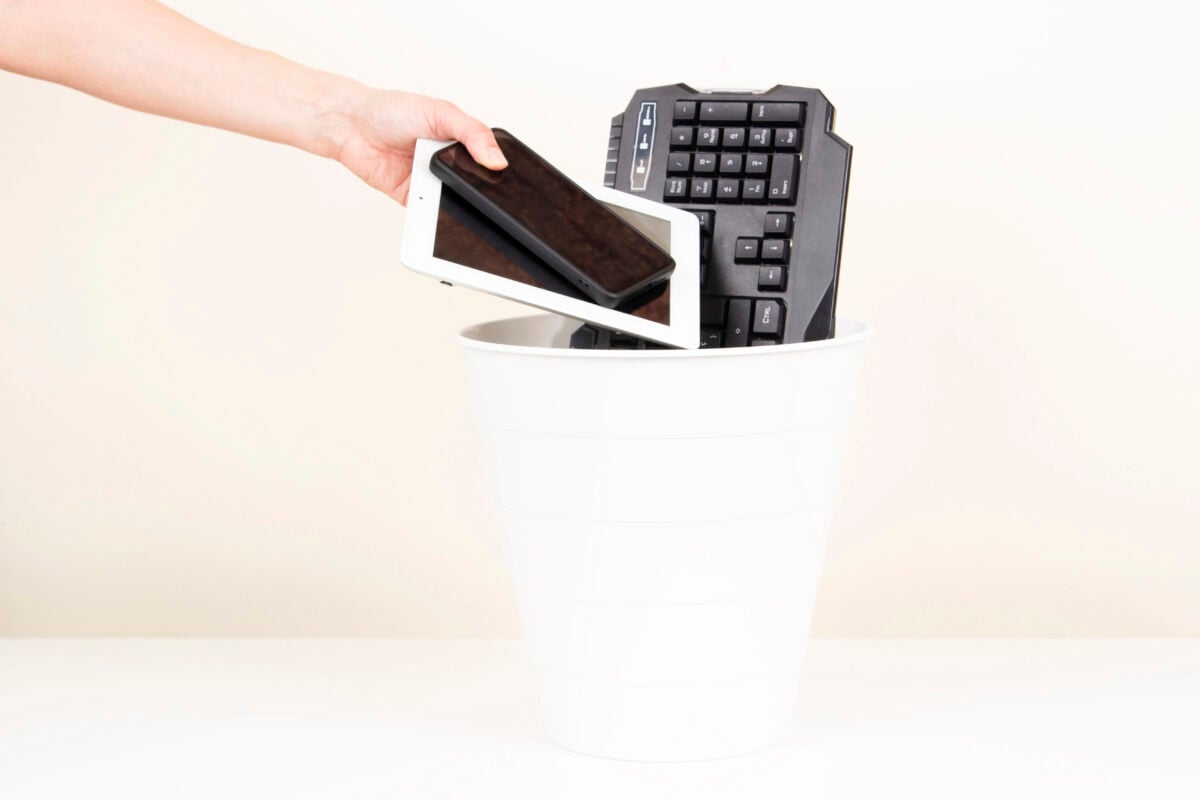
Why Can’t Electronics Be Recycled Like Cans and Bottles?
A soda can is relatively simple. It’s made primarily of aluminum, which can be separated, melted, and used again.
A smartphone is another story.
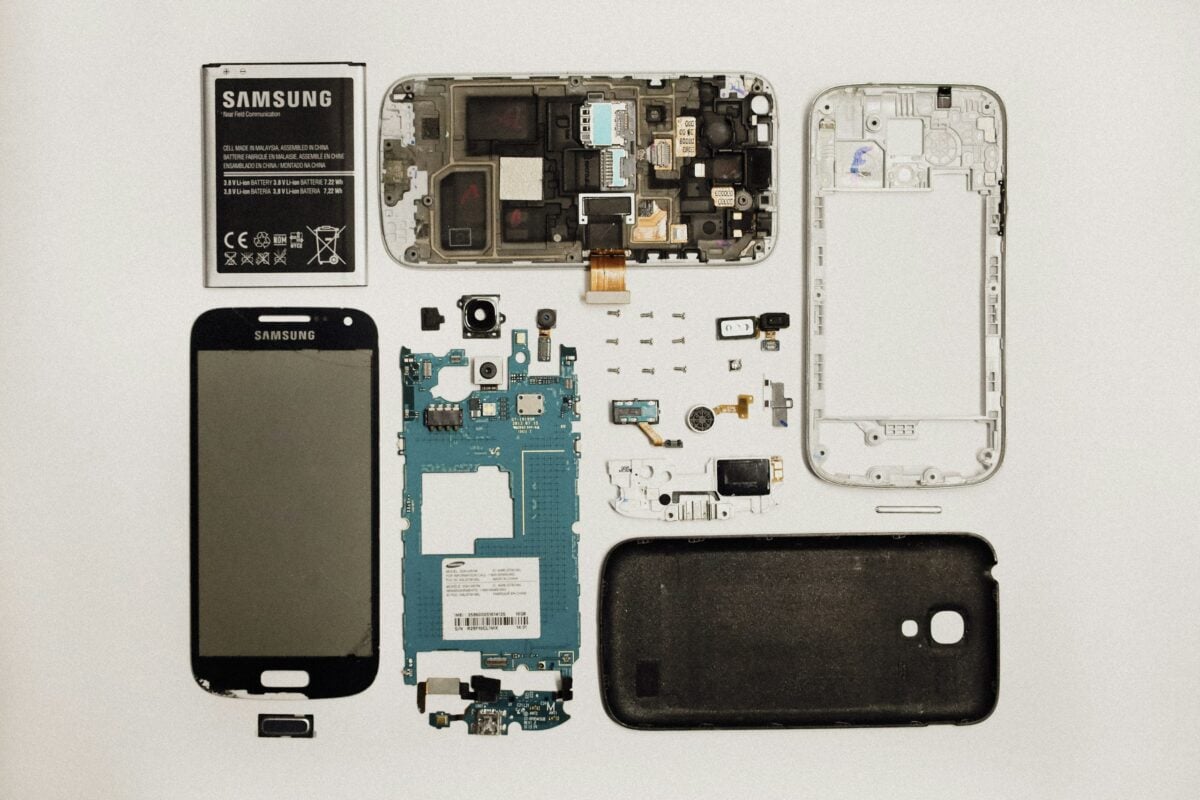
Inside that little rectangle are dozens of materials. There’s aluminum and steel, copper wiring, gold-plated connections, plastic, glass, and a rechargeable battery. Many of these parts are glued, soldered, or tightly packed together.
You can’t just toss the whole thing into a furnace and expect everything useful to come out the other side.
Some materials are valuable. Others require special handling. A damaged lithium-ion battery can catch fire, while certain older televisions contain lead or mercury.
That’s why electronics, often called e-waste or e-scrap, need a different recycling system than everyday household packaging.
And there’s an enormous amount of it to deal with.
According to the UN’s Global E-waste Monitor 2024, the world generated approximately 62 million metric tons of electronic waste in 2022. That’s nearly 17 pounds for every person on Earth.
Only 22.3% was documented as formally collected and recycled in an environmentally sound way.
That doesn’t mean everything else went straight into a landfill. Some devices were repaired, reused, or recycled through less formal channels. But it does mean we have many electronics whose final destinations aren’t properly tracked.
What Happens at an Electronics Recycling Facility?
Remember that old phone you dropped into the recycling bin? Its next stop probably isn’t a giant shredder. First, someone needs to figure out whether there’s still a working phone inside worth saving.
The journey depends on the device and the company processing it, but responsible electronics recyclers generally follow a similar process.
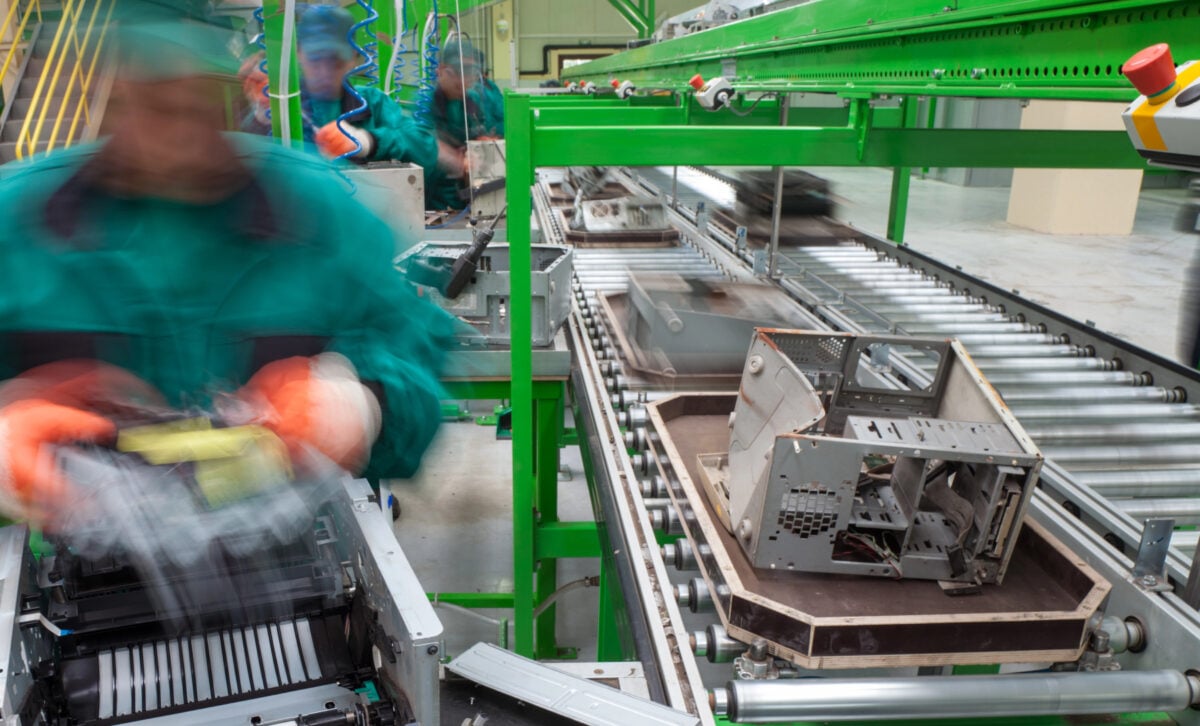
1. Electronics Are Collected and Sorted
Your phone’s first stop may be a retailer, municipal collection center, or dedicated recycling facility.
From there, electronics are transported to a processing center, often in large boxes or pallets.
Workers weigh the shipments, record what arrived, and separate the items by type. Phones, laptops, televisions, and printers all need different handling.
A pallet of smartphones might contain hundreds of devices worth repairing. A shipment of old televisions could contain heavy glass tubes and hazardous components that require specialized equipment.
Sorting them early makes the next steps safer and more efficient.
2. Working Devices Get a Second Chance
One of the most valuable things a recycler can recover is a device that still works.
A three-year-old smartphone with a good screen is usually worth more as a working phone than as a handful of recovered metals.
Recyclers may test devices for functionality, check their condition, and determine whether they can be resold or refurbished.
Some need only a replacement battery or minor repair. Others may provide usable screens, cameras, or spare parts for similar models.
Equipment that stores personal information must also go through appropriate data sanitization before resale or reuse.
Not every recycling facility handles refurbishment itself. Some send reusable electronics to specialized partners.
Either way, keeping a functional device in service generally saves more resources than immediately breaking it down for materials.
3. Batteries and Hazardous Components Are Removed
Before conventional shredding, recyclers need to identify and separate parts that could create safety or environmental problems.
This stage is sometimes called depollution.
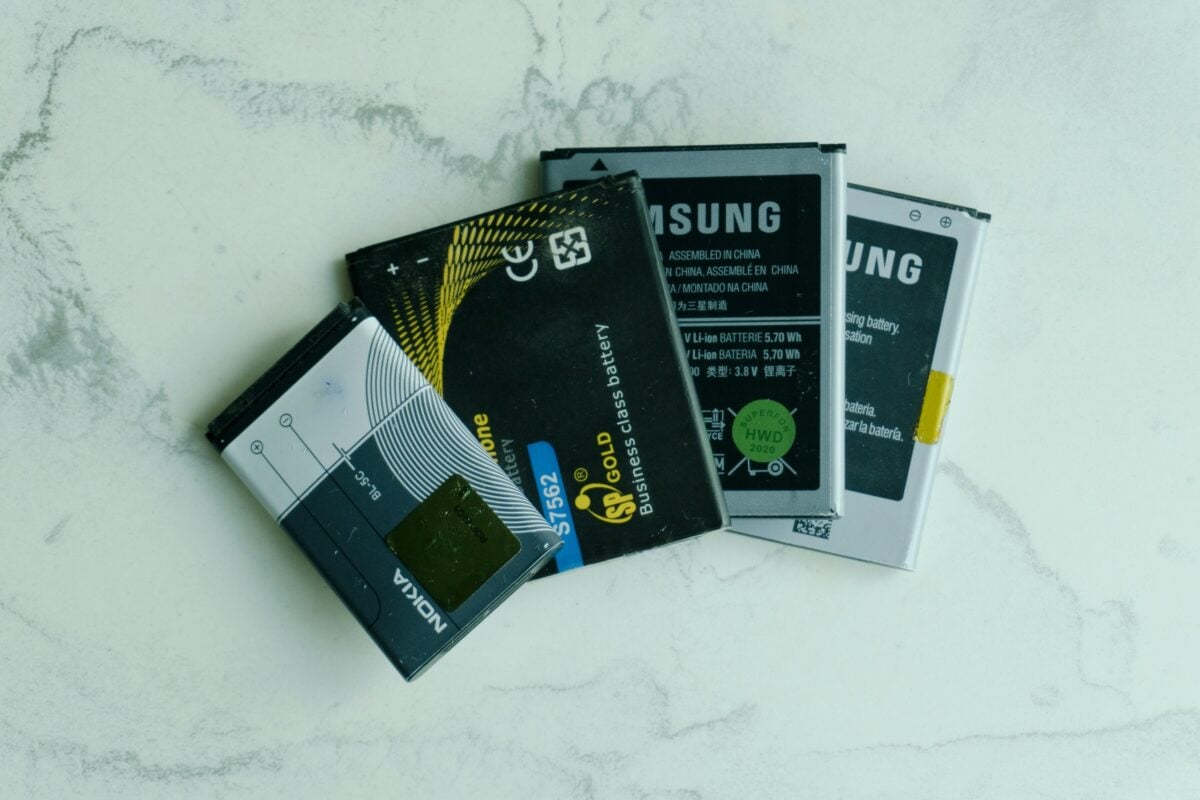
Depending on the device, workers or specialized equipment may remove:
- Lithium-ion batteries that could ignite if damaged
- Mercury-containing lamps from certain older screens
- Circuit boards with valuable or potentially hazardous materials
- Printer toner cartridges
- Components requiring specialized treatment
Some parts are easy to remove. Others are glued or sealed inside devices, making them harder to dismantle.
This is one reason you shouldn’t try prying out a stubborn phone battery yourself. A punctured lithium-ion cell can overheat or catch fire.
Recyclers have procedures and equipment designed to handle those risks.
4. Machines Shred and Separate the Remaining Materials
Once reusable parts and hazardous components have been removed or otherwise safely managed, the remaining electronics can be mechanically processed.
Industrial shredders break equipment into smaller pieces.
Those fragments travel through sorting systems that separate different materials.
- Magnets pull out steel and other iron-based metals.
- Eddy current separators push certain nonferrous metals, including aluminum, away from other materials.
- Optical sorting equipment helps identify and separate materials based on their properties.
- Air and density separators sort lighter plastics from heavier metal-rich pieces.
It’s a surprisingly sophisticated process.
Imagine a conveyor belt carrying thousands of tiny fragments that once belonged to phones, computers, and game consoles. By the time those pieces reach the end of the line, much of the material has been divided into separate streams.
Not everything can be recovered. Some plastics are difficult to identify or recycle economically, and mixed materials can be particularly troublesome.
The goal is to separate as much usable material as possible without creating additional safety hazards.
5. Valuable Metals Are Recovered and Refined
The metal-rich material collected during sorting moves on to specialized processors.
Copper, aluminum, and steel can be refined and sold to manufacturers. Circuit boards require more complicated treatment because they contain tiny amounts of several different metals.
Some processors use controlled high-temperature smelting. Others use chemical treatments to separate and purify metals.
The recovered materials can become raw ingredients for new electronics, wiring, industrial equipment, and even jewelry.
Your old phone probably won’t become another phone in one neat recycling loop. Its copper could end up in electrical wiring, while the gold from its circuit board might become part of an entirely different product.
But the materials can continue being useful long after the original device stops working.
Watch What Happens to a Recycled Phone
Want to see the process in action? This short video from Australia’s MobileMuster recycling program follows discarded phones as they’re dismantled and separated into materials that can be recovered and reused.
How Are Phones, Computers, and TVs Recycled Differently?
Not all electronics come apart the same way. A modern smartphone contains a compact battery and tightly packed components. A desktop computer has larger parts that are easier to separate. An old television can contain materials that require completely different precautions.
Here’s what recyclers typically remove and recover from different devices.
| Device | What Gets Removed or Separated | Main Materials Recovered |
|---|---|---|
| Smartphones | Batteries, circuit boards, reusable components | Copper, aluminum, gold, silver, palladium |
| Laptops & Computers | Storage drives, batteries, circuit boards, cables | Steel, aluminum, copper, precious metals, some plastics |
| Flat-Screen TVs | Circuit boards, metal frames, backlights where applicable | Steel, aluminum, copper, some plastics |
| Older CRT TVs | Lead-containing glass tubes, circuit boards, copper components | Copper, steel, other recoverable metals |
| Cables & Chargers | Plugs, adapters, insulation, mixed materials | Primarily copper and some plastics |
What gets recovered depends on the device’s age, design, and the recycling facility. Not every material can be recycled economically.
These are typical recovery streams, not guarantees. What actually gets recycled depends on the equipment, the processor, and whether there’s a viable market for the recovered material.
Can Robots Take Apart Old Phones?
Some manufacturers have developed machines specifically for dismantling their products.
Apple introduced a robot named Daisy in 2018 that could take apart up to 200 iPhones per hour. Instead of shredding everything together, Daisy separates components so certain materials can be recovered more efficiently.
Want to see Daisy in action? This behind-the-scenes video shows how Apple’s recycling robot takes apart old iPhones and separates their components for material recovery.
It’s an impressive example of how specialized recycling technology works, although most electronics don’t receive that kind of individual robotic treatment.
Many still move through a combination of manual dismantling and bulk mechanical processing.
Is There Really Gold in Your Old Phone?
Yes, and it’s one of the most fascinating parts of electronics recycling.
Gold is an excellent electrical conductor and resists corrosion, making it useful for tiny connectors and contacts inside electronic devices.
Your phone also contains copper, silver, and other valuable metals.
The amounts are small, but they add up when recyclers process thousands or millions of devices.
How Much Metal Can Be Recovered From 1 Million Old Phones?
There’s more valuable material hiding inside old phones than you might expect. According to historical EPA estimates, recycling one million cell phones could recover:
| Metal | Estimated Amount Recovered |
|---|---|
| Copper | 35,274 pounds |
| Silver | 772 pounds |
| Gold | 75 pounds |
| Palladium | 33 pounds |
Source: U.S. Environmental Protection Agency (EPA).
There’s a catch, though. These EPA estimates come from older generations of phones. Modern devices vary in size, construction, and the amounts of precious metals they contain.
Based on the historical estimate, an individual phone contains an average of roughly 34 milligrams of recoverable gold.
That isn’t enough to make dismantling your own phone worthwhile. Recovering precious metals safely requires specialized equipment, and chemical extraction methods can be dangerous.
But processing large volumes of discarded electronics can make recovery economically valuable.
The practice is sometimes called urban mining, because recyclers extract valuable resources from discarded products rather than digging new ore out of the ground.
Old Phones Have Even Become Olympic Medals
Here’s an especially interesting example of what recovered metals can become.
For the Tokyo 2020 Olympic and Paralympic Games, people across Japan donated millions of used electronic devices. The collection included approximately 6.21 million mobile phones, along with cameras, computers, and other small electronics. Organizers recovered enough metal to manufacture roughly 5,000 medals.
So, a discarded phone that once held someone’s vacation photos or text messages could eventually contribute to an Olympic medal.
That’s quite a second career for something forgotten in a drawer.
What Happens to Batteries and Other Toxic Materials?
Recovering valuable metals is only part of responsible electronics recycling.
Some components must be handled carefully to protect workers, recycling equipment, and the environment.
Lithium-Ion Batteries Can Start Fires
Rechargeable lithium-ion batteries are found in phones, laptops, tablets, wireless earbuds, power tools, and countless other products. They’re extremely useful because they store a lot of energy in a relatively small space.
Unfortunately, that stored energy becomes a problem when a battery is crushed, punctured, overheated, or short-circuited.
A damaged battery can enter a dangerous overheating process called thermal runaway, potentially causing a fire. This is especially risky at ordinary recycling facilities, where machinery isn’t designed to handle batteries.
The EPA has documented lithium-ion battery fires at U.S. waste and recycling facilities, including incidents requiring emergency responders.
That’s why batteries should never go into your curbside recycling bin.
What Happens to Batteries After They’re Removed?
Specialized battery recyclers sort batteries by chemistry and prepare them for processing.
For many lithium-ion batteries, the goal is to recover valuable materials such as lithium, nickel, cobalt, and copper, depending on the battery’s composition.
Some recycling processes produce a dark powder called black mass, which contains materials from the battery’s electrodes. Processors can then use controlled heat, chemical solutions, or a combination of techniques to recover metals from that material.
Those recovered metals may eventually go into new batteries or other products. However, not every battery recycler recovers every material, and recovery efficiency varies with the technology used.
What About Mercury and Lead in Old Electronics?
Older electronics present their own problems.
Cathode ray tube (CRT) televisions and monitors contain leaded glass, particularly in the back portion of the picture tube. Improper handling of that glass can expose workers and contaminate the environment.
Some older LCD televisions and monitors use fluorescent backlights containing mercury. These lamps require careful removal and specialized treatment.
Other electronic products may contain lead solder or plastics treated with certain flame retardants.
Responsible recyclers separate these materials and send them to appropriate processors rather than mixing them with ordinary recyclable metals and plastics.
Disposal isn’t always simple. For example, once manufacturers stopped making CRT televisions, demand for recycled CRT glass collapsed. Some recycling businesses were left storing enormous quantities of material with few practical buyers.
That history helps explain why recycling certain older televisions can involve fees.
What Happens When Electronics Aren’t Recycled Properly?
This is where the story takes a less reassuring turn.
Dropping a device into a recycling bin doesn’t automatically guarantee that it will be responsibly processed.
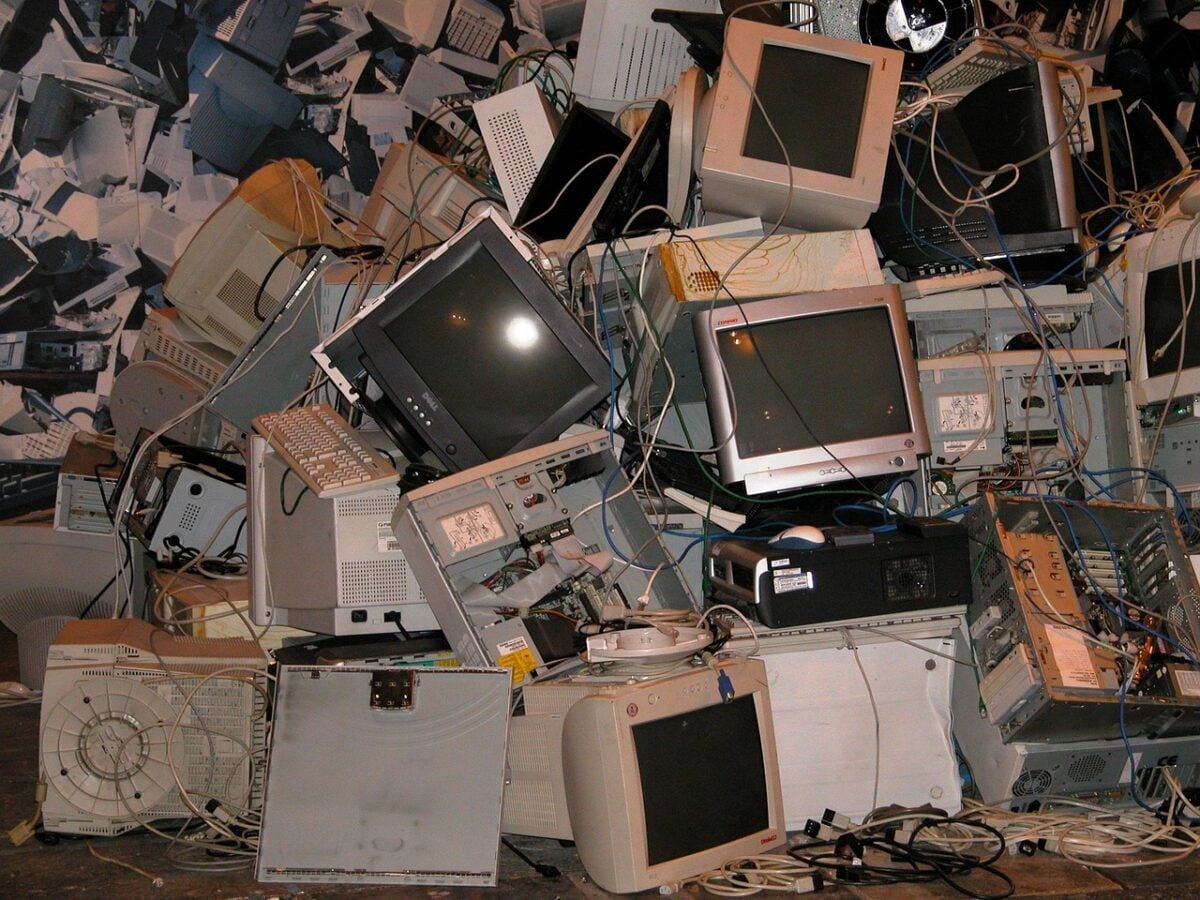
Some collected electronics travel through multiple companies before reaching a final processor. Others end up in informal recycling operations where safety equipment, pollution controls, and environmental oversight may be limited.
Where Does Most of the World’s E-Waste Go?
The UN’s Global E-waste Monitor 2024 found that only about 22% of the electronic waste generated worldwide in 2022 was documented as formally collected and recycled.
The remaining material followed several different paths.
Some was collected and processed outside formal systems. Some was handled by informal recyclers, including workers recovering metals for resale. Other waste was thrown away, often ending up in landfills.
It’s important not to assume that all informal recycling is harmful. Repair businesses and informal collectors can play valuable roles in keeping devices useful, particularly where formal recycling programs are limited.
The problems arise when dangerous materials are handled without adequate protection.
Why Does E-Waste Get Shipped Overseas?
Used electronics have an international market.
A working laptop donated in the United States might be refurbished and sold to someone in another country. That can extend the device’s useful life and reduce the demand for newly manufactured equipment.
But international shipments aren’t always what they seem.
Broken or unusable equipment may be exported under the assumption that it can be repaired or reused. Once it reaches its destination, workers may discover that much of it is only valuable as scrap.
Recovering copper from wiring or precious metals from circuit boards can then involve hazardous practices.
For example, informal recyclers have burned insulated cables to strip away the plastic and expose copper. Improper metal extraction can also involve dangerous chemicals.
These methods can release toxic substances into the air, soil, and water.
Investigators Have Tracked Discarded Electronics Across Borders
In 2016, the environmental watchdog Basel Action Network worked with researchers at MIT’s Senseable City Lab to track discarded electronics.
They placed GPS trackers inside old printers and monitors and delivered them to recycling facilities and charitable collectors in the United States.
About 34% of the 205 tracked devices were exported.
These findings raised serious questions about what happened to some of the collected equipment after it left the country.
However, the study followed a relatively small number of devices, and the results are now several years old. They cannot tell us what percentage of all U.S. e-waste is exported today.
They do show why transparency matters.
The first organization that accepts your old computer may not be the one that ultimately dismantles it.
What Happened to Ghana’s Infamous E-Waste Scrapyard?
For years, Agbogbloshie, a scrapyard in Accra, Ghana, became an international symbol of hazardous electronics recycling.
Workers dismantled electronic scrap and burned cables to recover copper and other valuable materials.
The resulting smoke and contamination raised serious concerns about exposure to toxic substances, particularly for people working or living nearby.
Ghana’s government demolished the former scrapyard in 2021, but informal electronics recycling continued elsewhere.
The broader problem extends far beyond one site. The World Health Organization has warned that children involved in informal e-waste recycling face particular health risks from exposure to hazardous materials.
Have International Rules Changed?
Yes. Changes to the Basel Convention, an international agreement governing hazardous waste shipments, took effect on January 1, 2025.
The amendments expanded international controls on electronic waste, including categories previously considered nonhazardous. Shipments covered by the rules generally require prior consent from importing and transit countries.
The United States has not ratified the Basel Convention, but American exporters can still be affected by requirements imposed by countries receiving their shipments.
These rules provide more oversight, although enforcement and tracking remain challenges.
And for consumers, there’s still a basic question worth asking: Does the company collecting my electronics know where they eventually end up?
What Electronics Can You Recycle?
Most electronics can be recycled somewhere, but that doesn’t mean they belong in your household recycling bin or that every electronics drop-off will accept them.
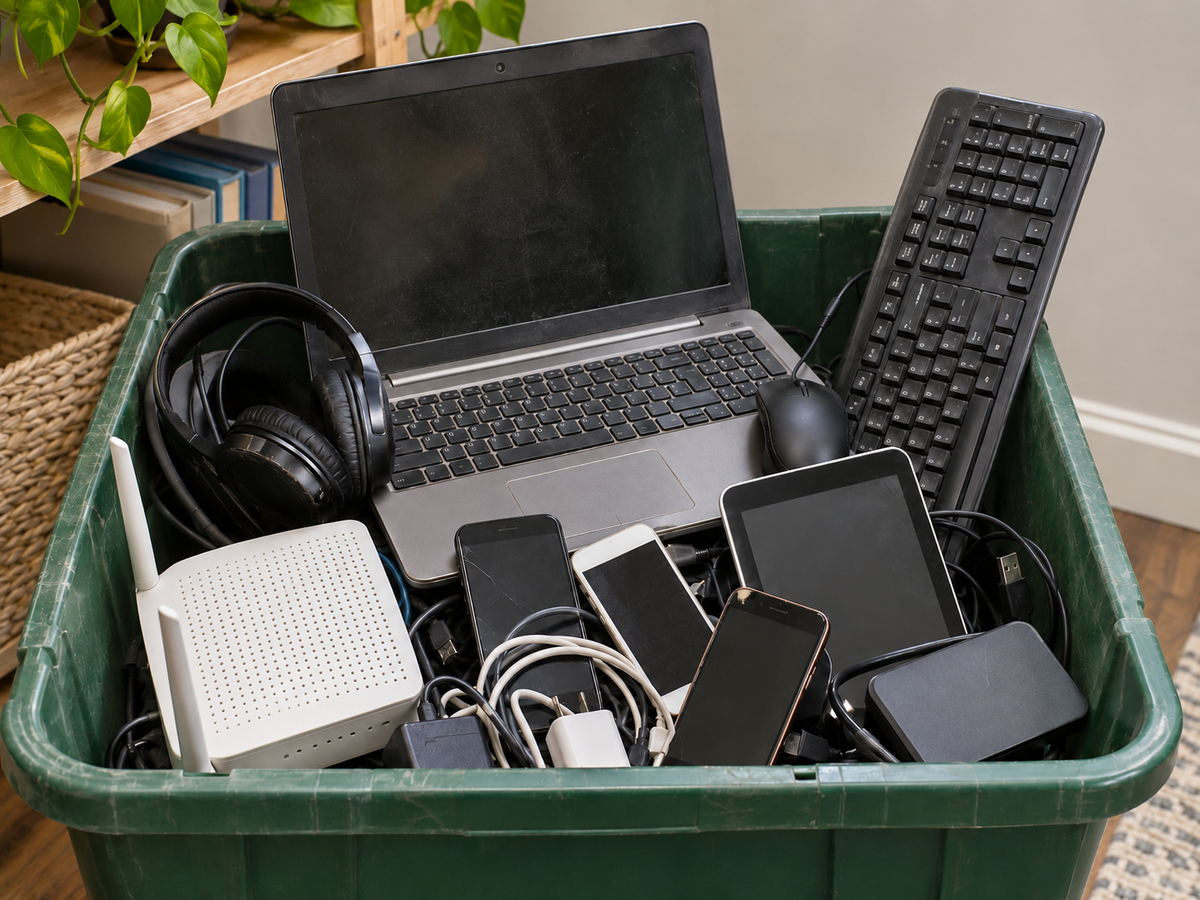
Phones, laptops, and chargers are relatively easy to find recycling programs for. Damaged batteries, disposable vapes, large rechargeable batteries, and older televisions can be trickier. Some require specialized collection sites, and others may come with recycling fees.
Before loading up the car, check what your local program accepts. You don’t want to arrive with a trunk full of old electronics only to discover they’ll take the laptop but not the TV.
Electronics Most Programs Commonly Accept
- Cell phones and tablets
- Laptops and desktop computers
- Keyboards and computer mice
- Cables and chargers
- Routers and modems
- Video game consoles
- Small electronic accessories
These are often accepted through municipal programs, retailers, manufacturer take-back services, or dedicated electronics recyclers.
Electronics That May Need Special Handling
- Televisions and computer monitors
- Large printers and copiers
- Microwaves and certain appliances
- Power banks and loose rechargeable batteries
- E-bike and electric scooter batteries
- Disposable vapes and other specialized battery-containing products
Some programs charge fees for televisions, especially older CRT models. Large batteries may require a dedicated collection service rather than a standard retail battery bin.
What if a battery is swollen or damaged?
Don’t place it in an ordinary drop-off container, try to remove it from a sealed device, or put it in household trash.
A swollen battery can be a warning sign of failure. If a battery is hot, smoking, hissing, or otherwise actively malfunctioning, keep your distance and seek emergency assistance as appropriate.
For a damaged but stable battery, contact your local hazardous waste program or the manufacturer for safe handling and transport instructions.
For ordinary loose lithium-ion batteries, the EPA recommends covering exposed terminals with nonconductive tape or placing batteries in separate plastic bags to prevent short circuits.
Your regular curbside recycling service isn’t equipped to handle these items. If you’re curious about what belongs in that bin, we explain what really happens after your recycling gets picked up.
How Do You Find an Electronics Recycler You Can Trust?
If there’s one thing worth checking before handing over your old electronics, it’s who will actually process them.
A retail store or collection event might accept devices without recycling them on-site. The materials may be transported to another company, which could send certain components to additional processors.
The EPA recommends choosing programs that use certified electronics recyclers.
In the United States, two recognized certification standards are particularly useful.
Look for R2 or e-Stewards Certification.
R2, or Responsible Recycling, is a certification standard administered by Sustainable Electronics Recycling International (SERI).
e-Stewards is a certification program developed by the Basel Action Network.
Both use independent audits to assess important areas such as environmental management, worker safety, and data security. They also include requirements for managing materials through downstream processing.
You can search their official directories:
Certification isn’t a guarantee that every device will be handled perfectly, but it gives you something meaningful to verify.
Ask These Three Questions Before Dropping Off Electronics
- Who actually processes the electronics? If you’re using a retailer or collection event, ask which company receives the devices.
- Is the recycling facility currently certified? Check the facility’s name and certification status rather than relying only on a logo displayed at the drop-off.
- How are personal data and unusable equipment handled? Ask whether the recycler offers data sanitization or destruction services and what happens to devices that cannot be refurbished.
A reputable organization should be able to explain its process or direct you to the appropriate information.
Your city or county solid waste department can also help you find legitimate collection programs.
What Should You Do Before Recycling Your Phone or Computer?
Even if you’re using a certified recycler, protecting your personal information is your responsibility, too.
Your old phone may contain photos, messages, contacts, account information, and access to financial apps. A laptop could hold years of personal records.

Before handing over a device, take a few precautions.
1. Back Up Anything You Want to Keep
Save photos, documents, contacts, messages, and other files to a secure backup.
Check that the files transferred successfully before erasing the original device.
Don’t forget apps used for two-factor authentication. Make sure you can still access your accounts from another device.
2. Sign Out of Your Accounts
Disconnect the device from personal accounts and services.
For iPhones, follow Apple’s instructions for signing out and turning off device ownership protections. Erasing the device using Apple’s supported procedure also turns off Find My and Activation Lock.
For Android devices, remove associated Google accounts as directed by the manufacturer so Factory Reset Protection doesn’t prevent someone else from using the phone.
Other manufacturers may have their own device locks and account-removal procedures.
3. Remove SIM Cards and Memory Cards
Take out any physical SIM card or removable memory card before recycling the device. These may contain personal information or can be reused elsewhere.
If your phone uses an eSIM, check your carrier’s instructions for transferring or deleting it.
4. Erase the Device
Use the manufacturer’s built-in reset procedure to remove your personal information.
- On modern iPhones, this is generally the Erase All Content and Settings option.
- Android devices typically provide a factory reset option, although the exact location varies by manufacturer and software version.
The Federal Trade Commission provides additional instructions on removing your personal information before getting rid of a phone.
Modern phones generally encrypt stored data, making a properly completed factory reset an effective way to protect personal information.
Very old devices and improperly reset equipment may be less secure.
5. Take Extra Care With Computers
Laptops and desktops can contain much more stored information than people realize.
Use an appropriate reset or secure-erasure method for the computer’s storage drive. The right procedure depends on the operating system and whether the drive is a hard disk or solid-state drive.
A basic reset isn’t necessarily sufficient for highly sensitive data or every older computer.
If the computer no longer works, ask a qualified recycler about secure drive sanitization or physical destruction.
Some facilities offer documented data destruction services, although these may cost extra.
6. Check That the Device Is Ready to Leave Your Hands
Before dropping it off, confirm that your backup is complete, the necessary accounts have been removed, and the device no longer contains accessible personal information.
For a device that cannot be erased, arrange appropriate data destruction rather than assuming everything will be handled automatically.
4 Electronics Recycling Mistakes That Are Easy to Make
Recycling electronics isn’t always as simple as finding a drop-off bin. A few common mistakes can put your personal information at risk, create safety hazards, or send your devices somewhere you never intended.
1. Tossing Batteries Into Curbside Recycling
That old phone battery doesn’t belong with your cardboard and cans. Lithium-ion batteries can catch fire when crushed by collection trucks or sorting equipment. Use a designated battery collection program, and check its rules before dropping anything off.
2. Forgetting to Erase Personal Information
Your old phone might still contain years of photos, messages, passwords, and account information. Don’t assume the recycler will handle everything. Back up your files, sign out of your accounts, and erase the device before handing it over.
3. Assuming Every Drop-Off Recycles Responsibly
A recycling sign doesn’t tell you where your electronics will end up. Some collection sites send devices to outside processors, and not all follow the same standards. Check whether the company handling your electronics has R2 or e-Stewards certification.
4. Taking Electronics Apart Yourself
It’s tempting to pull valuable components from an old computer or pry a stubborn battery out of a phone. But damaged batteries can ignite, and older TVs may contain hazardous materials. Leave complicated dismantling to properly equipped recycling facilities.
Is It Better to Repair, Donate, or Recycle Electronics?
Recycling is useful, but it shouldn’t automatically be the first option.
A working phone or computer still has value as a complete product. Reusing it avoids much of the additional manufacturing and material processing required to replace it.
If your device is still functional, consider selling, donating, trading in, or passing it along to someone who can use it. A minor repair may also extend its life.
If you’re considering replacing an older appliance because of its electricity use, it’s worth checking how much power it actually consumes. Our look at what uses the most electricity in your home may reveal a few surprises.
That doesn’t mean keeping every outdated gadget forever. Some devices are no longer safe, practical, or economical to repair. When equipment has reached the end of its useful life, responsible recycling can recover valuable materials and keep hazardous components out of ordinary waste streams.
Keeping electronics in use longer, whether through repairs, reuse, or recycling, helps us get more value from the resources that went into making them.
If you’d rather give something away, local sharing groups are another option. The Freecycle Network connects people who have usable items with neighbors who want them, including electronics, household appliances, and computer accessories.
Does Recycling Your Old Electronics Really Make a Difference?
Yes, especially when the equipment reaches a responsible recycler.
That old phone may become someone else’s refurbished device. If it’s beyond repair, its copper, aluminum, gold, and other recoverable materials can return to manufacturing instead of being discarded.
The outcome is less certain when electronics enter poorly managed collection or recycling systems. Valuable materials can be lost, and the environmental and health costs may fall on workers and communities far from where the devices were originally used.
So, before dropping that forgotten phone into a bin, back it up, erase your information, and check who’s taking it.
You don’t need to follow your electronics all the way to the smelter. But knowing where the journey begins can help you choose a better destination.
Have you ever struggled to find somewhere to recycle an old TV, computer, or phone? Or do you have a local recycling program you recommend? We’d love to hear about it in the comments.
More Surprises Hiding in Everyday Waste
Electronics aren’t the only things with a complicated recycling journey. Even those little numbers stamped on plastic containers can be misleading. Our breakdown of plastic recycling codes explains what they actually mean and why a recycling symbol doesn’t always guarantee something can be recycled.
And what about the electronics you’re keeping? Some quietly use electricity even when they’re switched off. Check out these simple ways to conserve energy at home to find out where you might be wasting power without realizing it.