When you purchase through links on our site, we may earn a commission. Here’s how it works.
Hybrid and electric cars have a clever trick up their sleeves. Every time you slow down, your car can capture some of that energy and turn it back into electricity, helping recharge its own battery as you drive.
Table of Contents
This technology is called regenerative braking, and it’s one reason hybrid and electric vehicles are so efficient. But how exactly does slowing down generate electricity? The process is surprisingly simple once you understand what’s happening behind the scenes.

Quick Answer: How Does Regenerative Braking Work?
Regenerative braking is a technology that allows hybrid and electric cars to capture some of the energy normally lost when slowing down and convert it into electricity. Instead of relying entirely on traditional brakes, these vehicles use their electric motors to help slow the wheels while generating power.
Here’s the clever part: The same electric motor that helps move the car can also work as a generator. When you slow down, the wheels drive the motor, which converts some of the car’s motion into electricity and sends it back to the battery.
Want our human-written content to rank above AI-generated garbage? Help us out by clicking this button!
That recovered energy can be used the next time you accelerate, helping hybrid cars burn less gasoline and electric vehicles travel farther on a charge. The amount of energy recovered depends on the vehicle and driving conditions.
Quick Takeaway: Regenerative braking allows hybrid and electric cars to recycle some of the energy that would otherwise be wasted when slowing down. The recovered electricity helps recharge the battery, reducing the amount of energy the vehicle needs from gasoline or an external charger.
What Happens To Energy When A Car Brakes?
Imagine you’re driving down the road at 40 mph when you notice a red light ahead. You take your foot off the accelerator and begin slowing down.
Your moving car has energy, known as kinetic energy. The faster a car travels, the more kinetic energy it carries.
A heavier vehicle also has more kinetic energy than a lighter one traveling at the same speed. When you brake, that energy has to go somewhere.
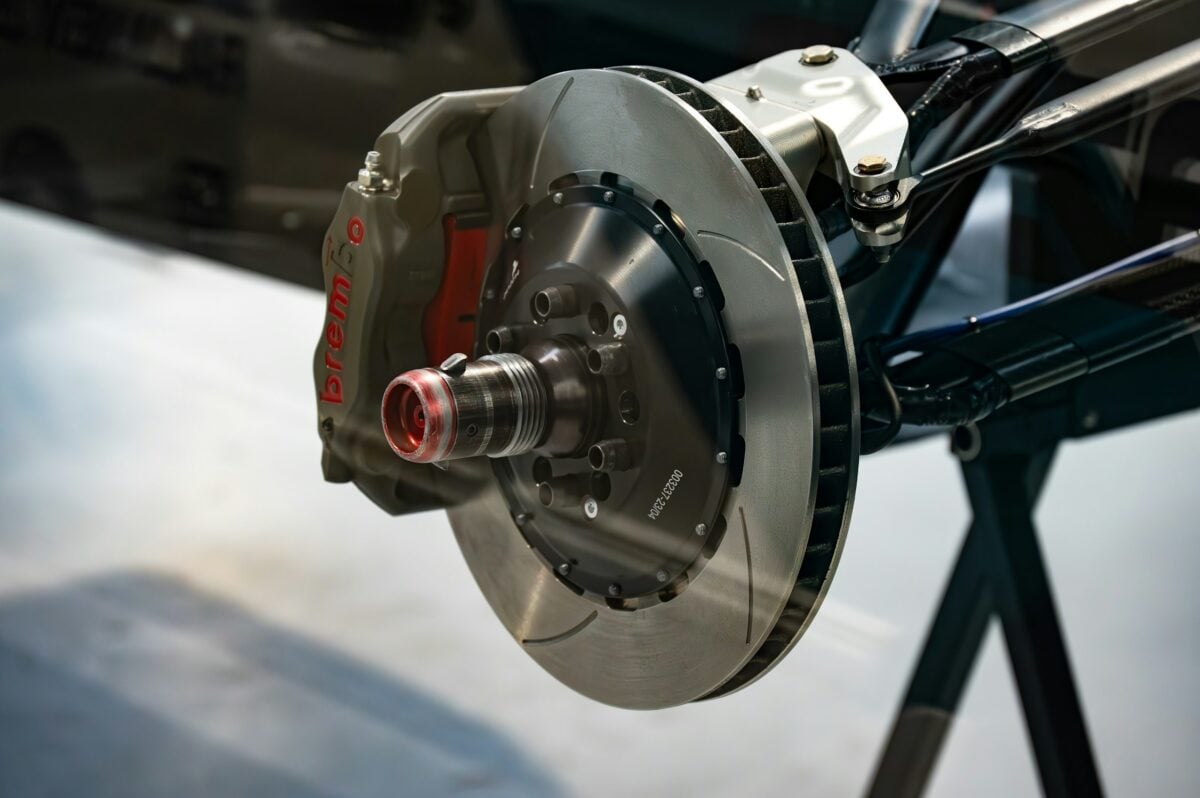
In a traditional gasoline-powered car, pressing the brake pedal activates friction brakes. In a typical disc brake system, brake pads squeeze against rotating metal discs called rotors, creating resistance that slows the wheels. Most of the car’s kinetic energy is converted into heat, which eventually escapes into the surrounding air.
This happens every time you use conventional friction brakes, whether you’re slowing for a stoplight or descending a steep hill. If you’ve ever noticed how hot car brakes can become after a long downhill drive, that’s a direct result of this energy conversion.
Hybrid and electric cars have another option. They can use their electric motors to recover some of that kinetic energy and turn it into electricity before it’s lost as heat.
That’s what makes regenerative braking so useful: Energy that would otherwise be wasted gets a second chance to power the car.
How Regenerative Braking Works: Step By Step
The easiest way to understand regenerative braking is to follow what happens during a typical stop.
Imagine you’re driving a hybrid or electric car toward a red light. As you begin slowing down, a series of electrical and mechanical processes takes place almost instantly. Here’s how your car turns some of its motion back into stored electricity.
1. You Lift Off The Accelerator Or Press The Brake
In many hybrid and electric cars, regenerative braking begins when you release the accelerator or gently press the brake pedal.
The exact response depends on the vehicle. Some electric cars provide noticeable braking as soon as you lift your foot, while others coast more freely until you use the brake pedal.
When regenerative braking activates, the vehicle’s computer adjusts how its electric motor operates. Instead of drawing electricity from the battery to propel the car, the motor uses the car’s movement to generate electricity.
This transition happens automatically, often without the driver noticing anything unusual.

2. The Wheels Keep The Electric Motor Spinning
Even after you release the accelerator, your car continues moving. The wheels are still rotating because the vehicle has momentum.
In many hybrids and EVs, the electric motor is mechanically connected to the wheels through a system of gears and shafts known as the drivetrain. This connection allows power to travel between the motor and the wheels.
Normally, electricity powers the motor, which turns the wheels and moves the car forward. During regenerative braking, the flow of mechanical energy reverses: The moving wheels drive the motor instead.
The motor continues spinning, but now it’s being driven by the vehicle’s motion rather than by electricity from the battery.
3. The Motor Acts As A Generator
This is the most interesting part of regenerative braking.
An electric motor and an electrical generator operate using the same basic scientific principle: electromagnetism, the relationship between electricity and magnetic fields.
Inside an electric motor, magnetic fields interact with coils of wire to produce rotational movement. When the motor is powered by the battery, that movement helps drive the car’s wheels. But the process can also work in reverse.
When the wheels drive the motor during regenerative braking, the changing magnetic fields inside it induce an electrical voltage. This phenomenon is called electromagnetic induction, and it’s the same fundamental principle used to generate electricity in power plants and wind turbines.
The motor can now act as a generator, converting mechanical energy from the moving vehicle into electrical energy.
Generating electricity also creates resistance to the motor’s rotation. This opposing force, called braking torque, helps slow the wheels and the vehicle.
That’s why regenerative braking can slow a car without relying entirely on traditional brake pads and rotors. The electrical generation process itself provides part of the braking force.
4. Electricity Flows Back Into The Battery
Once the motor generates electricity, that energy needs to be converted before the battery can store it. Most hybrid and electric vehicles use alternating current (AC) motors, but their batteries store electricity as direct current (DC). These are two different forms of electrical power.
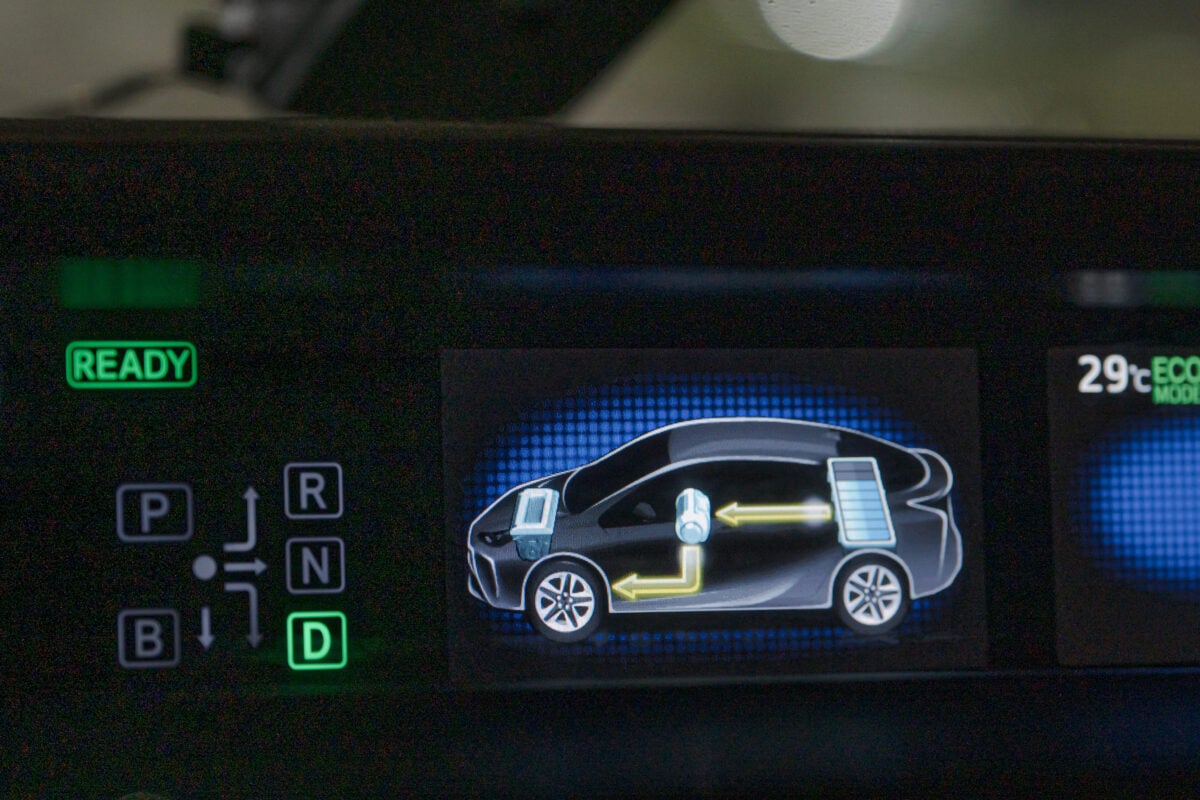
A component called an inverter handles the conversion, changing the electricity generated by the motor from AC to DC. This allows the recovered energy to flow back into the battery, where it can be stored for later use.
Meanwhile, the vehicle’s battery management system monitors temperature, charge level, and how much power the battery can safely accept. Once stored, that recovered electricity is ready to help power the car again.
5. The Recovered Energy Helps Power The Car Again
Now imagine the traffic light turns green.
When you press the accelerator, the electric motor draws electricity from the battery to help move the car forward. Some of that stored energy may have been recovered just moments earlier as you approached the intersection.
In a hybrid vehicle, the recycled electricity can reduce how much work the gasoline engine needs to do, improving fuel efficiency.
In a fully electric vehicle, that recovered energy reduces battery consumption over a trip, potentially increasing driving range.
This process repeats whenever driving conditions allow regenerative braking to operate. Each successful energy recovery helps the vehicle use the energy it already has more efficiently.
Did You Know? Regenerative braking follows a basic law of physics called the conservation of energy. Energy can’t be created or destroyed, but it can change forms. By converting some of a car’s kinetic energy into electricity, regenerative braking allows vehicles to reuse energy that traditional friction brakes would largely turn into heat.
How Much Energy Does Regenerative Braking Recover?
Regenerative braking can recover a surprising amount of energy, but it can’t capture everything you would otherwise lose when you slow down. The amount depends on your vehicle, your speed, how you brake, and how much charge the battery can accept.
According to the U.S. Department of Energy, regenerative braking in a typical electric vehicle recovers energy equivalent to roughly 22% of the vehicle’s energy use during a combined city and highway driving cycle. That’s a substantial efficiency benefit, although the amount recovered during an individual stop varies by vehicle and driving conditions.
Some energy is lost as heat and electrical resistance as the motor generates electricity and the battery stores it. Other energy losses occur as the car moves, including air resistance and tire friction. Hard braking can also require traditional brakes to step in, converting more of the car’s motion into heat.
The amount of energy recovered also depends on when and how you drive. Some driving conditions offer far more opportunities to capture energy than others, as we’ll explore later.
Regenerative Braking Vs. Traditional Brakes
Both regenerative and traditional friction brakes slow your vehicle, but they handle its moving energy very differently.
Traditional brakes use friction to turn motion into heat. Regenerative braking uses an electric motor to turn some of that motion into electricity.
Here’s how the two systems compare:
| Feature | Regenerative Braking | Traditional Friction Brakes |
|---|---|---|
| How it works | Uses an electric motor or generator to resist wheel rotation | Uses friction between brake components to slow the wheels |
| Where energy goes | Some is converted into electricity and stored in the battery | Most is converted into heat |
| Main benefit | Recovers energy and improves efficiency | Provides reliable stopping power |
| Brake wear | Can reduce wear on brake pads and rotors | Pads and rotors gradually wear with use |
| Limitations | Depends on motor capacity, battery conditions and vehicle speed | Produces heat and requires periodic maintenance |
In most modern hybrids and EVs, both systems work together automatically. The vehicle’s braking controls determine how much deceleration regenerative braking can provide and when it needs additional friction braking.
This process is often called blended braking. During a gentle stop, the electric motor may handle much of the slowing. Press the brake pedal harder, and the conventional brakes can provide additional stopping force.
Because regenerative braking reduces how often the friction brakes need to do the work, brake pads and rotors may last longer than those on comparable gasoline-powered vehicles. However, they still require inspection and maintenance.
Why Cars Still Need Regular Brakes
If regenerative braking can slow a car while recovering electricity, why bother with traditional brakes at all? Regenerative braking has limits, and drivers need reliable stopping power in every situation.
For example, imagine you’re driving toward a red light when the car ahead suddenly stops. You press the brake pedal hard to avoid a collision.
Regenerative braking may contribute some stopping force, but the electric motor has a limited capacity to generate electricity and resist the wheels’ rotation. Traditional friction brakes provide the additional braking force needed for a rapid stop.
Regular brakes also help bring the vehicle to a complete stop and hold it stationary when needed. Many regenerative braking systems become less effective at very low speeds, so friction brakes take over the final stages of stopping.
By working together, regenerative and friction brakes provide both energy recovery and dependable stopping power. The vehicle automatically manages the balance between the two based on driving conditions.
How Regenerative Braking Works In Hybrids Vs. EVs
Hybrid and fully electric vehicles use the same basic regenerative braking technology, but they use the recovered electricity slightly differently.
In a traditional hybrid, such as a Toyota Prius, regenerative braking helps recharge a relatively small battery that works alongside the gasoline engine. That stored electricity powers the electric motor, reducing how much gasoline the vehicle needs during acceleration and low-speed driving.
Fully electric vehicles (EVs), such as the Hyundai Ioniq 5, rely entirely on battery power. Regenerative braking sends recovered electricity back into their much larger battery packs, helping extend driving range between charges.
Because EVs generally have larger batteries and powerful electric motors, they often have greater regenerative-braking capacity. Many also allow drivers to adjust how strongly the vehicle slows when they release the accelerator.
Plug-in hybrids (PHEVs) fall somewhere in between. They combine a gasoline engine with a battery that can be charged from an outlet, and regenerative braking helps replenish that battery while driving.
The important distinction is what the recovered energy helps accomplish: In hybrids, it primarily improves fuel economy. In fully electric vehicles, it helps conserve battery charge and extend driving range.

What Does Regenerative Braking Feel Like?
If you’ve never driven an electric car, regenerative braking might feel a little unusual at first.
In a traditional gasoline-powered car, taking your foot off the accelerator usually allows the vehicle to coast, gradually losing speed. In a hybrid or EV with stronger regenerative braking, the car may begin slowing more noticeably as soon as you lift your foot.
Some drivers describe the sensation as similar to downshifting in a manual-transmission car or using engine braking while going downhill. There’s a gentle resistance that slows the vehicle without necessarily pressing the brake pedal.
How noticeable that resistance feels depends on the vehicle. Many hybrids blend regenerative braking with conventional brakes so smoothly that drivers barely notice it. Some EVs have adjustable regenerative braking settings, letting drivers choose between a more familiar coasting feel and stronger deceleration.
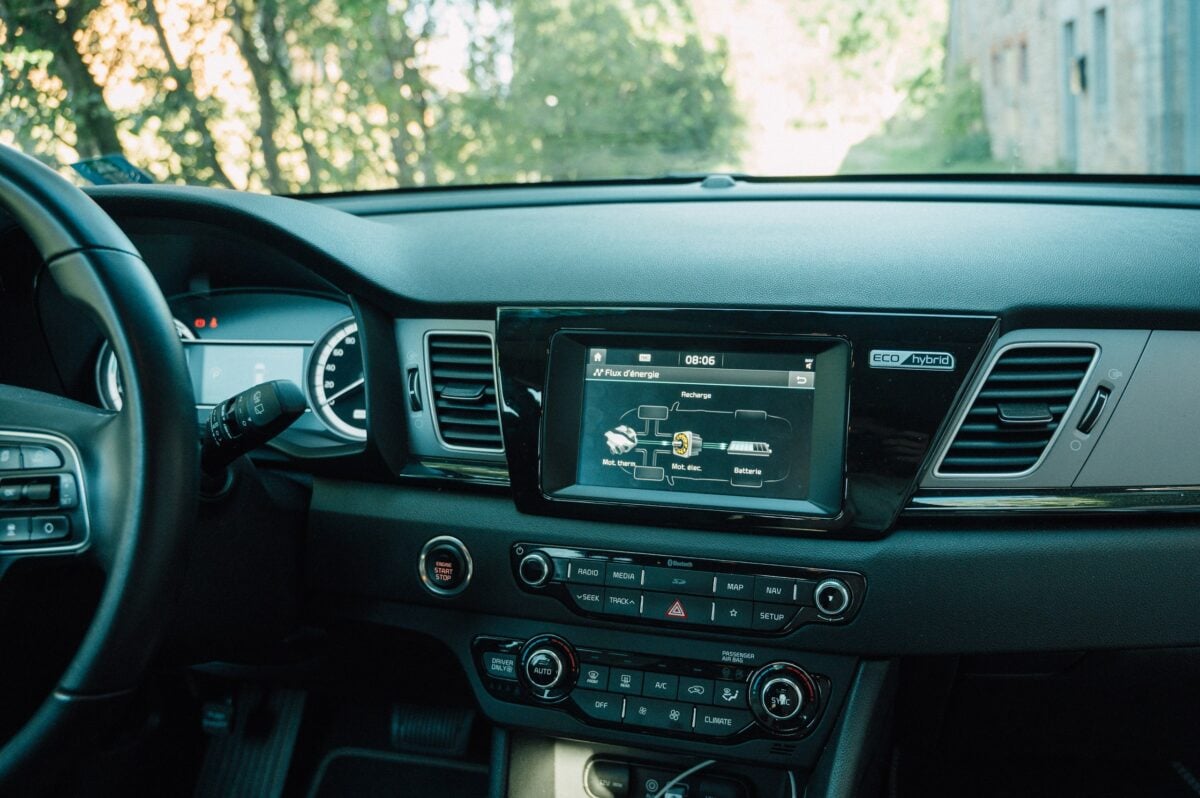
You might also see regenerative braking happening on the dashboard. Many hybrid and electric vehicles have energy-flow displays that show electricity moving back into the battery as the car slows. Some even show a charging indicator or a negative power reading when energy is being recovered.
After a little practice, drivers often become accustomed to anticipating stops earlier and adjusting the accelerator more gradually. In vehicles with strong regenerative braking, this can make stop-and-go driving feel particularly different from driving a conventional car.
What Is One-Pedal Driving?
One-pedal driving takes regenerative braking a step further by allowing drivers to control much of their acceleration and slowing with a single pedal.
Press the accelerator to speed up, then gradually release it to slow down. The more you lift your foot, the stronger the deceleration may become, depending on the vehicle’s system.
In some EVs, one-pedal driving can bring the vehicle all the way to a complete stop without the driver pressing the brake pedal. The car may then use a holding function to remain stationary until it’s time to move again.
This can be especially convenient in heavy traffic, where drivers would otherwise spend much of their time switching between the accelerator and brake pedals.
One-pedal driving takes some getting used to. Releasing the accelerator too quickly can cause a more abrupt slowdown than expected, particularly in vehicles with strong regenerative braking.
Important: One-pedal driving doesn’t eliminate the need for the brake pedal. Drivers must still be ready to use their regular brakes when they need additional stopping power. Stopping and holding behavior varies by vehicle, so check the owner’s manual before relying on this feature.
When Does Regenerative Braking Work Best (And When Doesn’t It)?
Regenerative braking is most useful when a vehicle has energy to recover and the battery has room to store it.
That’s why driving conditions play such an important role in how much electricity the system can generate. A car that frequently slows down has more opportunities to recover energy than one traveling at a steady speed for long stretches.
Let’s look at where regenerative braking makes the biggest difference and when its effectiveness can be limited.
City Driving & Stop-And-Go Traffic
Picture a typical drive through town. You accelerate away from one traffic light, slow for a pedestrian crossing, then brake again as traffic backs up ahead.
Each slowdown allows a hybrid or electric car to recover some of the energy used to get moving.
This is one reason regenerative braking is especially valuable in city driving. Frequent starts and stops create repeated opportunities to capture energy that conventional friction brakes would largely convert into heat.
On the highway, the situation is different. A vehicle cruising at a steady 65 mph has relatively few opportunities to recover energy because it isn’t slowing down very often.
Regenerative braking can still work when exiting the highway, approaching slower traffic, or descending a hill. However, the greatest benefits generally come from driving that involves frequent, controlled deceleration.

Going Downhill
Long downhill stretches offer another interesting opportunity for regenerative braking.
As a vehicle travels downhill, gravity helps pull it forward. This means the car can gain speed even when the driver isn’t pressing the accelerator.
To control that speed, a hybrid or electric vehicle may use regenerative braking to convert some of the energy gained during the descent into electricity.
In the right conditions, driving downhill can actually add charge to the battery. Some EV drivers may even notice their battery percentage increase during a long descent, although the amount recovered varies.
Regenerative braking can also reduce how much work the traditional friction brakes need to do, helping limit heat buildup during downhill driving.
However, long descents can produce more recoverable energy than the battery can accept. If regenerative braking becomes limited, drivers must rely on the vehicle’s other braking systems to maintain a safe speed.

When Regenerative Braking Is Limited
Regenerative braking doesn’t always operate at full strength. The vehicle’s computer continuously adjusts energy recovery based on battery conditions, vehicle speed, and available traction.
Several situations can reduce how much electricity the system recovers:
- The battery is nearly full. With little room to store additional energy, the vehicle may reduce or temporarily disable regenerative braking to prevent overcharging.
- The battery is very cold or hot. Lithium-ion batteries have temperature limits for charging. The vehicle may restrict energy recovery until the battery reaches a suitable operating temperature.
- The vehicle is moving very slowly. Regenerative braking generally becomes less effective at low speeds, although some vehicles can use their braking systems to complete a stop automatically.
- The road is slippery. On snow, ice, or other low-traction surfaces, the vehicle may adjust or reduce regenerative braking to help maintain wheel traction and stability.
- The driver needs to stop quickly. The motor can only provide a limited amount of braking force. Hard or emergency braking may require substantial assistance from the traditional friction brakes.
Most vehicles manage these changes automatically, although some drivers may notice differences in how strongly the car slows when regenerative braking is reduced.
The key is to treat regenerative braking as an efficiency feature rather than a substitute for normal braking. Regardless of how much electricity the system can recover, maintaining control of the vehicle always comes first.

Common Myths About Regenerative Braking
Regenerative braking is surprisingly effective, but its benefits are easy to overestimate. From how much electricity a car can recover to whether stronger braking generates more power, a few common assumptions deserve a closer look.
Myth: Braking Harder Generates More Electricity
You might assume that slamming on the brakes would send a bigger burst of electricity into the battery. In reality, harder braking doesn’t necessarily recover more energy.
The electric motor and battery can only handle so much power at once. When you brake suddenly, the vehicle may need additional friction braking to slow down quickly. Those traditional brakes convert the absorbed energy into heat rather than recovering it as electricity.
Gradual, controlled slowing often allows the regenerative system to capture a greater share of the available energy. Of course, safe stopping always takes priority over recovering electricity.
Myth: Stronger Regenerative Braking Is Always More Efficient
It seems logical that the more aggressively a car recovers energy, the more efficient it becomes. But there’s an interesting catch: Sometimes it’s more efficient to keep moving than to slow down and accelerate again.
Every time regenerative braking converts motion into electricity, some energy is lost during conversion and storage. When the vehicle later uses that electricity to accelerate, it loses additional energy.
If you’re approaching a gentle curve or traveling on a road where you don’t need to slow down much, allowing the car to coast may conserve more energy than using strong regenerative braking and then accelerating again.
The most efficient approach depends on the driving situation. Regenerative braking is especially useful when you already need to slow down, while coasting can help when maintaining momentum is safe and appropriate.
Myth: Regenerative Braking Can Replace Charging An Electric Car
If an electric car can recharge its battery while slowing down, could you eventually drive without plugging it in?
Unfortunately, regenerative braking can’t recover all the energy used to move the car. Some energy is lost through air resistance, tire friction, heat, and electrical inefficiencies. Every time the car accelerates, it also draws energy from the battery.
Regenerative braking can help extend an EV’s driving range, but it can’t keep the battery charged indefinitely. Fully electric vehicles still need an external source of electricity to replenish the energy they consume.
Frequently Asked Questions
Regenerative braking raises a few interesting questions about how hybrid and electric vehicles behave in everyday situations. Here are some details that may surprise you.
Don’t see your question? Respond in the comments, and we’ll get back to you!
Do Brake Lights Come On During Regenerative Braking?
Yes, they can. Some modern EVs automatically illuminate their brake lights when regenerative braking causes significant deceleration, even if the driver hasn’t pressed the brake pedal.
The exact behavior depends on the vehicle’s design and applicable regulations. Gentle deceleration may not activate the brake lights, while stronger regenerative braking may trigger them to alert drivers behind you.
Can You Turn Regenerative Braking Off?
It depends on the vehicle. Some hybrids and EVs let drivers adjust regenerative braking strength through dashboard settings, driving modes, or steering-wheel paddles. Others operate automatically with little or no driver adjustment.
Reducing regenerative braking can make the car feel more like a conventional vehicle that coasts when you release the accelerator. However, a lower setting doesn’t necessarily disable all energy recovery, especially when you use the brake pedal.
Check your owner’s manual to see which options are available.
Does Regenerative Braking Work In Reverse?
Some electric vehicles can recover energy while slowing down in reverse, but this depends on the vehicle’s design and settings.
Other vehicles disable regenerative braking when you select reverse gear. For example, certain Hyundai models deactivate their regenerative braking systems in reverse.
Because reversing usually involves low speeds and short distances, there is generally much less energy available to recover than during normal forward driving.
Keep Exploring Smarter Transportation
Regenerative braking is only one way modern vehicles use energy more efficiently. Curious about the technology working alongside it? Our guide to how hybrid cars work explains how gasoline engines, electric motors, and batteries work together to improve efficiency.
You can also explore the truth behind common hybrid car myths or discover practical ways to make your next trip more sustainable with our eco-friendly travel guide.