When you purchase through links on our site, we may earn a commission. Here’s how it works.
Ever notice how your dog always finds that one patch of cool kitchen tile on a scorching July afternoon? They’ll sprawl out, belly down, looking like they’ve discovered the world’s greatest invention.
Table of Contents
And in a way, they have.
They’re not creating cold. They’re simply letting their body heat move into the cooler floor.
Believe it or not, your heat pump relies on that same basic principle: moving heat from one place to another.
Want our human-written content to rank above AI-generated garbage? Help us out by clicking this button!
Only here’s where things get weird. A heat pump can pull warmth out of freezing winter air and use it to heat your house. Even when it’s 20°F outside, and you’re scraping ice off your windshield.
Sounds impossible, right?
That’s why heat pumps spark so many debates online. Some people swear by them. Others insist they can’t possibly work when it’s freezing. And most of us are left wondering how a machine can find heat where we can’t feel any.
But the science is surprisingly simple, and far more fascinating than the arguments make it sound.
Let’s break down how heat pumps actually work, why they’re so efficient, and how they keep your home cozy without burning fuel or generating heat the way a furnace does.
Wait, There’s Heat in Freezing Air?
Yes. Cold air isn’t empty of heat. It simply has less thermal energy than warmer air.
Think about absolute zero, the lowest possible temperature, at approximately -459°F. That’s the point where matter has its minimum possible thermal energy.
A bitter 20°F winter morning is still nearly 480 degrees above that limit. To you, it’s freezing. To physics, there’s still energy to work with.
But there’s a catch. Heat naturally flows from warmer things toward colder things. That’s why your hot coffee cools on the counter instead of getting hotter.
So how does a heat pump get heat from 20°F outdoor air into a cozy 70°F living room?
It creates something even colder than the outdoor air, collects heat there, and uses electricity to move that heat indoors.
That’s the whole idea. The rest is engineering.
A Heat Pump Moves Heat Instead of Making It
A furnace makes heat. A heat pump moves heat.
A gas furnace burns fuel to warm your house. An electric space heater runs electricity through a heating element, turning electrical energy directly into heat.
A heat pump works differently. It uses electricity to collect existing heat from outside and deliver it inside.
Think of it like a delivery truck. A furnace is the bakery making fresh bread. A heat pump is the delivery driver bringing bread from somewhere else.
The driver still needs energy, but it doesn’t have to bake every loaf. That difference explains one of the most impressive things about heat pumps: their efficiency.
According to the U.S. Department of Energy, properly installed air-source heat pumps can deliver roughly two to four times as much heat energy as the electricity they consume, depending on operating conditions.
Here’s what that means:
- Electric resistance heater: Uses 1 unit of electricity to produce about 1 unit of heat.
- Heat pump: Can use 1 unit of electricity to deliver approximately 2 to 4 units of heat indoors.
- The difference: Most of the extra heat comes from the surrounding environment.
Engineers call this the coefficient of performance, or COP.
A COP of 3 means the heat pump delivers three units of heat for every one unit of electricity it uses.
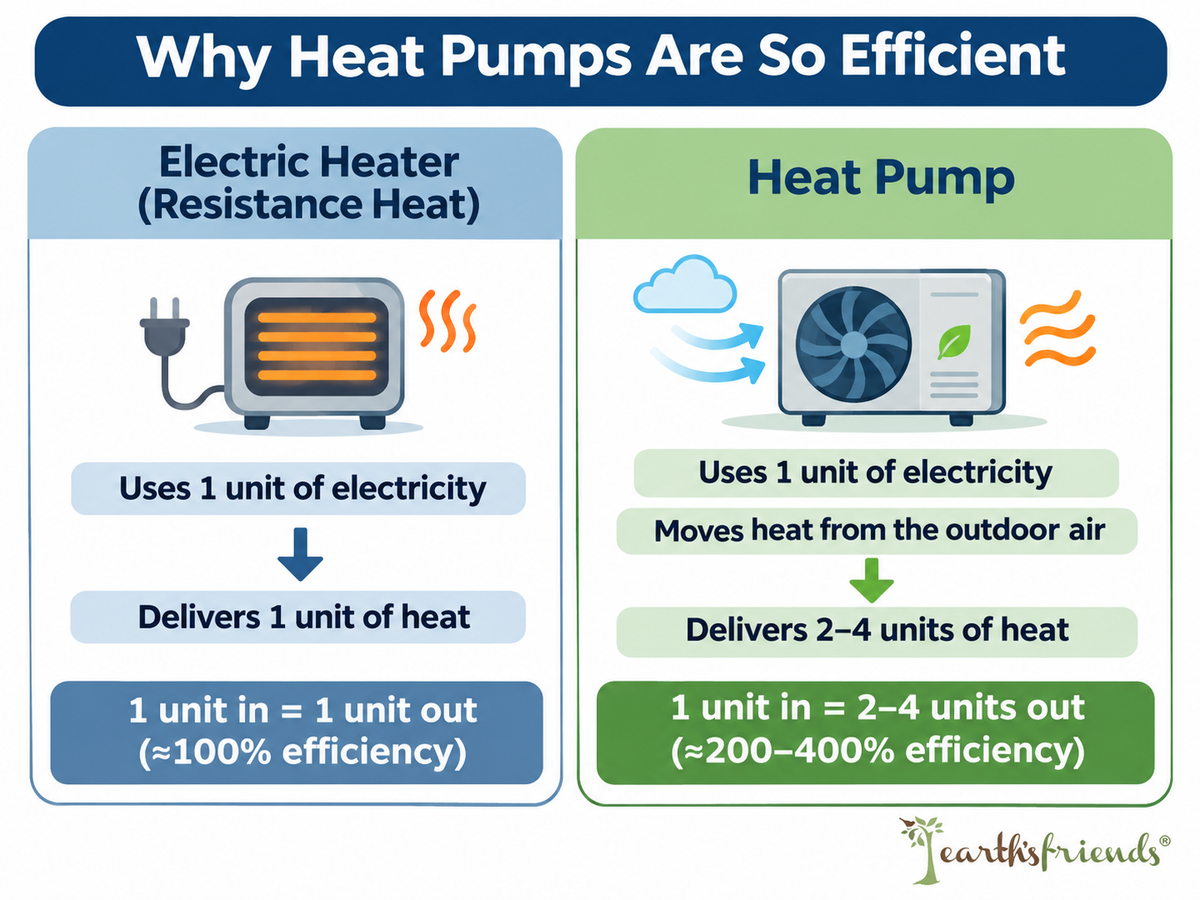
More heat out than electricity in? Yes.
Free energy? No.
The heat pump isn’t creating extra energy. It’s moving energy that was already outside.
And if this sounds familiar, you probably own a smaller version already. Your refrigerator collects heat from its cold interior and releases it into your kitchen. That’s why the coils underneath or behind a refrigerator can feel warm.
A home heat pump uses the same basic principle, only on a much larger scale.
The Real Trick: Making Something Colder Than Winter
To pull heat out of freezing air, a heat pump needs something even colder.
Enter the refrigerant.
Refrigerant is a special fluid that absorbs and releases heat as it changes between liquid and gas.
Its boiling temperature changes with pressure. Inside a heat pump, carefully controlled pressures allow the refrigerant to evaporate at temperatures below the outdoor air and condense at temperatures warm enough to heat your house.
On a 20°F day, for example, the refrigerant in the outdoor coil can be colder than the surrounding air.
Heat naturally moves from the warmer outdoor air into the colder refrigerant.
Picture a dry sponge sitting on a damp countertop. The sponge absorbs water even though the surface doesn’t look particularly wet.
The refrigerant does something similar with heat. Once it absorbs that heat outdoors, the system uses a compressor to raise its temperature so it can release the energy indoors.
And it all happens through four familiar processes:
- Evaporation absorbs heat. It’s why sweat cools your skin.
- Compression raises temperature. It’s why a bicycle pump can get warm when you use it.
- Condensation releases heat. It’s why steam transfers so much heat when it condenses.
- Expansion lowers temperature. Reducing refrigerant pressure prepares it to absorb heat again.
Put these processes together, and you have a heat pump.
How Does a Heat Pump Work in Winter? Four Steps
A heat pump runs a continuous cycle that collects heat outside, concentrates it, and releases it indoors.
The refrigerant moves through a sealed circuit between the outdoor and indoor units, repeatedly changing pressure, temperature, and physical state.
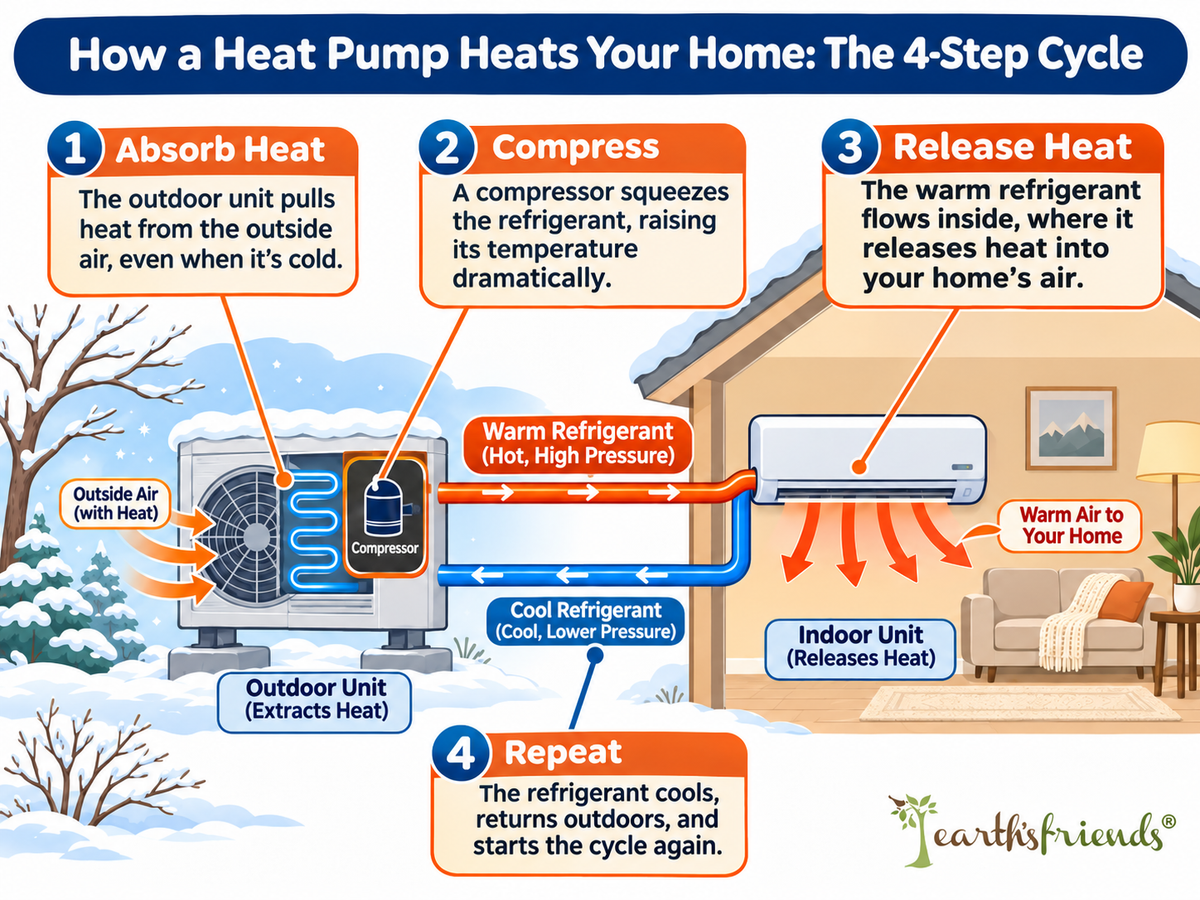
Here’s one trip around the loop.
1. The Outdoor Coil Collects Heat
Cold, low-pressure refrigerant enters the outdoor coil. Even though the outdoor air feels freezing, it’s warmer than the refrigerant.
A fan draws that air across the coil, allowing heat to flow into the refrigerant. As the refrigerant absorbs energy, it boils and turns into a gas.
And here’s a fun detail: The air leaving the outdoor unit can actually be colder than the air entering it. That temperature difference shows the system has extracted heat.
2. The Compressor Turns Up the Heat
Next, the refrigerant gas travels into the compressor. The compressor raises the gas pressure, causing its temperature to climb dramatically.
Think about pumping up a bicycle tire. After several vigorous strokes, the pump barrel may feel noticeably warm.
The heat pump uses the same basic principle.
Now the refrigerant is much hotter than the air inside your house. And that sets up the next step.
3. The Indoor Coil Releases the Heat
The hot, high-pressure refrigerant flows through the indoor coil. Because the refrigerant is hotter than your indoor air, heat naturally transfers from the refrigerant into your home.
In a ducted system, a blower moves air across the coil and distributes the warmth through your vents. As the refrigerant gives up its heat, it condenses back into a liquid. The warmth collected outdoors has now reached your living room.
4. The Expansion Valve Resets Everything
Before the refrigerant can absorb more outdoor heat, it needs to cool again. It passes through an expansion device that sharply reduces its pressure.
That pressure drop lowers the refrigerant’s temperature, producing a cold mixture ready to return to the outdoor coil.
Then the cycle begins again.
Collect heat. Compress. Release heat. Expand. Repeat.
The compressor, fans, and controls use electricity to keep the process running. The refrigerant continually circulates through the system rather than being consumed like fuel.
See How a Heat Pump Works in Action
Still trying to picture how a machine can pull heat from freezing air?
You’re not alone. It’s one of those things that makes a lot more sense once you can actually see what’s happening.
This video helps bring the science to life, so you can connect all those moving parts and understand how a heat pump keeps your home warm without burning fuel.
How Does the Same Heat Pump Cool Your House in Summer?
Here’s where the engineering gets even more interesting.
A heat pump can reverse the process and move heat out of your home instead of bringing it in.
One important component, called the reversing valve, changes the refrigerant’s route so the indoor and outdoor coils switch jobs.
In winter:
- The outdoor coil absorbs heat.
- The indoor coil releases heat.
In summer:
- The indoor coil absorbs heat from your house.
- The outdoor coil releases that heat outside.
That’s essentially what a conventional air conditioner does.
A heat pump is like an air conditioner with a reverse gear.
In cooling mode, it also removes moisture from indoor air as water condenses on the cold indoor coil.
So the same system can keep your home warm during winter and cool during summer.
One machine. Two seasons.
Air-Source vs. Geothermal Heat Pumps: What’s the Difference?
Not every heat pump collects heat from the same place.
The two main residential types are air-source and geothermal (also called ground-source) heat pumps.
They use similar refrigeration principles, but their outdoor heat sources are different.
Air-Source Heat Pumps
Air-source heat pumps collect heat from the outdoor air. They’re common in residential homes and can be installed with existing ductwork or as ductless mini-splits.
The main challenge is that outdoor temperatures change dramatically throughout the year. When the air gets colder, the system generally has to work harder to provide the same amount of indoor heating.
Geothermal Heat Pumps
Geothermal systems exchange heat with the ground through buried piping. A few feet below the surface, and particularly below the frost line, ground temperatures are much steadier than outdoor air temperatures.
That creates a useful advantage.
In winter, the ground may be considerably warmer than the air above it. In summer, it may be much cooler. The heat pump therefore works with a more consistent heat source and heat sink.
The trade-off? Installing buried ground loops can require substantial excavation or drilling.
Air-Source vs. Geothermal: Quick Comparison
| Feature | Air-source | Geothermal |
|---|---|---|
| Heat source | Outdoor air | Ground or groundwater |
| Winter source temperature | Changes with weather | Relatively stable |
| Cold-weather efficiency | Usually decreases as temperatures fall | Less affected by outdoor temperature |
| Installation | Usually simpler | Requires buried loops or wells |
| Upfront cost | Generally lower | Generally higher |
| Heating and cooling | Yes | Yes |
The Department of Energy’s heat pump guide explains how both systems transfer heat rather than generating it directly.
The bottom line: Geothermal systems have a more stable heat source, while air-source systems are generally easier and less expensive to install.
Neither is automatically the best choice for every home.
Heat Pump vs. Furnace: Why Does the Warmth Feel Different?
If you’re used to a furnace blasting hot air like it’s trying to roast a Thanksgiving turkey, a heat pump might seem a little underwhelming at first.
That doesn’t mean something is wrong. A furnace typically delivers hotter air in shorter bursts, while many heat pumps provide gentler warmth over longer periods.
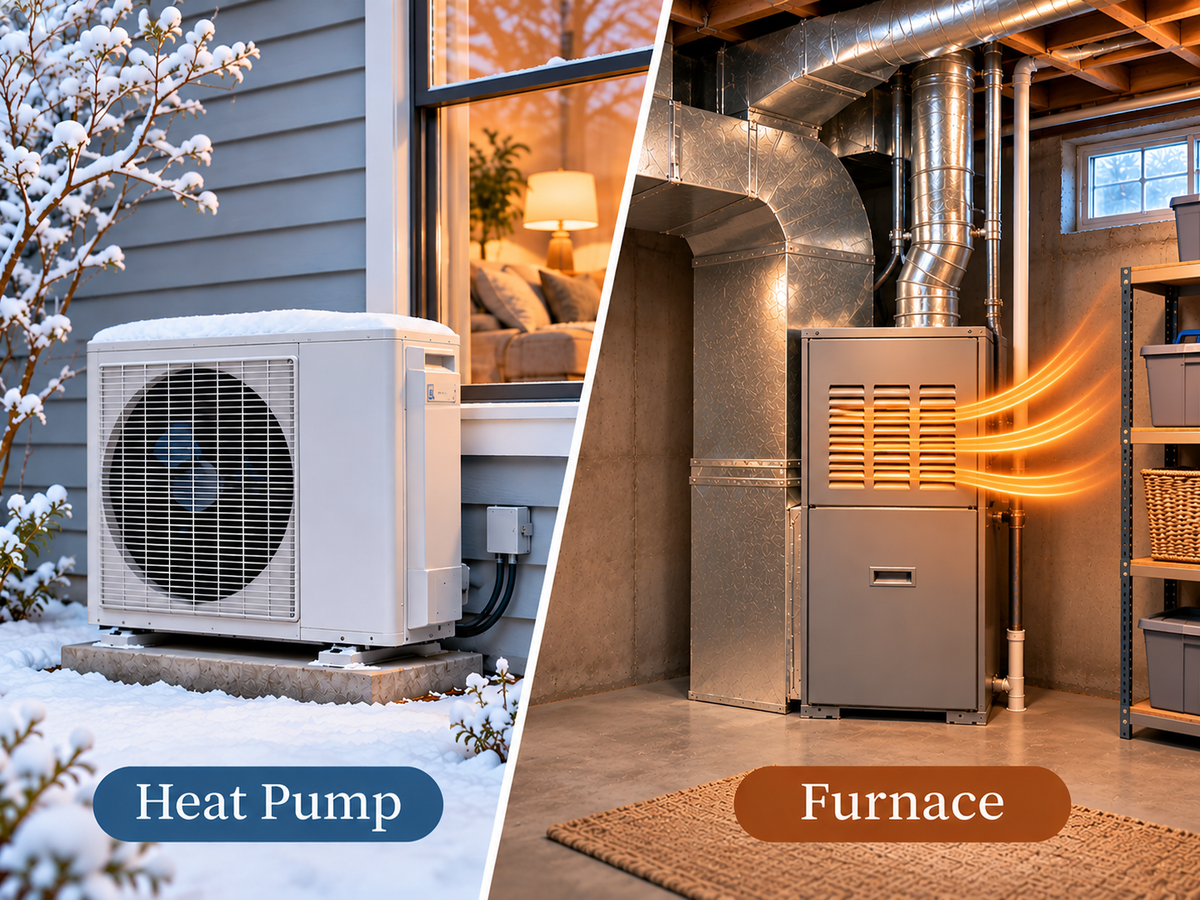
Think of a furnace like a campfire: strong, intense heat.
A variable-speed heat pump is more like steady sunshine on a mild afternoon.
Both can warm you up. They just feel different.
| Feature | Furnace | Heat Pump |
|---|---|---|
| How it heats | Burns fuel or uses resistance elements | Moves existing heat |
| Air from vents | Usually hotter | Often moderately warm |
| Operating pattern | Frequently shorter heating cycles | Often longer, steadier cycles |
| Summer cooling | Needs separate cooling equipment | Reverses to provide cooling |
| Efficiency | Limited by fuel or electrical input | Can deliver several units of heat per unit of electricity |
Here’s the part that surprises many homeowners.
Air that feels lukewarm against your hand may still be warm enough to heat your house comfortably.
Your skin is already warm, so air coming from a heat pump may not produce that familiar blast of furnace heat.
But if your thermostat reaches its set temperature and your home stays comfortable, the system is doing its job.
And while heat pumps are highly efficient, that doesn’t automatically guarantee lower utility bills. Operating costs depend on electricity prices, fuel prices, climate, equipment performance, and your home’s heating needs.
Do Heat Pumps Really Work Below Freezing?
Yes! Modern heat pumps can work even when temperatures plunge well below freezing. But they do have their limits, and that’s where the internet debates begin.
Older heat pumps often struggled in bitter cold, which gave them a reputation for being useless in winter. Today’s cold-climate models are a different story. Some can keep heating at temperatures as low as -15°F or even colder.
So what’s the catch?
As temperatures drop, the heat pump has to work harder to collect warmth from the outdoor air and move it inside. Meanwhile, your house is losing heat faster through its windows, walls, and roof.
In other words, your heat pump is working harder right when your house needs it most.
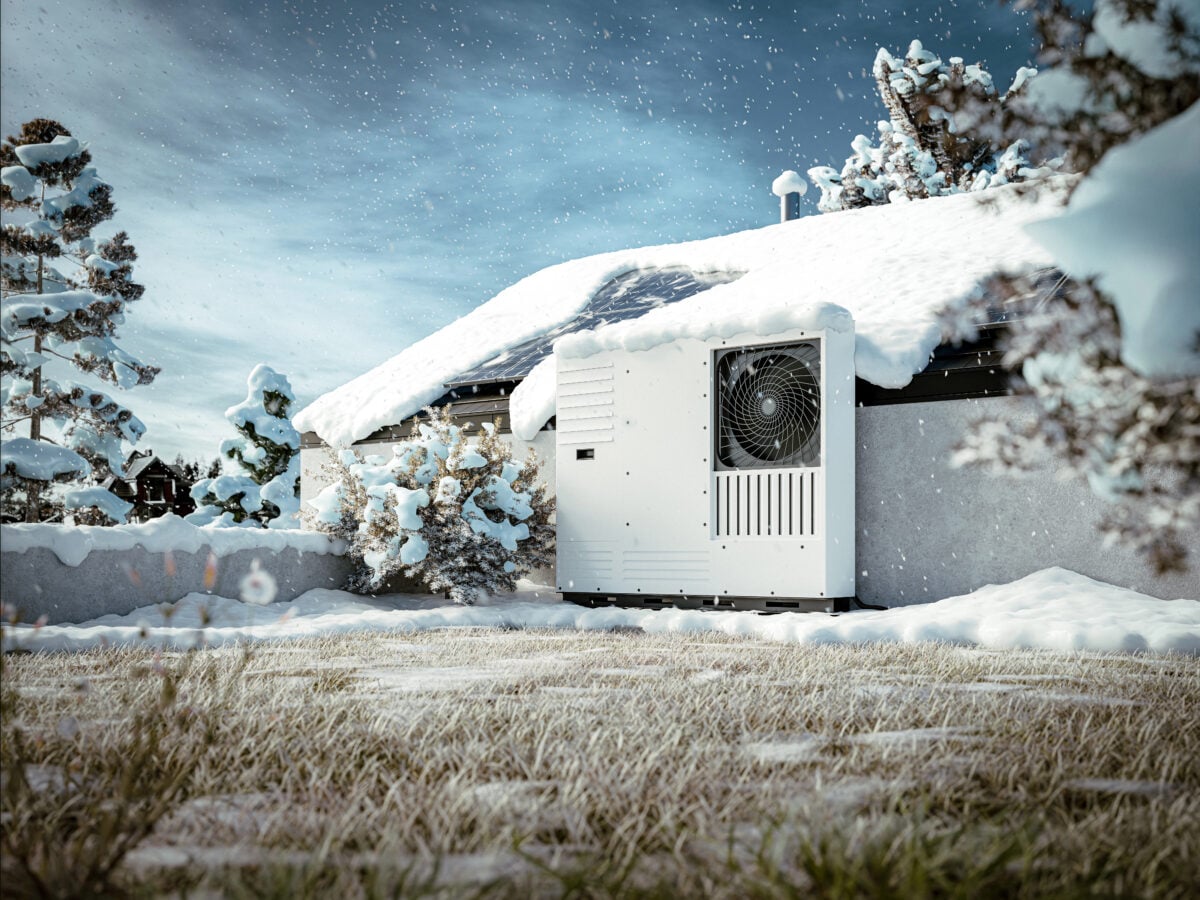
Think of it like riding a bicycle uphill. The bike doesn’t suddenly stop working when the hill gets steeper. You just have to pedal harder to keep moving.
Modern cold-climate heat pumps use technology like variable-speed compressors to tackle those tougher conditions. But not every model performs the same way.
In fact, the ENERGY STAR cold-climate criteria require qualifying models to meet specific heating performance standards at 5°F.
The takeaway? Freezing temperatures don’t automatically stop a heat pump. What matters is choosing a system designed for your climate and properly sized for your home.
Your home’s insulation and air leaks matter, too. Even an efficient heat pump has a harder job in a drafty house, which is why eco-friendly home heating strategies often start with keeping warmth from escaping.
Why Is My Heat Pump Steaming in Winter?
Picture this: It’s a freezing morning, and your outdoor heat pump suddenly starts producing a cloud of white vapor.
It looks dramatic. But chances are, you’re watching a normal defrost cycle.
When outdoor conditions are cold and damp, moisture can freeze on the outdoor coil. Too much frost restricts airflow and makes it harder for the system to collect heat.
To fix this, the heat pump briefly reverses its operation, sending heat to the outdoor coil to melt the frost. The resulting water and vapor can create what looks like a cloud of steam.
A brief defrost cycle is normal. A thick buildup of ice that never clears is not.
Keep snow and debris away from the outdoor unit, and contact an HVAC technician if heavy icing persists.
Why Do Some Heat Pumps Need Backup Heat?
Even the hardest-working heat pump sometimes needs a little help.
Every heat pump has a limit to how much heat it can deliver, and on especially cold days, your house might need more warmth than the system can provide on its own.
HVAC professionals call the temperature where those two things meet the balance point.
Above that temperature, the heat pump can handle the job by itself. Below it, backup heat may need to pitch in.
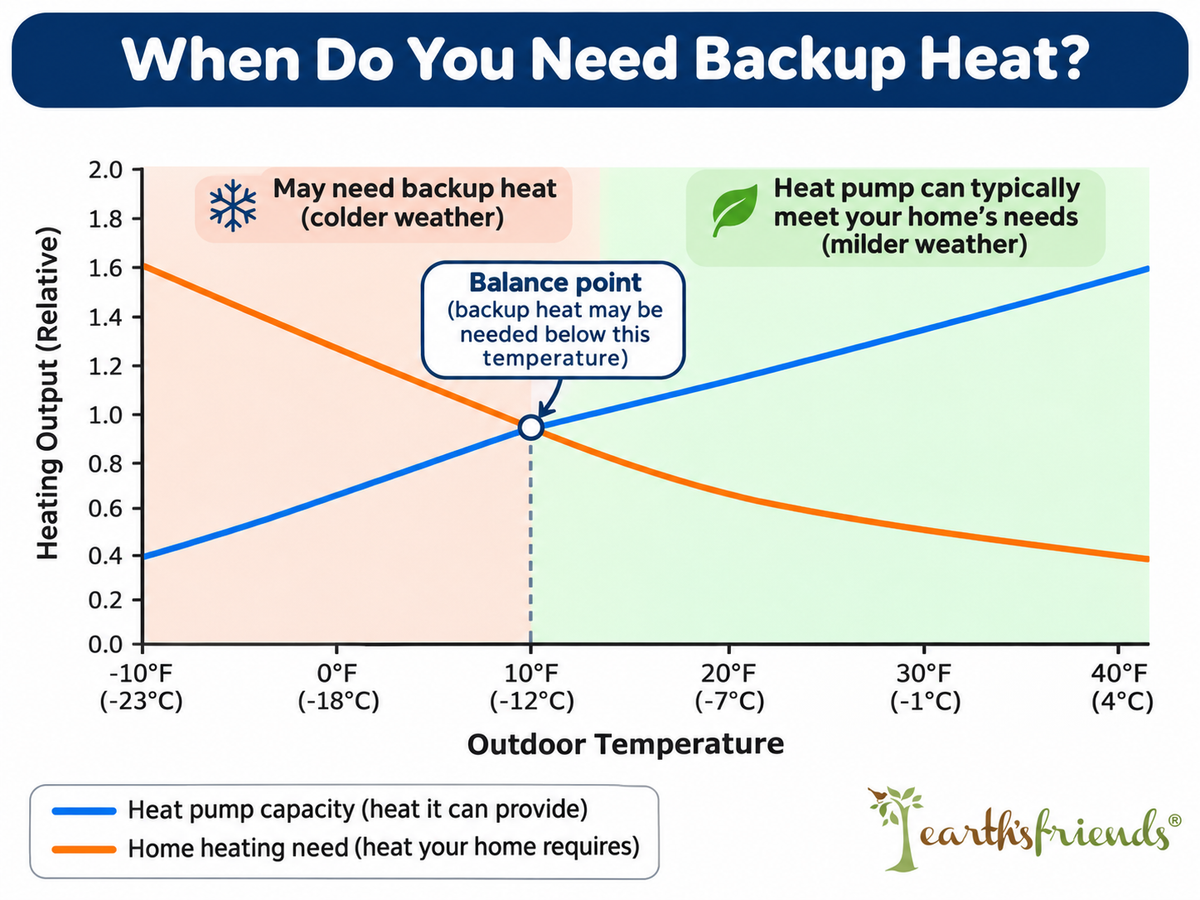
Think of it like having a second driver ready to take over when the road gets tough.
There are two common types of backup heating:
- Electric auxiliary heat: Heating coils inside the system provide extra warmth when needed. They’re reliable, but generally cost more to operate than the heat pump itself.
- Dual-fuel heating: A heat pump works alongside a gas or propane furnace. The heat pump handles milder weather, while the furnace can take over when temperatures drop far enough.
Some systems also use auxiliary heat briefly during defrost cycles to keep chilly air from blowing through your vents.
And one thing worth knowing: “Auxiliary heat” and “emergency heat” aren’t quite the same thing. Auxiliary heat usually switches on automatically when the system needs help. Emergency heat typically bypasses the heat pump and relies on the backup system alone.
So don’t flip your thermostat to emergency heat just because it’s freezing outside.
The bottom line? Backup heat doesn’t mean your heat pump failed. It just means it called for reinforcements.
Four Heat Pump Myths Worth Retiring
Heat pumps have been around long enough to collect a surprising amount of folklore.
Let’s clear up four of the biggest misconceptions.
Myth 1: Heat Pumps Stop Working Below 32°F
Fact: Outdoor air doesn’t suddenly lose its thermal energy when water freezes.
Many modern systems continue extracting heat at temperatures well below freezing, although efficiency and heating capacity vary by model.
Myth 2: Heat Pumps Just Blow Cold Air
Fact: Heat pump supply air is often cooler than furnace supply air, but it can still be warmer than the room and provide comfortable heating.
Judge the system by whether it maintains your thermostat setting, not whether your hand feels a blast of hot air.
Myth 3: A Heat Pump Is Just an Expensive Electric Heater
Fact: Electric resistance heaters convert electricity directly into heat. Heat pumps use electricity to transfer heat from another location.
That’s why a heat pump can deliver substantially more heat than the electricity it consumes.
Myth 4: Turning the Thermostat Way Down Always Saves Money
Fact: Large temperature setbacks can sometimes trigger less-efficient auxiliary heat when the thermostat tries to warm the house quickly.
For many heat pumps, maintaining a relatively steady temperature or using a compatible smart thermostat with gradual recovery can work better.
The ideal settings depend on the system, climate, and backup heat configuration.
Is a Heat Pump Right for Your Home?
A heat pump can be an excellent heating and cooling solution, but buying the right equipment matters just as much as understanding the science.
Before choosing one, consider your winter temperatures, your home’s insulation and air sealing, your existing ductwork or heating system, and your local electricity and fuel rates.
A qualified HVAC contractor should calculate your home’s heating and cooling loads rather than selecting equipment based only on square footage.
For cold climates, ask about the model’s heating capacity at low outdoor temperatures, whether it carries an ENERGY STAR Cold Climate designation, and how backup heating will operate if needed.
The best heat pump isn’t necessarily the biggest or most expensive. It’s the one that can meet your home’s actual needs efficiently and comfortably.
Keep Exploring: Clever Ways We Use Energy
Heat pumps aren’t the only technology making smarter use of energy. If you love discovering how everyday systems work—or finding ways to make greener choices—these articles are worth exploring:
- 5 Important and Interesting Facts About Solar Energy — Discover some of the fascinating facts behind the energy we get from the sun.
- How Do Hybrid Cars Work? Everything You Need to Know — Learn how gasoline engines and electric motors work together to use less fuel.
- How Do Electric Cars Work? What Really Makes Them Move — Find out what happens when you press the accelerator in a car without a traditional gasoline engine.
- How Does Regenerative Braking Work in Hybrid & Electric Cars? — Discover how electric and hybrid cars capture energy that would normally be wasted when braking and turn it back into usable electricity.
Heat Pump FAQs: Maintenance, Costs, and Everyday Questions
So now you know how a heat pump manages to pull warmth from freezing air. Pretty clever, right?
But understanding the science is one thing. Living with a heat pump is another.
How often does it need maintenance? Should you worry when it runs all day? And what happens when your dog sheds enough fur to make a second dog?
Let’s tackle some of the practical questions homeowners ask most.
How Often Does a Heat Pump Need Maintenance?
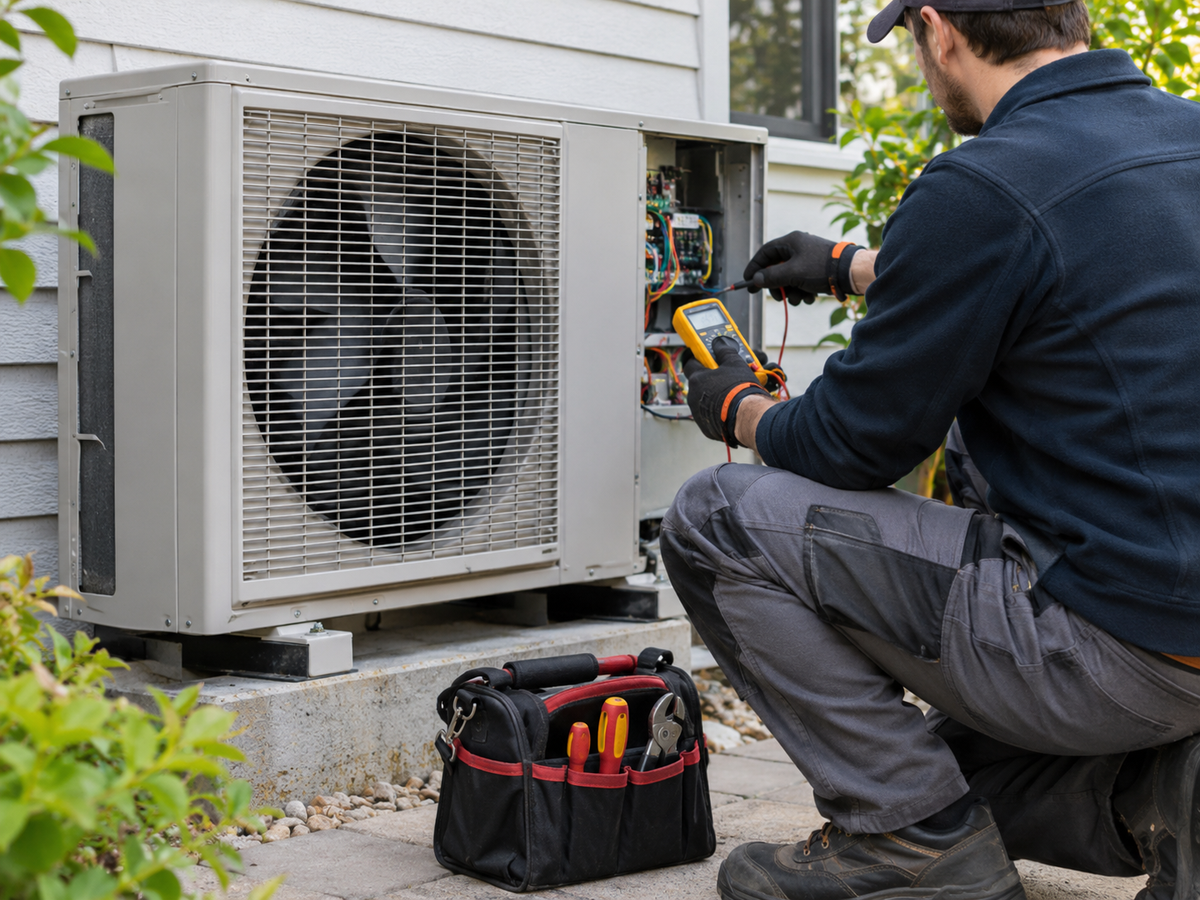
A little regular attention goes a long way. Check your air filters monthly, clean or replace them as needed, and schedule professional maintenance at least once a year.
A technician can check the coils, refrigerant system, electrical components, and airflow before small problems turn into expensive repairs.
According to ENERGY STAR’s maintenance checklist, regular servicing helps heating and cooling equipment operate efficiently and avoid unnecessary wear.
Think of it like changing the oil in your car. A little maintenance now can save a major headache later.
How Often Should You Change a Heat Pump Filter?
Check your filter every month, especially during heavy heating and cooling seasons. Many disposable filters need replacing every one to three months, while reusable filters should be cleaned according to the manufacturer’s directions.
And if you have pets? You may need to clean or change filters more often.
Pet hair, dust, and dander can restrict airflow, making the system work harder to keep your home comfortable.
A clean filter is one of the easiest ways to help your heat pump perform its best.
Heat Pump Maintenance Checklist
☐ Monthly: Check the air filter and clean or replace it when needed.
☐ Seasonally: Clear leaves, snow, and debris around the outdoor unit.
☐ Regularly: Check for blocked vents, unusual sounds, or persistent ice.
☐ Annually: Schedule a professional heat pump inspection.
Can You Leave a Heat Pump Running All Day?
Yes! Many heat pumps are designed to run for long periods, especially during cold weather.
Unlike a traditional furnace that blasts hot air and shuts off, a variable-speed heat pump can deliver a gentler, steadier stream of warmth.
That longer running time isn’t necessarily a sign of trouble.
However, if your home never reaches the thermostat setting or your energy bills suddenly spike, it’s worth having the system checked.
Should You Turn Your Heat Pump Down at Night?
Not necessarily. Unlike many furnaces, heat pumps often work best with a relatively steady thermostat setting.
A big temperature setback overnight can make the system work harder in the morning. In systems with electric auxiliary heat, that sudden demand may even trigger the more expensive backup heating elements.
Instead, try maintaining a comfortable temperature or making smaller adjustments.
If you like a cooler bedroom at night, ask your installer about thermostat settings that allow gradual temperature recovery without unnecessary backup heat.
Should You Cover Your Outdoor Heat Pump in Winter?
No. Your outdoor heat pump needs airflow to do its job, even when it’s snowing.
Wrapping it in a cover or tarp while it’s operating can block airflow and interfere with heating.
Instead, gently clear away snow, fallen leaves, and debris around the unit. Make sure water from defrost cycles can drain away instead of forming a thick layer of ice.
And resist the temptation to attack frozen coils with a shovel or ice scraper. You could damage the equipment.
A little snow is normal. An outdoor unit buried in a snowbank isn’t.
What Are the Signs Your Heat Pump Needs Repair?
Heat pumps make some unusual noises and occasionally produce clouds of vapor during defrosting. Those things can be completely normal.
But a few warning signs deserve attention:
- Your home won’t reach the thermostat temperature.
- The system makes new grinding, banging, or unusually loud noises.
- Thick ice stays on the outdoor coil and doesn’t clear.
- Airflow becomes noticeably weaker.
- Your electricity bill suddenly increases without an obvious reason.
- The system repeatedly shuts off or displays error codes.
If something sounds, smells, or behaves differently than usual, don’t ignore it. A qualified HVAC technician can determine whether it’s normal operation or a problem that needs fixing.
Can a Heat Pump Work With Old-Fashioned Radiators?
Yes! Even those chunky, old-school cast-iron radiators may work with a heat pump. But there’s a catch.
Traditional radiators were often designed for much hotter water than heat pumps typically provide. An air-to-water heat pump can circulate warm water through radiators, but some older systems may need larger radiators or other upgrades to keep rooms comfortable.
That doesn’t mean you have to rip everything out. A qualified installer can check whether your existing radiators are up to the job.
Will a Heat Pump Lower Your Winter Electric Bill?
It can, but there’s no one-size-fits-all answer.
Because heat pumps move heat instead of generating it directly, they often use much less electricity than traditional electric resistance heaters.
But whether you’ll save money compared with a gas furnace depends on your local electricity and gas prices, winter temperatures, insulation, and the efficiency of both systems.
For some households, the savings can be substantial. For others, the difference may be smaller. Before switching systems, ask a qualified installer to compare estimated annual heating costs using your local utility rates.
Heating isn’t the only place to reduce household electricity use. Even choosing more energy-efficient lighting can help trim your overall power bill.
How Long Does a Heat Pump Typically Last?
Many air-source heat pumps last around 10 to 20 years, although actual lifespan depends on the equipment, climate, installation quality, usage, and maintenance.
A system that’s properly sized, kept clean, and serviced regularly has a better chance of staying reliable.
And because heat pumps often handle both heating and cooling, they may work throughout the year rather than just one season.
The best way to protect that investment? Keep up with filter changes, maintain clear airflow, and address small problems before they become big ones.
Still Have Questions About Heat Pumps?
Wondering about strange noises, winter performance, or those surprising energy bills? Drop your questions in the comments below! We’d love to hear what’s on your mind and help take the mystery out of heat pumps.
The Bottom Line
A heat pump is a heat mover, not a heat maker.
It collects warmth from outdoor air or the ground, uses a compressor to raise the refrigerant’s temperature, and delivers that heat into your home. In summer, it reverses the process to keep things cool.
It’s clever physics, but it’s not a perfect solution for every house. Your climate, insulation, and energy costs all matter. And if you’re looking to make your home more efficient, tackling everyday energy wasters is another great place to start.
Curious about other technologies that make smarter use of energy? Discover how solar panels turn sunlight into electricity and why they can be another useful part of a more energy-efficient home.
And the next time you step outside on a freezing morning and wonder how there’s possibly any heat out there, remember:
Your heat pump doesn’t need the air to feel warm. It just needs the refrigerant to be colder.
How’s Your Heat Pump Working Out?
We’re curious: if you have a heat pump, how does it actually perform when winter hits? Does it live up to the hype, or have you run into a few frustrations? Tell us about your experience in the comments.