When you purchase through links on our site, we may earn a commission. Here’s how it works.
You just saw a snake, and your brain immediately said: danger.
Table of Contents
That reaction is normal. But in many cases, the snake in your yard is far more harmless than it looks.
Most snakes people come across aren’t dangerous at all. They just have the unfortunate ability to trigger instant panic.
Before you grab a shovel or run inside, take a breath and take a second look.
Want our human-written content to rank above AI-generated garbage? Help us out by clicking this button!
This quick guide breaks down the most common non-poisonous snakes people mistake for dangerous ones, how to recognize them fast, and why they may actually be one of the most helpful animals in your yard.
Snake Basics: Myth vs. Reality
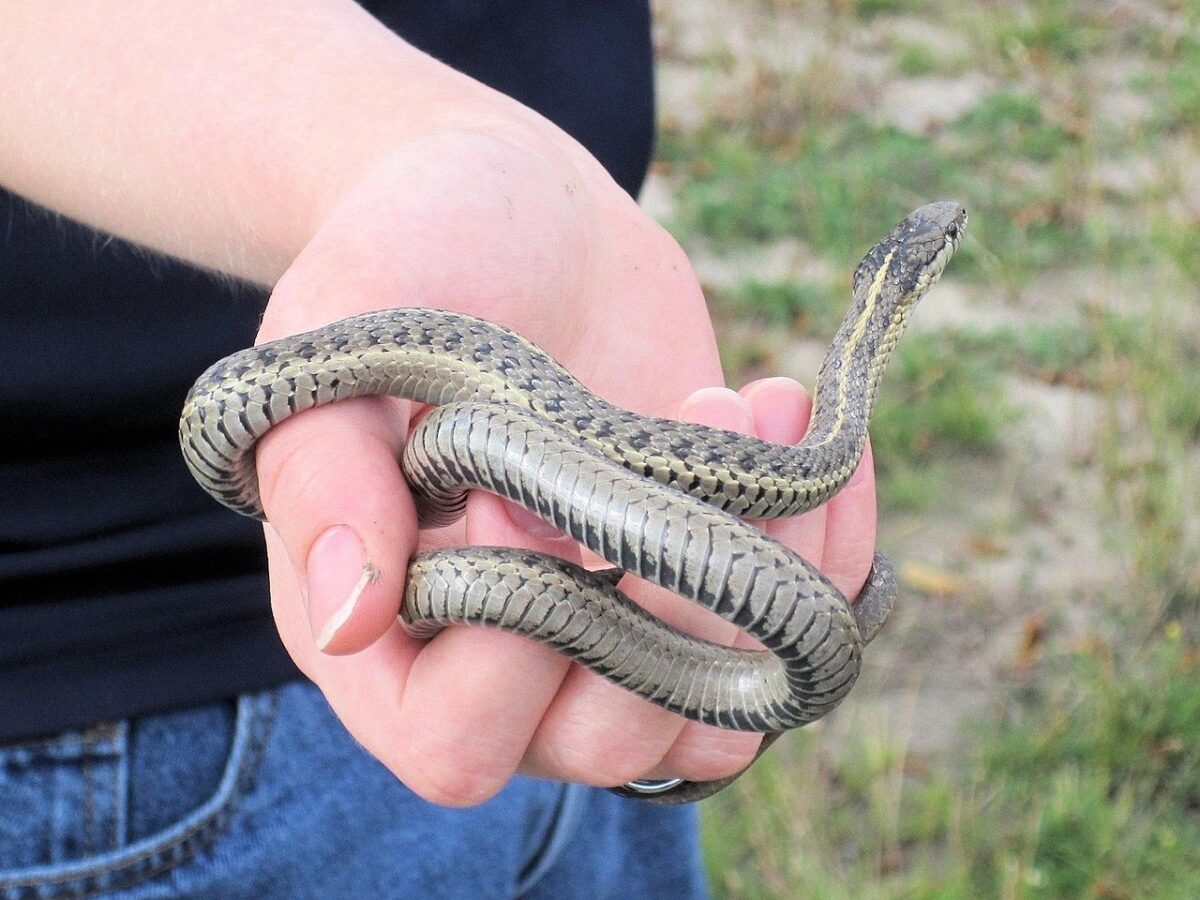
For many people, even hearing the word snake is enough to trigger ophidiophobia, the fear of snakes. But fear doesn’t always match reality.
Of the 3,900+ snake species identified worldwide, most are harmless to humans. And understanding them matters for more than peace of mind: these often-feared reptiles play an essential role in maintaining healthy ecosystems.
A snake is a legless, carnivorous reptile of the suborder Serpentes. While they are often confused with legless lizards, snakes are unique because they lack eyelids and external ears.
While many reptiles lay eggs (oviparous), several common species give birth to live young (ovoviviparous), including Garter snakes, Vipers, and Boas. Snakes are incredibly resilient, having survived the mass extinction of the dinosaurs; they have inhabited Earth since the early Cretaceous period, approximately 100 million years ago.
Venomous vs. Non-Venomous: Knowing the Difference
A common linguistic error is calling a snake “poisonous.” Technically, poison is something you ingest or touch (like a toad), whereas venom is injected via a bite.
- The Stats: Only about 20% of snake species worldwide are venomous. In the United States, that number is even lower—roughly 10% (about 20 out of 200+ species).
- Behavior: Most snakes, venomous or not, are shy. They use venom primarily for hunting. A bite to a human is almost always a last-resort defensive strike.
- The Risk: While non-venomous snakes lack toxins, their bites can still cause lacerations and potential infections. However, they pose no systemic threat to human life.
Saw a Snake? Start Here (Quick ID)
If you only have a few seconds, look for this:
- Bright green + thin like a vine → harmless
- Red, black, yellow bands → probably harmless (kingsnake)
- Solid black + fast → harmless racer
- Near water + thick body → likely nonvenomous watersnake (often mistaken)
Most snakes you’ll see around homes fall into these categories.
10 Common Harmless Snakes (And Why People Panic Anyway)
Most people don’t panic because they know a snake is dangerous; they panic because they’re not sure. And when a snake appears in the yard, garden, or driveway, that split-second uncertainty is enough to send the mind straight to worst-case scenarios.
The truth is, many of the snakes people encounter most often are harmless. They just happen to be fast, bold-looking, or easy to confuse with venomous species.
Here are 10 common harmless snakes people panic over, and how to recognize them more quickly.
1. Brown Watersnake
The brown watersnake is one of the most commonly misunderstood snakes people spot near ponds, ditches, creeks, and backyard water features. Because it has a heavy body and stays close to the water, it often triggers instant panic in people who assume they are looking at a cottonmouth.
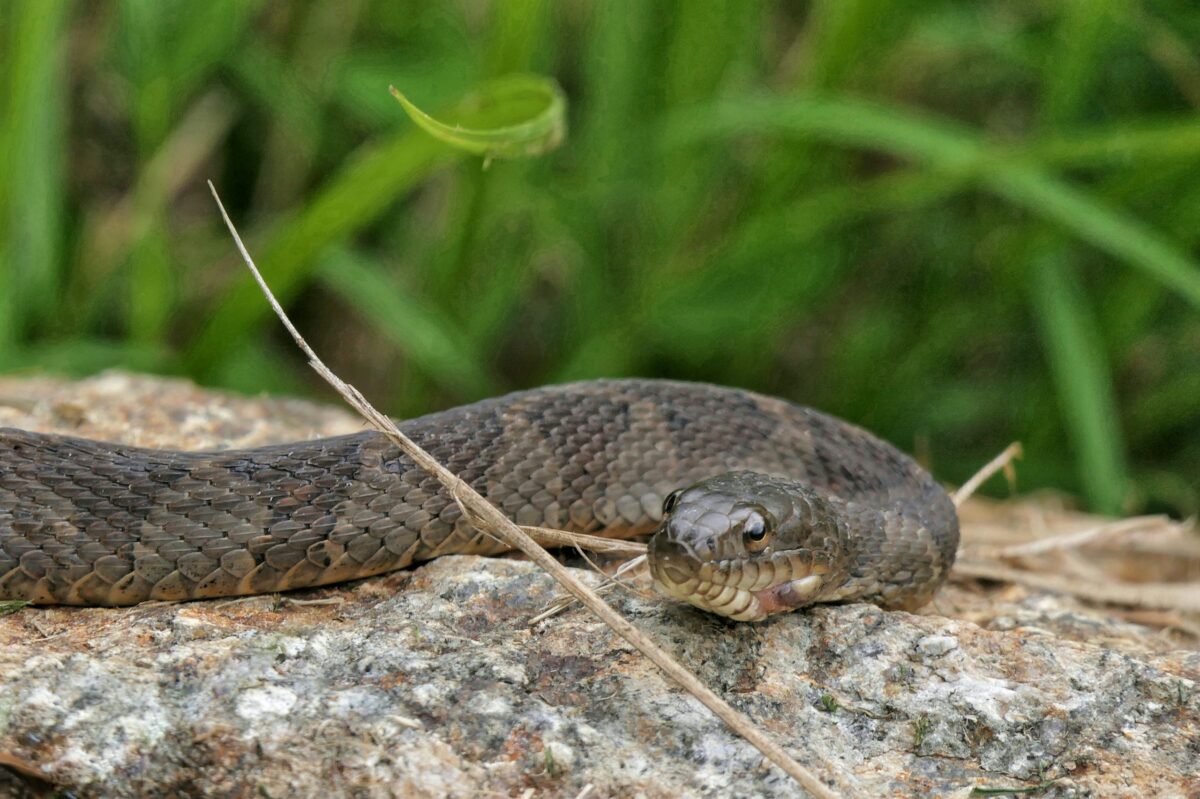
- Quick ID: Brown, tan, or grayish body with darker blotches and a heavy build.
- Length: Typically 2.5 to 4 feet.
- Speed: Moderate; more likely to swim away than move quickly on land.
- Other names: Brown watersnake, southern watersnake, false moccasin, water rattler, great water snake.
- Scientific name: Nerodia taxispilota.
What makes this snake so easy to misidentify is its defensive behavior. If cornered, it may flatten its body or strike, which can make it seem much more dangerous than it really is. In reality, the brown watersnake is nonvenomous and mainly feeds on fish and amphibians. Like most snakes, it would rather escape than confront a person.
2. Eastern Indigo Snake
The Eastern indigo snake is the kind of snake that makes people freeze on sight. It is large, dark, and powerful-looking, which can be intimidating when one appears crossing a yard, roadside, or open stretch of ground in the Southeast.
See this behemoth in action. This Eastern indigo snake video gives you a closer look at one of the largest and most impressive non-poisonous snakes in the United States.
- Quick ID: Glossy blue-black or black body with a thick, powerful build.
- Length: Up to 8 to 9 feet.
- Speed: Moderate; moves steadily rather than quickly.
- Other names: Eastern indigo, indigo snake, blue indigo snake, black snake.
- Scientific name: Drymarchon couperi.
Its size is what causes most of the fear, but that size is misleading. The Eastern indigo is nonvenomous and generally known for being calm and nonaggressive. It is even known to prey on other snakes, including venomous ones, which makes it one of the more beneficial snakes to have in the ecosystem.
3. Scarlet Kingsnake
The scarlet kingsnake is small, colorful, and easy to overreact to at first glance. When people catch sight of its red, black, and yellow or white banding under leaves, bark, or debris, they often assume they have found something dangerous.
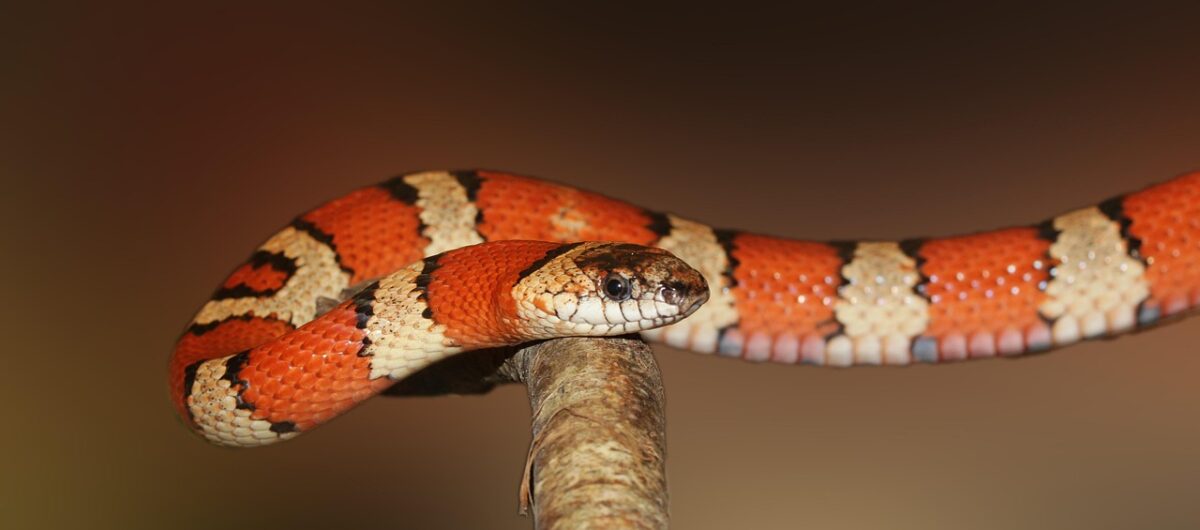
- Quick ID: Small, slender body with bright red, black, and yellow or white bands.
- Length: Usually under 2 feet.
- Speed: Slow to moderate; tends to stay hidden rather than flee quickly.
- Other names: Scarlet kingsnake, scarlet king snake.
- Scientific name: Lampropeltis elapsoides.
The reason people panic is simple: its color pattern resembles that of the coral snake. Most people notice the colors before they notice the details. In reality, the scarlet kingsnake is a harmless, nonvenomous constrictor that prefers to stay out of sight and feed on small prey.
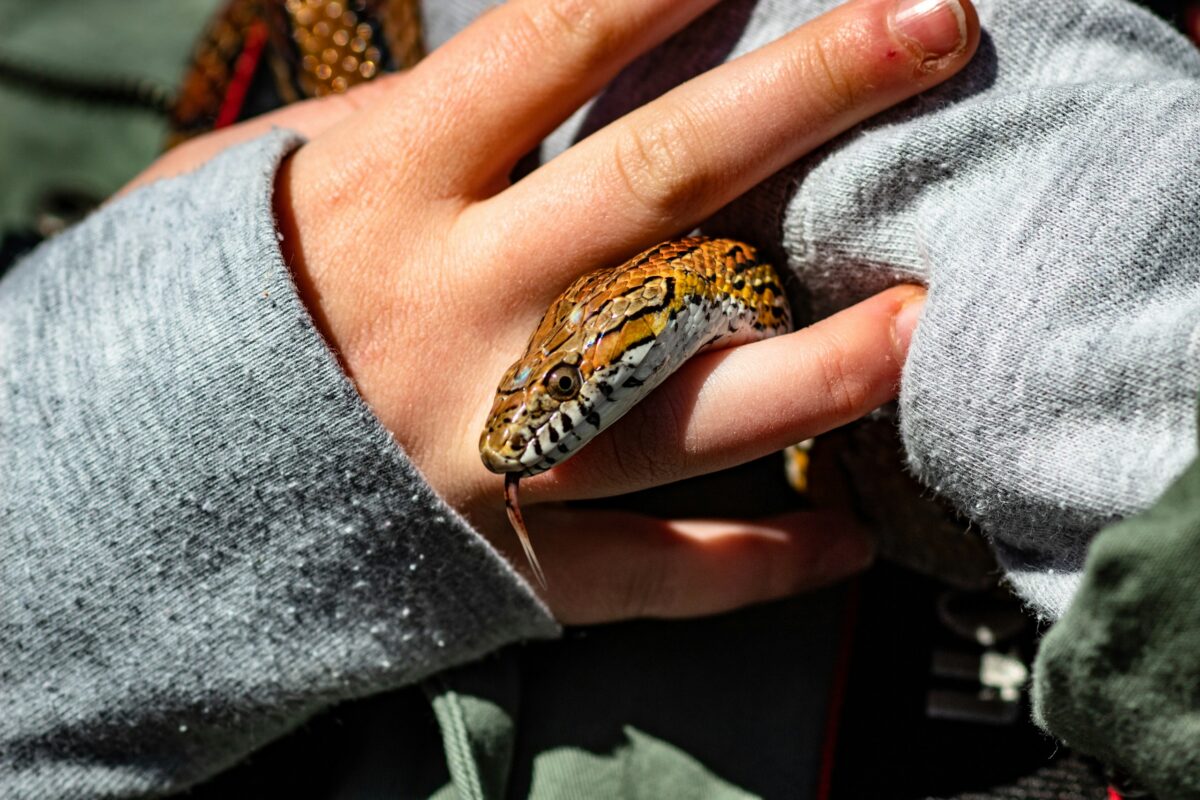
4. Corn Snake
The corn snake is one of the most helpful snakes to have around a home, but it is also one of the most frequently misidentified. People often spot it near sheds, barns, fences, or even climbing along walls, and its bold coloring can make the encounter feel more alarming than it really is.
Want to see one of the most commonly misidentified snakes up close? Watch this corn snake in action and see why it’s often mistaken for something more dangerous.
- Quick ID: Orange, reddish, or rust-colored body with dark-outlined blotches and a checkerboard belly.
- Length: Typically 2.5 to 5 feet.
- Speed: Moderate; smooth-moving and capable of climbing quickly.
- Other names: Corn snake, red rat snake.
- Scientific name: Pantherophis guttatus.
The reason people panic is that its blotchy pattern is often mistaken for a copperhead. It also shows up in unexpected places because it is such a strong climber. In reality, the corn snake is nonvenomous and highly beneficial because it helps control rats and mice around homes and outbuildings.
5. Black Racer
The black racer is one of the fastest snakes people are likely to see near a home, and that speed is exactly what makes it so unnerving. When one darts across a driveway, lawn, or roadside, the movement alone can make it seem aggressive.
Watch the black racer in action and see just how fast this sleek snake can move when it wants to disappear.
- Quick ID: Solid black body with a slender build and fast, alert movement.
- Length: Usually 3 to 5 feet, though some can be longer.
- Speed: Fast; one of the quickest snakes most people will see.
- Other names: Black racer, racer, eastern racer.
- Scientific name: Coluber constrictor.
What confuses people is the way black racers lift their heads and seem to watch what is happening around them. That can feel confrontational, even though they are usually just assessing danger and looking for an escape route. In reality, this snake is nonvenomous and depends on speed and awareness, not venom, to survive.
6. Rough Green Snake
The rough green snake is one of the easiest snakes to miss until it suddenly moves. Its bright green body blends almost perfectly into shrubs, vines, and low tree branches, which is why people are often startled when they realize it was there all along.
See this almost invisible snake in action and get a closer look at how the rough green snake blends so easily into leaves and branches.
- Quick ID: Bright green, very slender, and almost vine-like in appearance.
- Length: Usually 2 to 3 feet.
- Speed: Slow to moderate; relies more on camouflage than speed.
- Other names: Rough green snake, green grass snake, grass snake.
- Scientific name: Opheodrys aestivus.
People tend to panic because it seems to appear out of nowhere in a bush or garden bed. But this snake is about as harmless as they come. The rough green snake is nonvenomous, rarely bites, and mainly feeds on insects and spiders, making it more helpful than threatening.
7. Eastern Hognose Snake
The Eastern hognose snake is famous for putting on one of the most dramatic defensive displays in the snake world. If you see one in sandy soil, wooded edges, or dry upland areas, its behavior can be much more alarming than its actual level of danger.
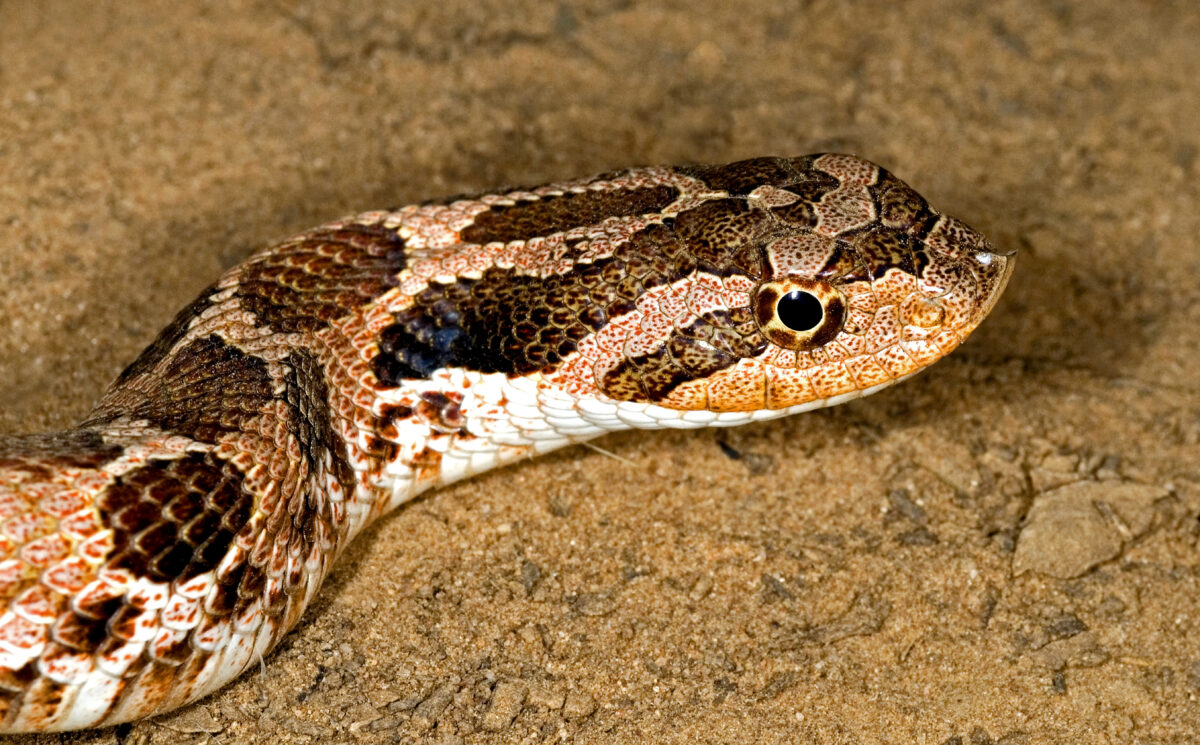
- Quick ID: Thick body, upturned snout, and a neck that can flatten dramatically when threatened.
- Length: Usually 2 to 3 feet.
- Speed: Slow; relies on bluffing rather than escaping quickly.
- Other names: Eastern hognose snake, hognose snake, spreading adder, puff adder, blow snake.
- Scientific name: Heterodon platirhinos.
What makes this snake so memorable is the show it puts on. It may hiss, spread its neck, bluff-strike, and even roll over and play dead if it feels threatened. In reality, the Eastern hognose is nonvenomous and mostly relies on theatrics to scare off predators.
8. Eastern Garter Snake
The Eastern garter snake is one of the most familiar snakes in North America, yet it still startles people all the time. Because it often appears in grass, flower beds, gardens, or near water, it tends to catch people off guard in the exact places they least expect it.
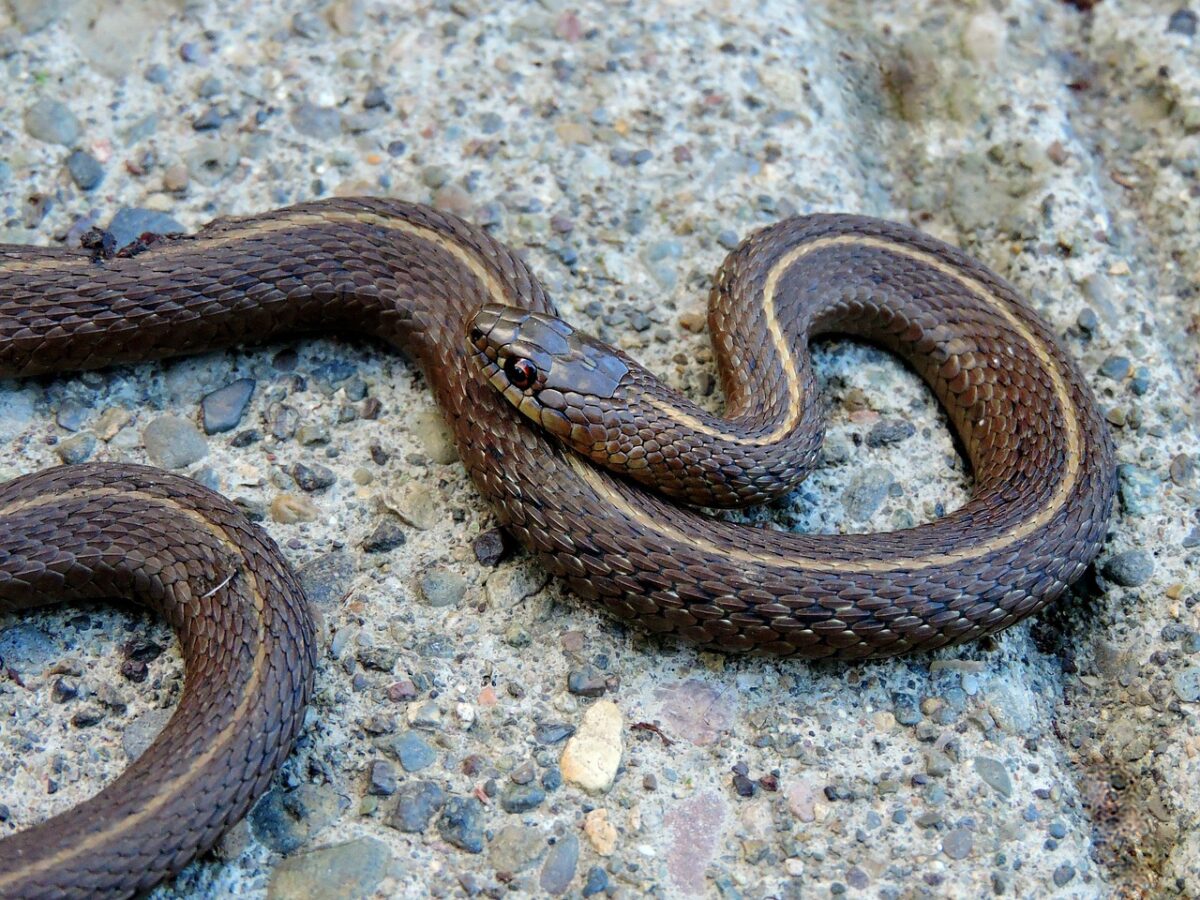
- Quick ID: Dark body with three light stripes running lengthwise and a slender shape.
- Length: Usually 1.5 to 3 feet.
- Speed: Moderate; capable of quick bursts, but not built for sustained speed.
- Other names: Eastern garter snake, garter snake, common garter snake.
- Scientific name: Thamnophis sirtalis.
Because garter snakes are so common, they are also one of the snakes people most often overreact to. A sudden movement in the grass is often all it takes to spark panic. In reality, this snake is harmless, nonvenomous, and helpful for keeping small pest populations in check.
9. Banded Watersnake
The banded watersnake is another species that causes a lot of alarm simply because of where it lives. When people see a dark, thick-bodied snake swimming in a pond or resting near a swampy edge, they often assume the worst.
- Quick ID: Dark body with visible or faint crossbands, a thick build, and a strong connection to water.
- Length: Typically 2 to 4 feet.
- Speed: Moderate; strong and confident in the water.
- Other names: Banded watersnake, southern watersnake, water bandit.
- Scientific name: Nerodia fasciata.
Its body shape, habitat, and swimming behavior all make it easy to confuse with a cottonmouth. That is why so many harmless watersnakes get misidentified. In reality, the banded watersnake is nonvenomous, though it may bite if cornered or handled, and it would much rather be left alone.
10. Dekay’s Brownsnake
Dekay’s brownsnake is small, shy, and easy to overlook until it suddenly turns up in mulch, leaf litter, flower beds, or under a rock in the garden. Because it often appears at close range, it can startle people far more than its size would suggest.
Want to see this tiny backyard snake up close? Watch Dekay’s brownsnake in action and get a better feel for one of the most overlooked harmless snakes around.
- Quick ID: Small, slender body with brown or gray coloring and a light stripe down the back marked by tiny dark spots.
- Length: Usually 4 to 12 inches.
- Speed: Slow; relies on hiding rather than fleeing.
- Other names: Dekay’s brownsnake, DeKay’s brown snake, brown snake.
- Scientific name: Storeria dekayi.
What makes this snake confusing is its size. Many people assume a tiny brown snake must be the juvenile form of a more dangerous species. In reality, Dekay’s brownsnake is harmless and especially useful in gardens because it feeds on slugs, worms, and other soft-bodied pests.
3 Snakes People Commonly Mistake for Dangerous Species
Most snake-related panic doesn’t come from actual danger; it comes from confusion. Many harmless snakes look similar to venomous ones at a quick glance, especially when you only have a second to react. Here are the most common mix-ups and how to tell the difference more confidently.
1. Brown Watersnake vs. Cottonmouth
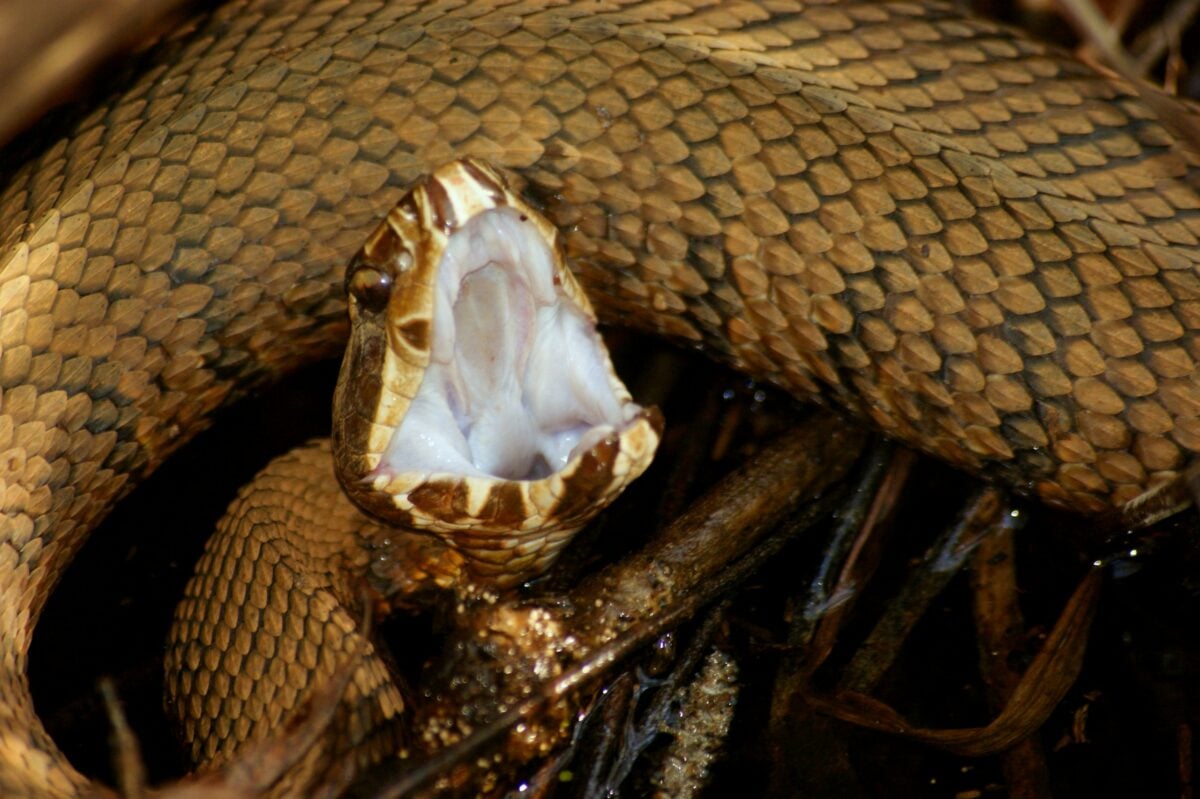
This is one of the most common and most stressful misidentifications, especially around water. Both snakes are thick-bodied and often seen near ponds, creeks, and ditches.
- Brown Watersnake: Nonvenomous; tends to have a more patterned, blotchy appearance.
- Cottonmouth: Venomous; often appears heavier with a more solid, darker look.
- Key difference: Watersnakes are far more common and usually try to escape, while cottonmouths may stand their ground.
At a glance, these two can look very similar, especially from a distance. The safest assumption is always to keep your distance—but in most cases, what you’re seeing is a harmless watersnake, not a cottonmouth.
2. Scarlet Kingsnake vs. Coral Snake
This is one of the most well-known snake lookalikes, but it still causes confusion because people remember the colors more than the pattern.
- Scarlet Kingsnake: Nonvenomous; red bands touch black.
- Coral Snake: Venomous; red bands touch yellow.
- Key difference: The band pattern—not just the colors—is what matters.
When seen quickly, both snakes appear red, black, and yellow. That’s why people panic. In reality, the harmless kingsnake is far more commonly encountered than the venomous coral snake.
3. Corn Snake vs. Copperhead
This mix-up happens frequently in yards, barns, and wooded areas where both snakes can appear in similar environments.
- Corn Snake: Nonvenomous; orange or reddish with bold, dark-outlined blotches.
- Copperhead: Venomous; tan with hourglass-shaped bands.
- Key difference: Copperhead markings are more uniform and shaped like hourglasses, while corn snakes have more irregular blotches.
Because both snakes have warm, earthy colors, they can be confused at a glance. But corn snakes are harmless and extremely beneficial, especially for controlling rodents.
What to Do If You See a Snake
Quick answer: Stay calm, keep your distance, and let the snake leave on its own. Most will be gone within minutes.
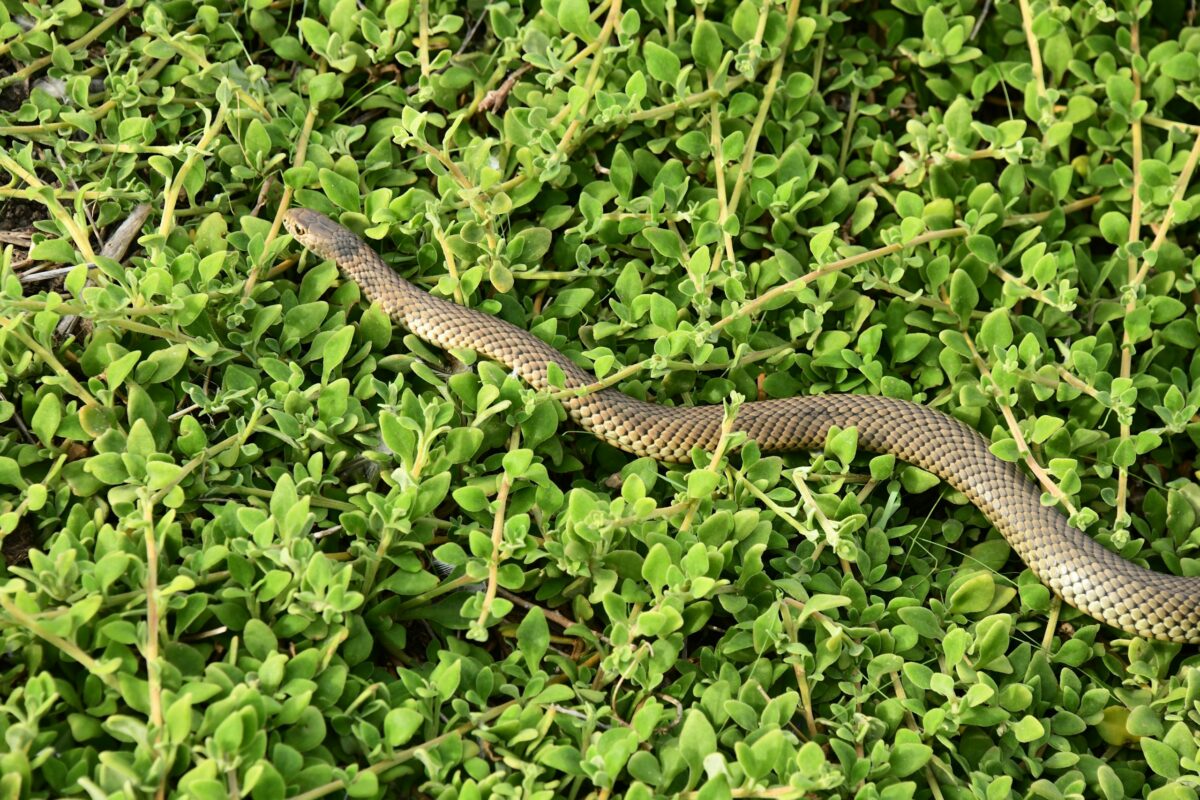
Seeing a snake can trigger an instant reaction, but in most cases, there’s no need to panic. The majority of snakes people encounter are harmless and want nothing to do with humans. Knowing how to respond calmly can keep both you and the snake safe.
If You See a Snake in Your Yard
Most outdoor encounters are brief and low-risk. Snakes typically pass through yards while searching for food, water, or shelter.
- Stay calm and keep your distance: Most snakes will not approach you unless they feel threatened.
- Do not try to handle or kill it: This is when most bites happen—even from nonvenomous snakes.
- Slowly back away: Give the snake space and a clear path to leave.
- Keep pets and children away: Curious pets are more likely to provoke a defensive bite.
- Let it move on: In most cases, the snake will leave the area on its own within minutes.
Snakes in yards are often there for a reason—usually because there is food nearby, such as rodents or insects. In many cases, their presence is actually helping control pest populations.
If You Find a Snake in Your House
Finding a snake indoors is rare, but it can happen—especially in basements, garages, or areas close to the ground.
- Do not panic or make sudden movements: Sudden activity can cause the snake to hide or move unpredictably.
- Keep a safe distance: Stay several feet away and avoid blocking its path.
- Close off the room if possible: Shut doors to keep the snake contained in one area.
- Remove pets and people from the space: Reduce stress for both you and the snake.
- Call animal control or a wildlife professional: They can safely remove the snake if needed.
Most indoor snakes are small, harmless species that enter through gaps, vents, or open doors. Once inside, they are usually just as eager to find a way out as you are to have them gone.
What Not to Do
- Do not try to catch or corner the snake
- Do not attempt to kill it
- Do not assume it is dangerous without clear identification
The most important thing to remember is this: snakes are defensive, not aggressive. When given space, they almost always choose to retreat rather than confront a person.
What to Do If a Snake Bites You
Snake bites are rare, especially from nonvenomous species, but knowing what to do can make a big difference. The most important thing is to stay calm and act quickly.
- Stay calm: Panic increases heart rate and can spread venom faster if the snake is venomous.
- Move away from the snake: Prevent further bites by putting distance between you and the animal.
- Keep the affected area still: Try to limit movement and keep the bite at or below heart level.
- Remove tight items: Take off rings, watches, or tight clothing near the bite area in case of swelling.
- Seek medical attention immediately: Even if you’re unsure whether the snake was venomous, it’s best to get checked.
Do not:
- Do not cut the wound
- Do not try to suck out venom
- Do not apply ice or a tourniquet
- Do not attempt to catch the snake
Most bites from nonvenomous snakes result in minor injuries, but proper care is still important to prevent infection and ensure your safety.
In the United States, only about 7,000 to 8,000 people are bitten by venomous snakes each year, and deaths are rare, typically around five annually, according to the Centers for Disease Control and Prevention.
Frequently Asked Questions
Even once the panic passes, most people still have a few questions. Below are answers to some of the most common things people ask after seeing a snake in the yard, garden, or around the house. And if there’s something you’re still wondering about, feel free to ask in the comments.
Are most snakes in the U.S. dangerous?
The majority of snakes in the United States are nonvenomous and pose little to no threat to humans.
How can I tell if a snake is venomous?
It can be difficult to identify a snake safely from a distance, and many harmless snakes resemble venomous ones. The safest approach is to keep your distance and avoid relying on quick visual rules alone.
Will a snake chase me?
Snakes do not chase people. If a snake appears to move toward you, it is usually trying to escape or reach cover.
What attracts snakes to my yard?
Snakes are usually drawn to areas with food, water, and shelter. This includes rodents, insects, standing water, tall grass, woodpiles, and debris.
Should I kill a snake if I see one?
Absolutely not. Most bites happen when people try to handle or kill snakes. It’s safer and more effective to leave the snake alone and let it move on.
Are nonvenomous snake bites dangerous?
Most nonvenomous bites are minor, but they can still cause cuts and potential infection. It’s best to clean the wound and seek medical advice if needed.
How do I keep snakes out of my yard?
Keep grass trimmed, remove debris and woodpiles, seal gaps around your home, and reduce rodent populations. These steps make your yard less attractive to snakes.
What should I do if I see a snake often?
Frequent sightings may mean there is a steady food source nearby. Addressing things like rodents or standing water can help reduce repeat visits.
The “Silent Partners”: Hidden Benefits of Snakes
Beyond basic rodent control, snakes provide sophisticated environmental services that are often invisible to the naked eye. They are “mid-level” predators, meaning they act as both a stabilizer for smaller populations and a vital food source for larger wildlife.
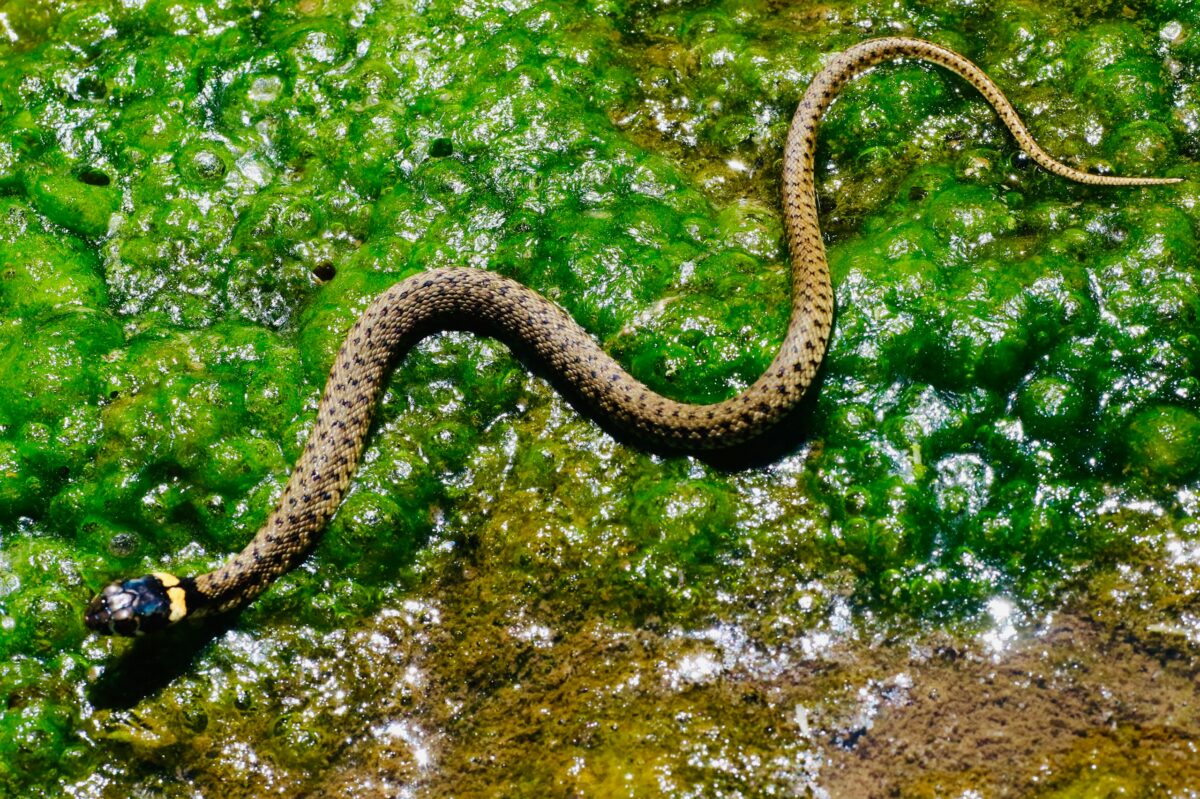
1. Lyme Disease Defense (The Tick-Eaters)
While snakes don’t eat ticks directly, they are a primary predator of the white-footed mouse, the main host for young black-legged ticks. By keeping mouse populations in check, a single Timber Rattlesnake or large Rat Snake can indirectly remove thousands of ticks from a forest annually. This break in the “tick life cycle” makes hiking trails and backyards significantly safer for humans and pets.
2. Secondary Seed Dispersal
Snakes are accidental gardeners! When a snake eats a rodent that has a belly full of seeds (like berries or nuts), the snake often travels far beyond the rodent’s original territory. Because snakes have slow digestive systems, those seeds are eventually deposited in a new location, encased in nutrient-rich fertilizer (snake droppings). This helps diversify and grow our forests and grasslands.
3. Bio-Indicators of Health
Snakes are extremely sensitive to environmental changes and pollutants. Because they are “ectothermic” (cold-blooded) and live in direct contact with the soil and water, their presence—or sudden absence—is a primary indicator for biologists that an ecosystem is either thriving or in trouble. A healthy snake population usually means the water is clean and the food web is intact.
4. Genetic Stability (The “Health Inspector”)
As predators, snakes often target the slowest, weakest, or sickest members of a prey population. This selective hunting ensures that only the healthiest individuals survive to reproduce, which prevents the spread of diseases among local wildlife and keeps the gene pool of common backyard animals strong.
Want to Learn More About Poisonous & Venomous Species?
If spotting a harmless snake has you wondering what actually is dangerous, you’re not alone. Once people learn that most snakes they see are harmless, the next question is usually what poisonous or venomous animals they should really know about.
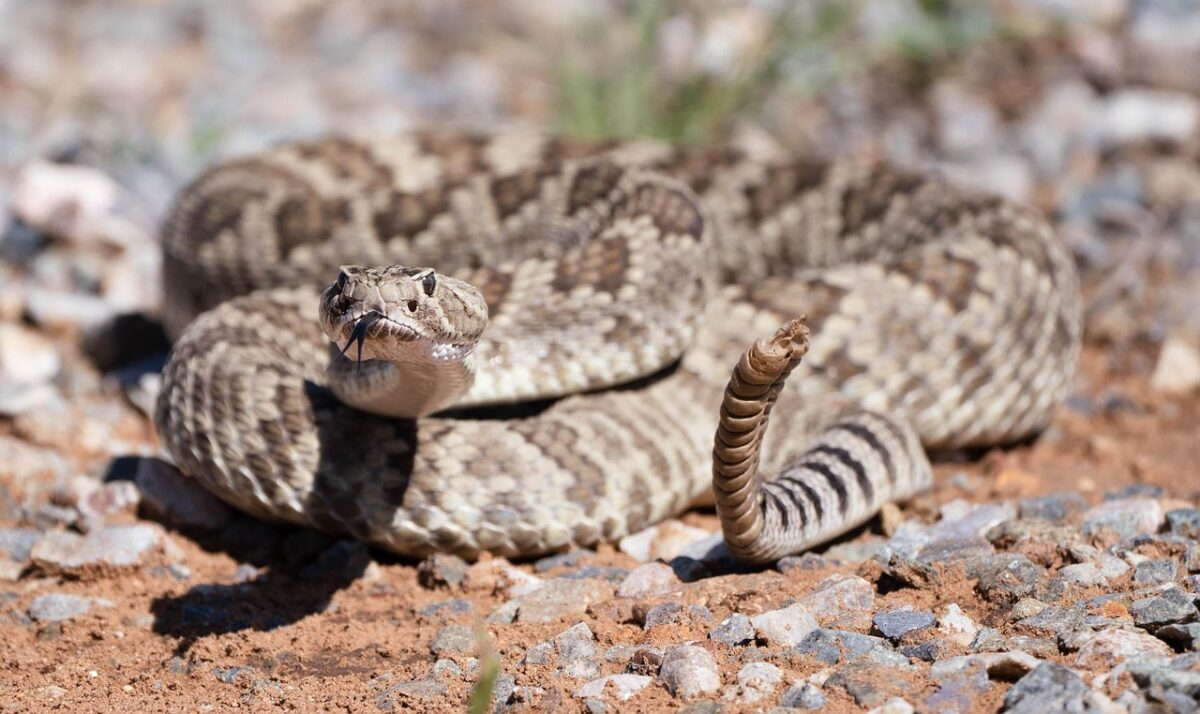
If you want to go deeper, these related guides cover some of the world’s most toxic animals, poisonous snakes from around the globe, and the insects people are most likely to fear. They’re a good next step if you want to better understand which species deserve real caution—and which ones are simply misunderstood.
- What Are the Most Poisonous Animals? — A broader look at highly toxic animals, including creatures like box jellyfish, cone snails, inland taipans, and more.
- Poisonous Snakes Hail From All Over the World — A companion piece focused specifically on dangerous snake species from different parts of the world.
- 10 of the Most Dangerous Insects in the World—and Why They’re So Feared — A related guide for readers curious about insects that pose a genuine threat.
The goal isn’t to make you more fearful; it’s to make you more informed. Knowing the difference between harmless wildlife and truly dangerous species can help you react more calmly and more confidently the next time you find something unexpected in the yard.
Learning to Live Alongside Wildlife
Once you start looking at snakes differently, it can change the way you see the rest of the natural world, too. A yard isn’t just grass and flower beds—it’s part of a much bigger habitat that birds, bees, insects, and small animals depend on every day.
If this article got you thinking more about how we share space with wildlife, these are a few good places to keep reading:
- How To Make a Wildlife Garden — Simple ways to make your yard feel more welcoming to birds, insects, and other helpful wildlife.
- Why Are Bees Dying So Fast? — A look at what’s happening to bees and why their decline affects all of us.
- Beekeeping for Beginners — A good starting point if you’ve ever thought about helping pollinators in a more hands-on way.
- Recently Extinct Animals — A reminder that the way we treat wildlife has real consequences.
The more we understand the animals around us, the easier it becomes to replace fear with respect. Sometimes that starts with something as simple as recognizing that the snake in your yard is harmless. And sometimes it grows into a bigger appreciation for the many species we share this planet with.
Have You Seen One? Share Your Snake Story!
Have you ever come across a non-venomous snake in your yard, garden, or around your home? Share your encounter in the comments. We’d love to hear what you saw, where you spotted it, and whether you knew right away that it was harmless.