When you purchase through links on our site, we may earn a commission. Here’s how it works.
You have probably seen solar panels on rooftops, beside highways, and across large open fields. But what is actually happening inside those dark, glass-covered rectangles?
Table of Contents
There are no spinning turbines, no visible moving parts, and no fuel being burned. Sunlight reaches the panel, and electricity comes out.
It may sound complicated, but the basic process is surprisingly simple. Solar panels contain many small solar cells that absorb energy from sunlight. That energy sets tiny electrical particles in motion, creating an electrical current. An inverter then changes that current into the type of electricity used by lights, appliances, and electronics.
Solar panels can even produce electricity on cloudy days—just not as much as they usually generate in bright, direct sunlight.
Want our human-written content to rank above AI-generated garbage? Help us out by clicking this button!
Let’s follow the journey from a ray of sunlight to a working wall outlet.
How Do Solar Panels Work?
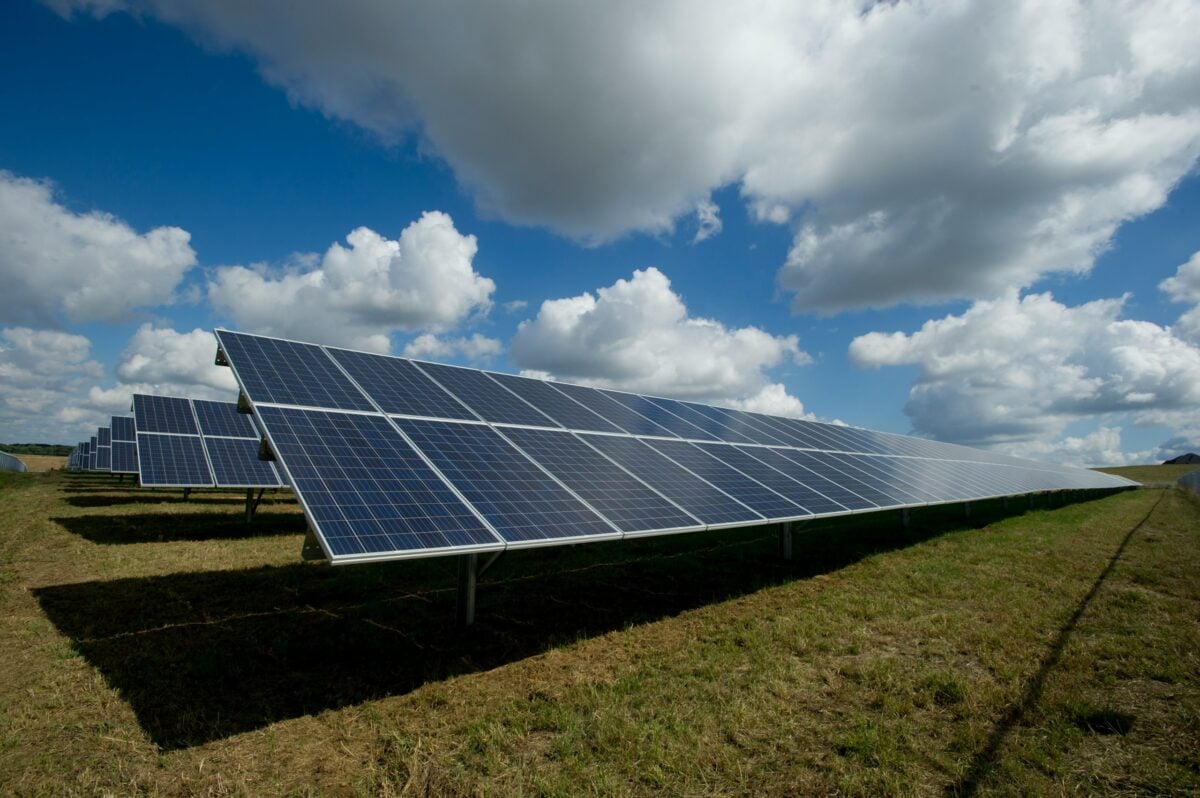
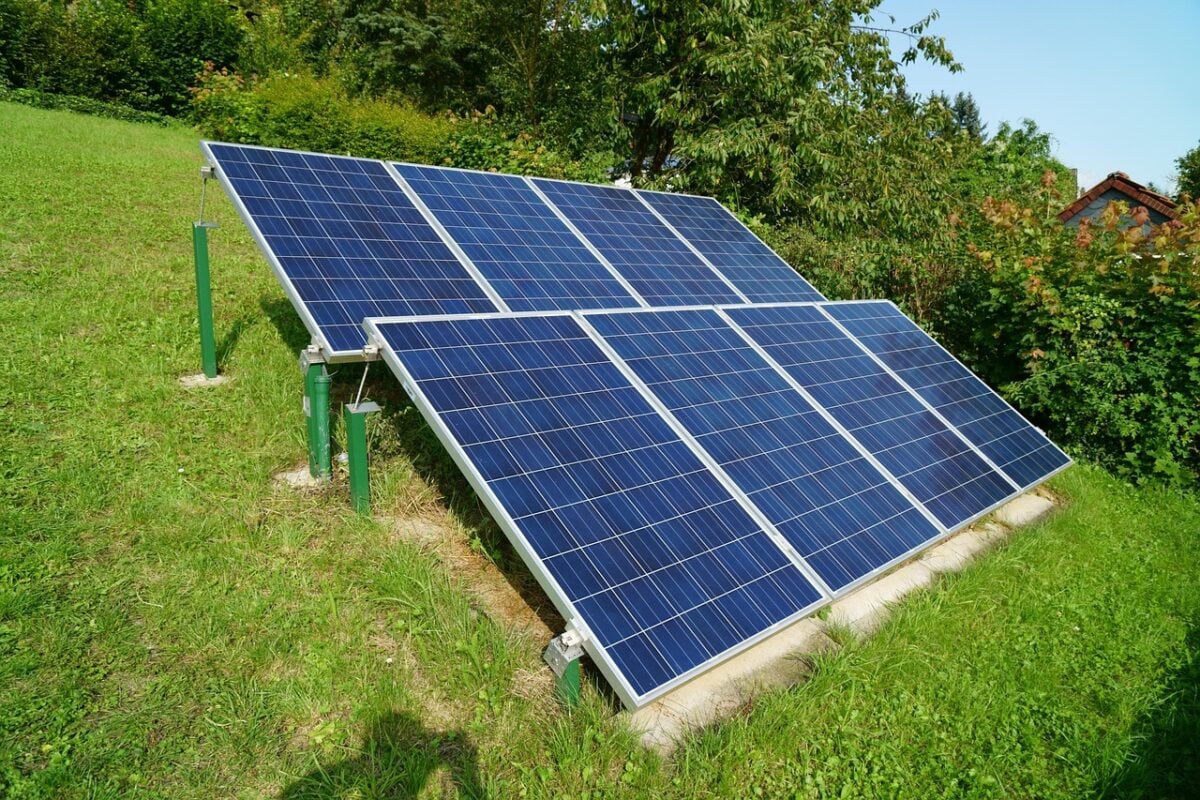
Solar panels convert sunlight directly into electricity.
Each panel contains many smaller units called photovoltaic cells, often shortened to PV cells. “Photovoltaic” simply means converting light into electricity.
Most solar cells use silicon, a material that responds to light. When sunlight reaches the cell, it transfers energy to tiny electrical particles. As those particles move, they create an electrical current.
Solar panels first produce direct current, or DC, electricity. Because most homes use alternating current, or AC, electricity, an inverter converts the solar-generated power before household devices can use it.
The entire process works like this:
Sunlight hits the cells → electrical particles begin moving → DC electricity flows → an inverter converts it to AC electricity → the home uses the power
Photovoltaic cells convert sunlight directly into electricity without turbines or other mechanical moving parts.
Want to see the process in action? This short video offers a simple visual explanation of how solar panels turn sunlight into usable electricity.
8 Surprising Facts About Solar Panels
Before breaking down the process step by step, here are a few surprising facts that show just how unusual solar technology really is.
- Solar panels do not need fuel: There is no tank to fill and nothing to burn. Solar panels generate electricity using only the light that reaches their cells.
- Cold weather does not stop them: Solar panels can still work well on bright winter days. They need sunlight, not heat.
- One solar cell is not very powerful: A single cell produces only a small amount of electricity. That is why cells are grouped into panels, and panels are grouped into larger arrays.
- They start working almost instantly: Solar panels do not need time to warm up. As soon as enough light reaches the cells, they can begin generating electricity.
- They only capture part of the sunlight: Not all sunlight becomes electricity. Some is reflected, some becomes heat, and only part is converted into usable power.
- Solar panels and solar collectors are not the same: Solar panels create electricity. Solar thermal collectors use sunlight to create heat, often for water or indoor spaces.
- Most solar panels rely on silicon: Silicon is especially useful because it reacts well to light and helps create an electrical current.
- Solar technology is used far beyond rooftops: The same basic technology can power calculators, road signs, satellites, water pumps, homes, businesses, and massive solar farms. The scale may change, but the process stays the same: light reaches the cells and becomes electricity.
How Solar Panels Create Electricity, Step by Step
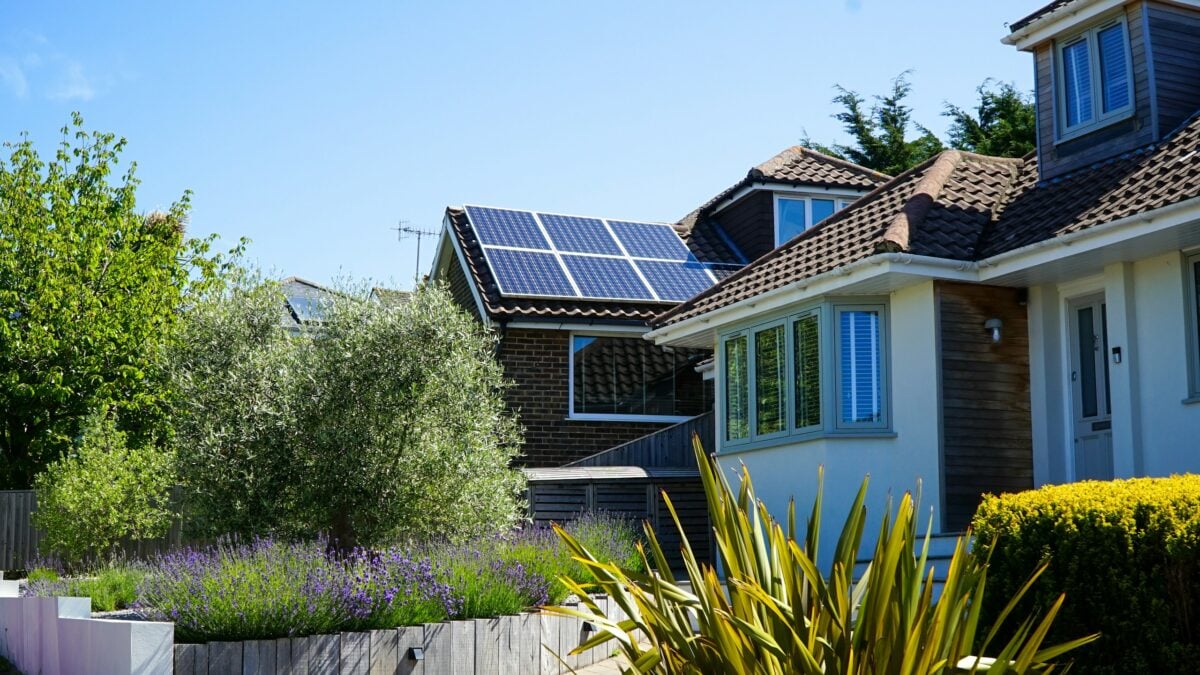
Here’s what happens from the moment sunlight hits a solar panel to the moment that energy becomes usable electricity in your home.
An Easy Way to Picture It
Imagine a line of marbles resting inside a narrow track.
When you push the first marble, that movement transfers through the line. The marbles begin to move because energy is added to the system.
Sunlight does something loosely similar inside a solar cell: it supplies energy that gets electrical particles moving.
The comparison is not a literal description of solar-cell physics, but it helps illustrate the central idea:
Light provides energy, and that energy creates electrical movement.
1. Sunlight reaches the solar cells
Sunlight may appear to be one continuous beam, but it carries many tiny packets of energy.
When that energy reaches a solar cell, some of it is absorbed by the material inside the cell.
2. The light gives electrical particles a push
The absorbed energy causes tiny electrical particles called electrons to become more active.
You do not need to understand the physics of electrons to understand the main idea. Sunlight supplies the energy that gets them moving.
3. The moving particles create an electrical current
The solar cell directs those moving particles along a particular path.
Think of water being guided through a pipe. The movement of water creates a flow. Inside a solar cell, the movement of electrical particles creates a flow of electricity.
4. The electricity travels out of the panel
Metal contacts in the solar cells collect the electrical current. The current then travels through wiring toward an inverter.
Individual solar cells produce only a small amount of electricity, so manufacturers connect many cells to form a panel. Multiple panels can then be connected to form a larger solar array.
5. The inverter makes the electricity usable
The electricity produced by a solar panel is not yet in the form normally used by a home.
The inverter converts the panel’s DC electricity into AC electricity. Once converted, it can power household lights, appliances, outlets, and electronics.
Solar Panel System Components
Myth vs. Reality
Myth: Solar panels have moving parts.
Reality: Standard solar panels generate electricity without motors, turbines, or gears. The important movement happens among tiny electrical particles inside the solar cells.
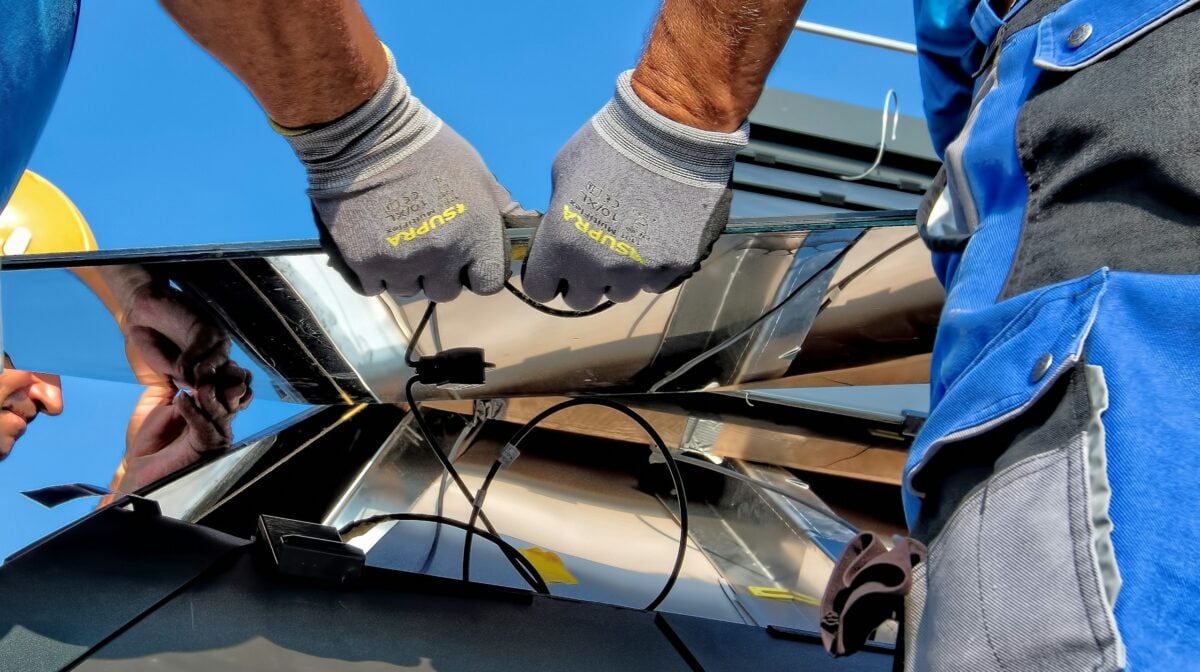
A solar power system includes more than the panels you see on the roof. Each part has a different job in collecting sunlight, converting it into usable electricity, and safely delivering that electricity to a home.
- Optional backup equipment: May keep selected lights, outlets, or appliances operating during an outage. This can include a battery, backup panel, special controls, or a generator used as a separate power source.
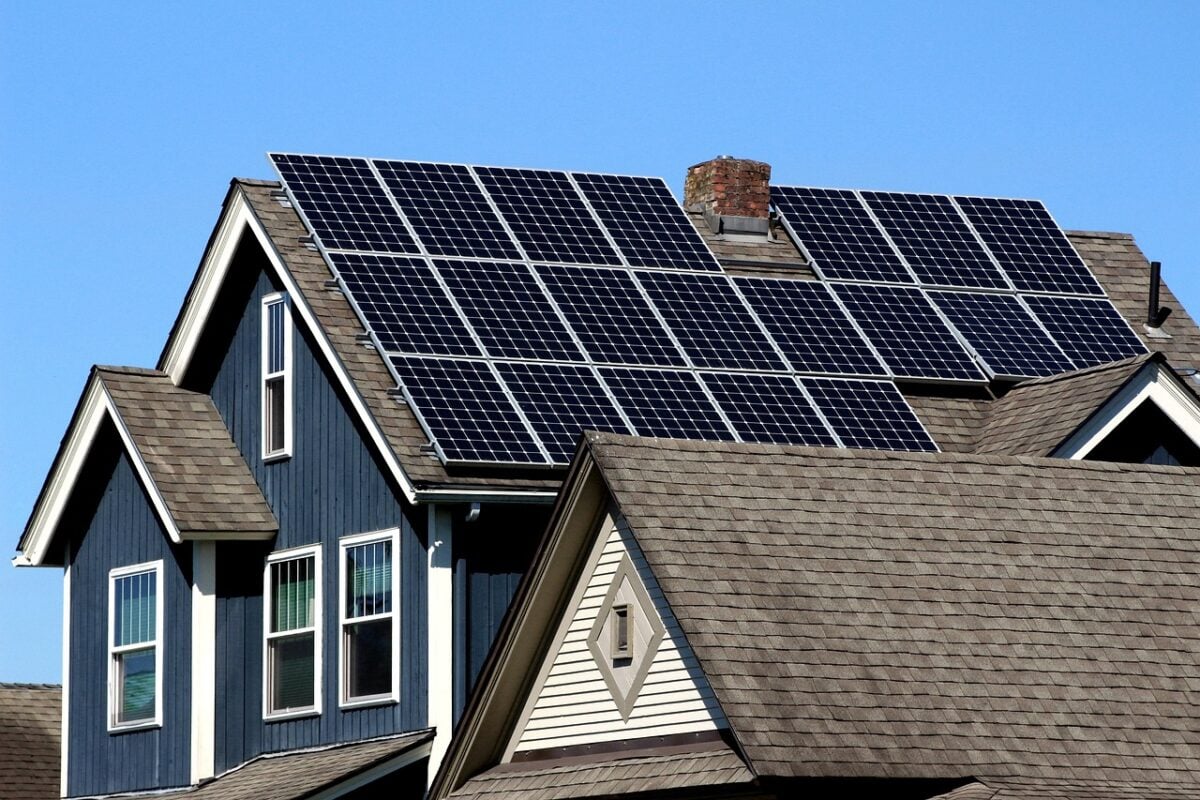
- Solar panels: Contain photovoltaic cells that capture energy from sunlight and convert it into DC electricity. Multiple panels are connected to form an array and may be mounted on a roof or on the ground.
- Mounting and racking: Secure the panels in place and position them at an angle that allows them to receive sunlight. The best direction and angle depend on the property, roof design, shade, and location.
- DC disconnect: Acts as a safety switch that allows the electrical flow from the panels to be shut off during maintenance, repairs, or emergencies.
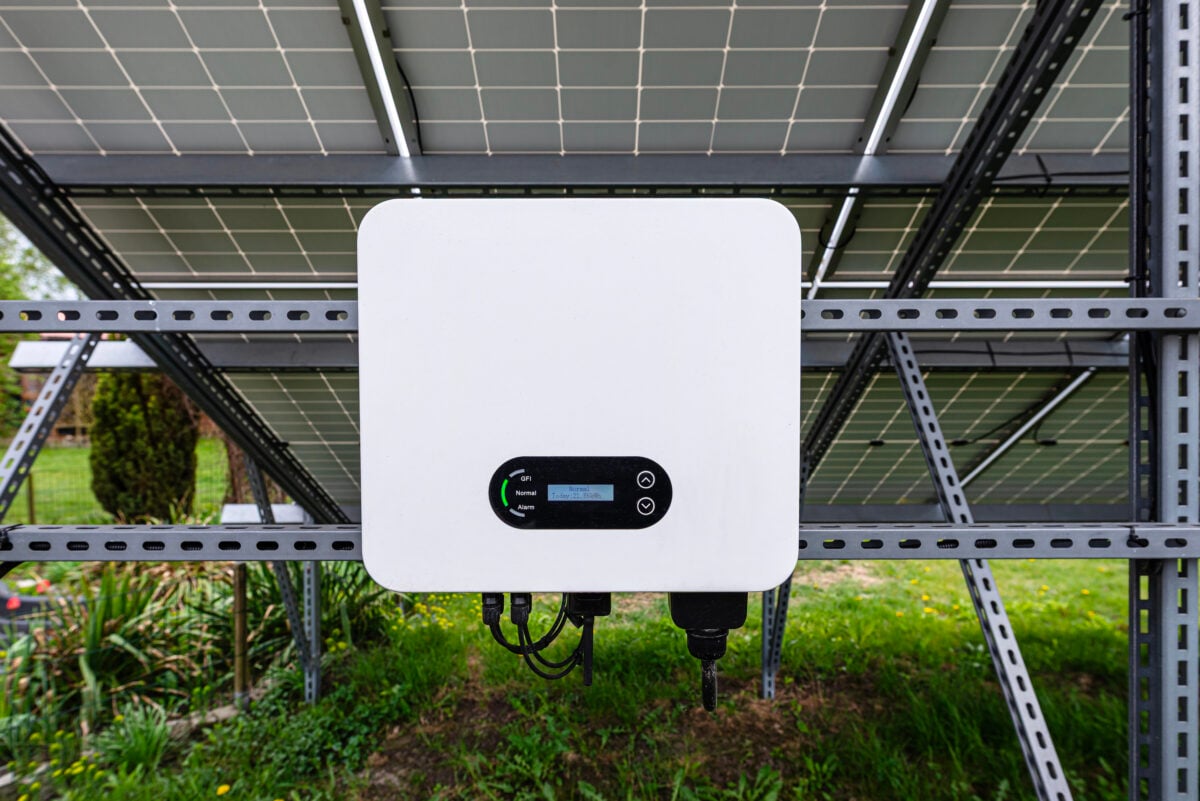
- Inverter: Converts the DC electricity produced by the solar panels into AC electricity, which is the form used by most homes and electrical grids.
- Meter: Measures how much electricity the home uses and, in some systems, how much excess solar electricity is sent to the grid.
- Monitoring system: Tracks solar production, electricity use, and equipment performance through an app, website, or inverter display.
- Optional battery storage: Stores excess solar electricity for later use, such as at night or during certain outages. Solar panels generate electricity; batteries store it.
- Optional backup equipment: May keep selected lights, outlets, or appliances operating during an outage. This can include a battery, backup panel, special controls, or a generator used as a separate power source.
What Does an Inverter Do?
The inverter is one of the most important parts of a solar power system.
Solar panels produce DC electricity. Most homes and electrical grids use AC electricity. The inverter acts as a translator between the two.
There are several ways a system may be arranged:
- One inverter may serve a group of panels.
- Several inverters may serve different groups of panels.
- Small microinverters may be attached to individual panels.
This means that an inverter is not necessarily housed inside every solar panel. Its location and design depend on the type of system.
Regardless of the arrangement, its basic job remains the same: convert solar-generated DC electricity into usable AC electricity.
Myth: Every solar panel contains an inverter
Reality: Not every panel has its own inverter.
Some systems use microinverters attached to individual panels, while others use one inverter for several panels.
Do Solar Panels Work on Cloudy Days?
Yes. Solar panels can still generate electricity when the sky is cloudy.
Clouds reduce the amount of sunlight that reaches a panel, but they do not always block it completely. Some direct and scattered sunlight still passes through the atmosphere and reaches the solar cells.
As a result, panels normally produce less electricity on cloudy days than on clear, sunny days.
Think of sitting beside a window during overcast weather. The room may look dimmer, but it does not become completely dark. There is still enough daylight to see.
Solar panels respond in a similar way:
Less sunlight generally means less electricity—not necessarily no electricity.
The exact reduction depends on factors such as cloud thickness, time of day, season, shade, and the type of panel. The Department of Energy notes that photovoltaic systems can use both direct and scattered sunlight, although output depends on how much solar energy reaches the panel.
Myth: More heat means more solar power
Reality: Strong sunlight can increase production, but hotter panels are not always better.
Solar panels respond to light. Excessive heat can reduce their performance slightly.
Do Solar Panels Work at Night?
No. Solar panels need light to generate electricity, so they do not produce meaningful power after dark. That does not necessarily mean a solar-powered home loses electricity at night.
Depending on the system, nighttime power may come from:
- The local electrical grid
- Electricity stored in a battery
- Another backup energy source
It is important to understand the difference between a solar panel and a solar battery.
Solar panels generate electricity. Batteries store electricity for later use.
A battery may store excess solar power produced during the day so it can be used after the sun goes down. A solar panel does not store that energy by itself.
What Happens to the Electricity?
Once the inverter has converted the electricity, the home can use it immediately.
For example, electricity from the panels might power:
- A refrigerator
- Lights
- A television
- A washing machine
- A computer
- Heating or cooling equipment
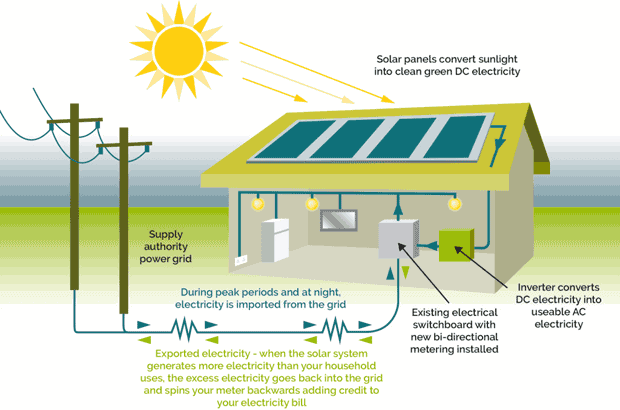
When the panels generate less electricity than the home is using, additional power may come from the electrical grid or a battery.
When the panels generate more electricity than the home needs, the excess may do one of two things:
- Charge a connected battery.
- Flow into the local electrical grid.
How customers receive credit for electricity sent to the grid depends on their utility company and local rules. Some areas use traditional net metering, while others use different export-credit or billing arrangements.
The important point is that a home does not create a separate neighborhood power grid. Its solar system connects to the existing electrical system under rules established by the utility and local regulators.
Myth: Solar panels store electricity
Reality: Solar panels generate electricity. Batteries store it.
A solar system without a battery usually uses power as it is produced and may draw additional electricity from the grid when needed.
This graphic from Environmental Energies helps explain how the solar panel system works.
How to Install a Solar Panel System
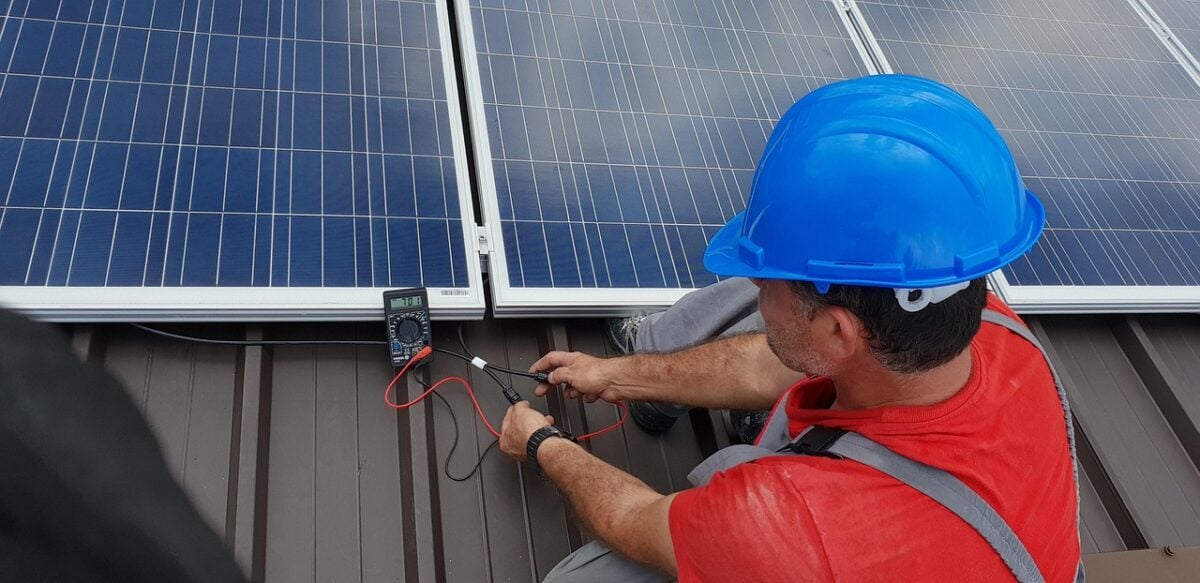
Some home supply stores, like Lowe’s and Costco, sell solar panel kits that can save you a ton of money. However, depending on where you live, you may be required to use a certified company to install the panels (in addition to getting all the necessary permits).
So we recommend going with a professional versus DIY installation, especially since electricity can be dangerous. Read our best solar panels comparison for an in-depth comparison of the top-rated companies that can install solar panel systems to find one in your area.
How Much Do Solar Panels Cost?
The cost of a home solar system depends on its size, location, equipment, roof conditions, battery storage, installer, and method of payment.
Recent industry data placed average residential solar pricing at approximately $3.39 per watt before incentives in late 2025. At that rate, an 8-kilowatt system would cost roughly $27,000 before any available state, local, or utility incentives. Actual quotes may be significantly higher or lower.
Federal incentives have also changed. The Residential Clean Energy Credit applied to qualifying systems placed in service through December 31, 2025, but it is not available for systems placed in service after that date under current federal law. State, local, and utility programs vary, so homeowners should verify current incentives before estimating their final cost.
Are Solar Panels Worth It?
Solar panels may reduce electricity costs, but their value depends on more than the purchase price.
Important factors include:
- The system’s total installed cost
- Available sunlight and shade
- Household electricity use
- Local electricity prices
- Utility credits for excess power
- Financing charges
- Equipment performance
- Roof condition
- Ongoing utility fees
A simple payback estimate divides the system’s net cost by its expected annual savings. However, the calculation should use projected solar production and the portion of the electricity bill the system can realistically offset—not the household’s entire pre-solar bill.
Because these factors vary by home, broad promises such as “solar pays for itself in three years” should be treated cautiously.
Our Experience With Solar
We installed solar panels and a battery on our southwest-facing roof in North Carolina about a year and a half ago. Based on the federal and state incentives available at the time, our installer estimated a payback period of six to seven years. So far, however, we appear to be on pace to break even in roughly four to five years.
Several factors have contributed to those results, including our battery storage, our utility’s 1:1 electricity buyback program, and the credits we accumulate when our system produces more power than we use. During our first 18 months, we paid only three regular power bills, all during the coldest and least sunny months.
Every home, utility, and solar agreement is different, so our experience should not be treated as a guaranteed outcome. Still, we recommend checking your local utility’s solar rates, export credits, and available programs. We are very glad we chose to go solar.
– Michelle Schenker, Earth’s Friends Writer & Homeowner
Buying vs. Leasing Solar
Homeowners may purchase a system with cash or a loan, lease the equipment, or enter a power purchase agreement where available.
- When you buy a system, you own the equipment and generally receive the financial benefits associated with ownership. Loans can reduce the upfront expense, but interest and fees increase the total cost.
- With a lease, a solar company owns the equipment and the homeowner pays to use it. Some leases require little or no upfront payment, but monthly charges, annual price increases, maintenance responsibilities, home-sale requirements, and end-of-contract options vary.
Before signing any solar agreement, compare the total amount you will pay over the full contract—not just the upfront price or first monthly payment.
Keep Exploring Solar and Home Energy
Understanding how solar panels work is only the beginning. Explore these guides to learn more about solar energy, reduce household electricity use, and discover other ways to lower your environmental impact.
- Find simple ways to conserve energy: Discover everyday habits, quick fixes, and home improvements that can reduce wasted electricity and lower your energy use.
- Discover more interesting facts about solar energy: Learn more about the sun’s energy, how people use it, and why it plays such an important role in life on Earth.
- Learn how solar pool heaters work: See how solar thermal technology uses sunlight to warm pool water without first converting it into electricity.
- See how small solar panels are used beyond homes: Explore how compact solar systems can provide electricity for RVs, boats, campers, and other off-grid uses.
- Learn why recycling is so important: Find out how recycling can conserve resources, reduce waste, and lower the energy needed to produce new materials.
The more we understand where our energy comes from—and how our everyday choices affect the planet—the easier it becomes to make smarter, more sustainable decisions.
Have You Tried Solar Power?
We’d love to hear about your experience. Have you installed solar panels, considered making the switch, or learned something surprising about how solar energy works? Share your questions, tips, and experiences in the comments below.