When you purchase through links on our site, we may earn a commission. Here’s how it works.
Most of us have stood in the produce section, picked up a carton of berries or a bag of apples, and wondered where they really came from.
Table of Contents
Sometimes the answer is obvious. You might see the name of a nearby farm right on the package. Other times, the display just says “local,” which sounds helpful but doesn’t tell you much.
We get why that can be confusing. “Local” doesn’t have one simple definition that every store, farm, or market follows. In some USDA programs, food may be considered local or regional if it travels less than 400 miles or stays within the same state or territory. But that doesn’t mean every store uses the word the same way.

The good news is that you don’t need to become an expert on food labeling to figure it out. A few simple checks can tell you a lot about where your produce came from, whether it’s really in season, and where to look when you want food grown closer to home.
Want our human-written content to rank above AI-generated garbage? Help us out by clicking this button!
Quick Guide: Is That Produce Really Local?
Not sure what all those signs, stickers, and labels actually mean? Here’s a quick way to separate useful information from marketing language before you shop.
| What you see | What it actually tells you |
|---|---|
| Farm name + nearby location | One of the strongest clues. You can see where the produce was actually grown. |
| “Local” sign with no location | Not enough information on its own. Ask where the produce was grown. |
| “Product of USA” | It was grown in the U.S., but it could have traveled hundreds of miles to reach your store. |
| PLU sticker | Helps retailers identify the produce, but does not tell you where it was grown. |
| Organic label | Tells you about how the food was produced, not whether it was grown locally. |
| Farmers market stand | Often a good source of local produce, but don’t assume everything was grown by the vendor. Ask. |
| Produce that’s in season locally | A useful clue that it could be local, but seasonality alone doesn’t prove where it was grown. |
The simplest rule: If you really want to know whether something is local, skip the marketing language and ask, “Where was this grown?”
Start With the Most Useful Question: Where Was It Grown?
If you want to know whether produce is truly local, start here.
A sign that says:
- “Sweet corn — Miller Family Farm, Brighton, Colorado”
is much more useful than one that simply says:
- “Locally grown corn.”
Look for a farm name, town, county, or state. The more specific the information, the easier it is to judge what “local” actually means in that situation.
If you don’t see anything beyond a generic local label, ask.
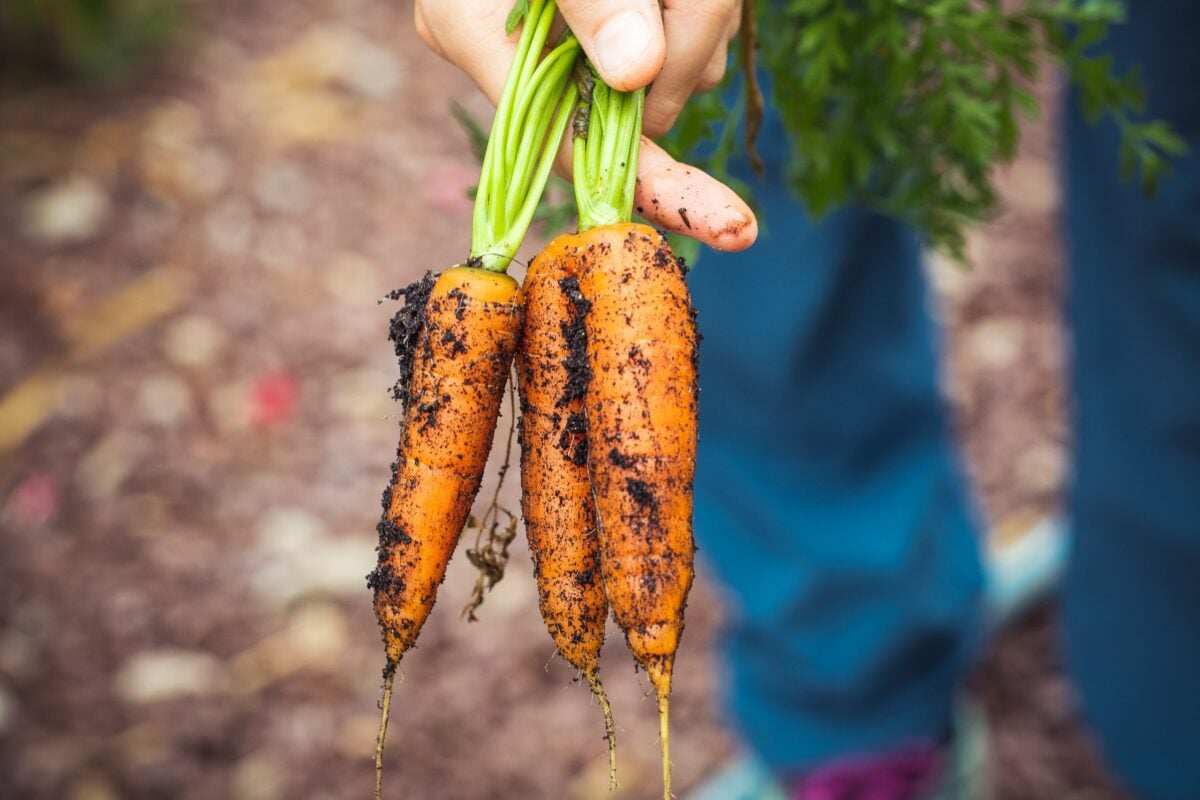
At a farmers market, you can simply say, “Where was this grown?” At a grocery store, someone working in the produce department may be able to tell you which farm or distributor supplied it.
You don’t have to make it complicated. One direct question usually tells you more than the sign does.
Check the Country-of-Origin Label
Grocery stores can give you another clue.
Fresh and frozen fruits and vegetables are often marked with country-of-origin information. You may find it on the package, on a sticker, or on a sign near the display.
If you’re shopping in the United States and the label says “Product of Chile,” you already know it isn’t locally grown.
On the other hand, “Product of USA” still doesn’t tell you how close it was grown. Apples sold in Colorado, for example, could have come from Washington.
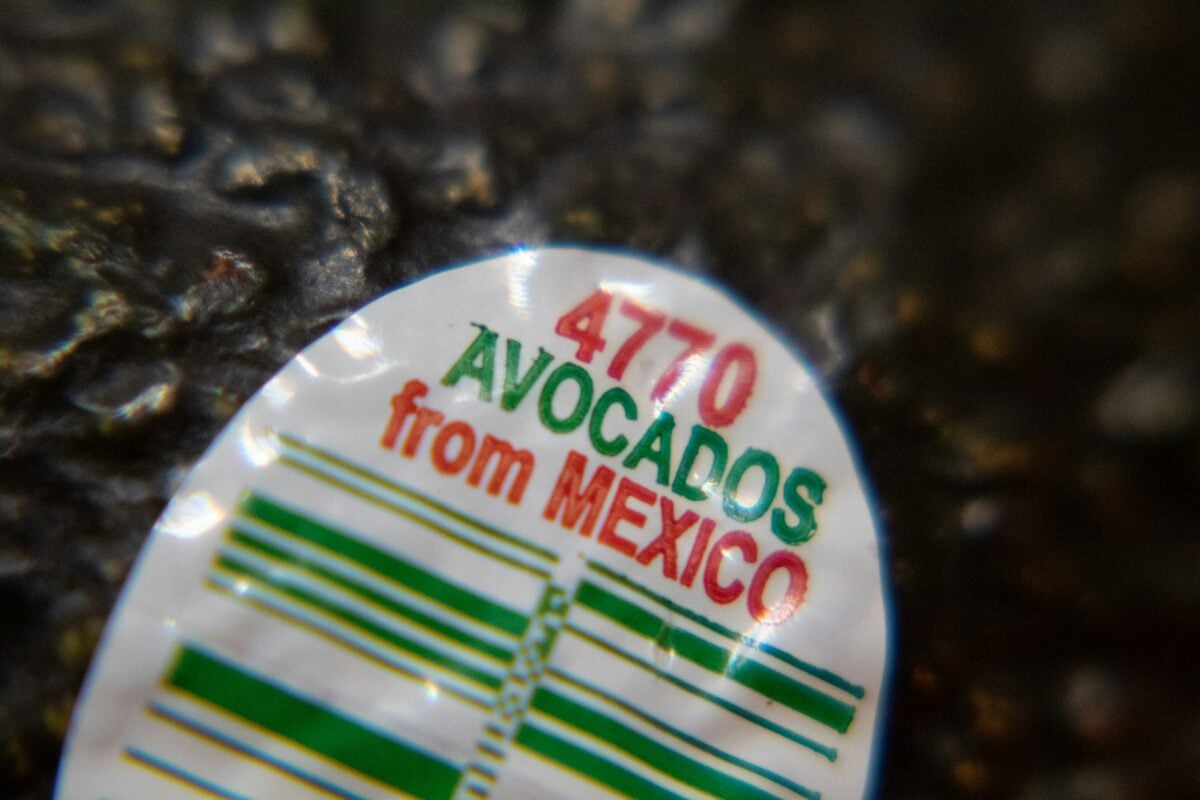
So country of origin is useful, but think of it as a first filter rather than proof that something is local.
What About Those PLU Stickers?
Those little numbered stickers on apples, bananas, avocados, and other produce are called PLU codes, short for Price Look-Up codes.
They’re mainly there to help stores identify produce at checkout.
A standard four-digit code usually identifies conventionally grown produce. A five-digit code beginning with 9 is commonly used for organic produce.
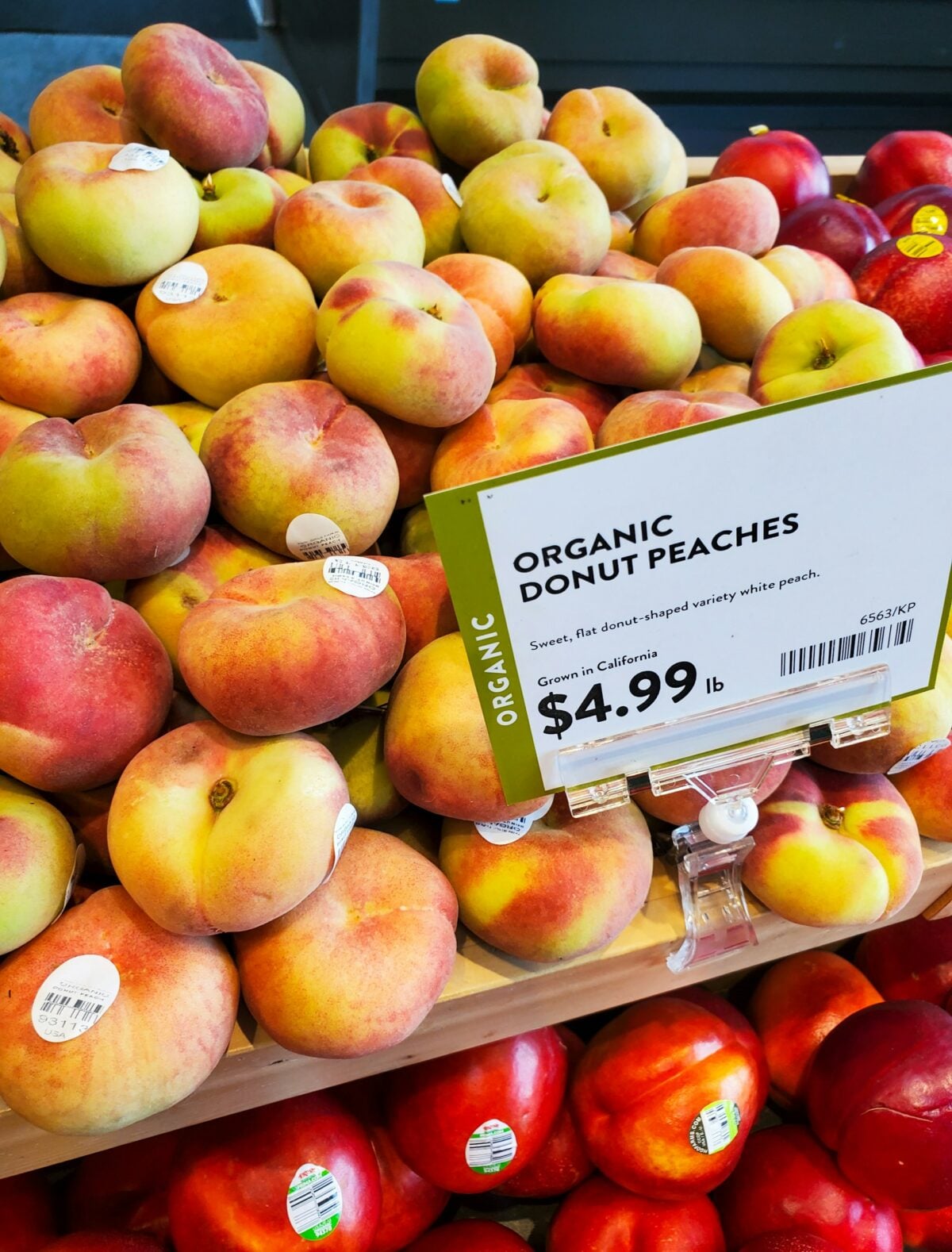
What a PLU code does not tell you is where the produce was grown.
It won’t identify the farm, state, or country. So if you’re trying to figure out whether something is local, the sticker isn’t much help.
You may also have heard that a five-digit code beginning with 8 means the produce is genetically modified. That claim has circulated online for years, but it isn’t a reliable way to identify GMO produce.
For local shopping, you’re better off looking for an actual place name or asking where the food came from.
The Easiest Ways To Find Fresh Local Produce
Once you know what “local” really means, the next question is usually: where do you actually find it?
You may have more options nearby than you realize. Farmers markets are an obvious place to look, but CSAs, farm stands, U-pick farms, independent grocers, and even regular supermarkets can all be good sources.
If you’re not sure what’s available around you, LocalHarvest is a useful place to start. Enter your city or ZIP code to look for nearby farms, farmers markets, CSAs, U-pick farms, and other local food sources. You can also check the USDA Local Food Directories for farmers markets, CSAs, food hubs, and on-farm markets.
Just remember that finding a local seller doesn’t automatically mean every fruit or vegetable they carry was grown there. It’s still worth checking the signs or asking where a particular item came from.
Farmers Markets Are a Great Place to Ask Questions
Farmers markets are one of the easiest places to find food grown nearby because you can often speak directly with the people selling it.
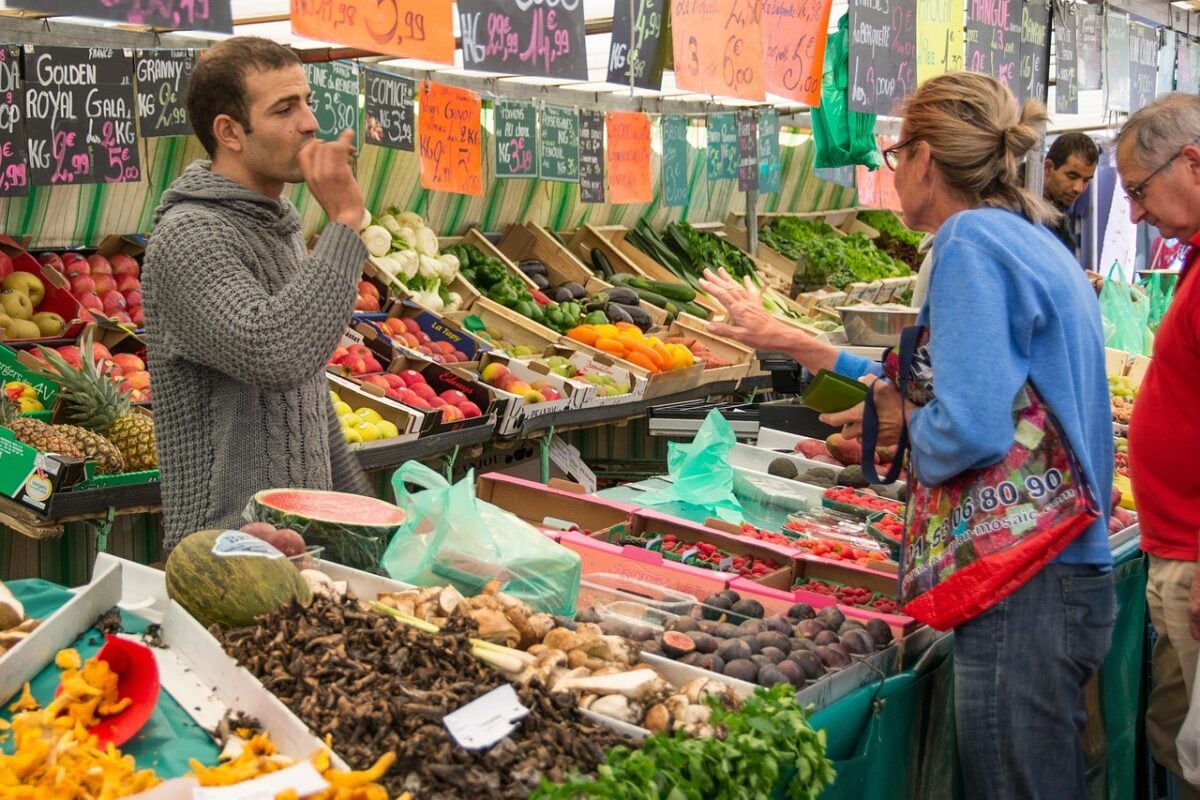
Still, don’t assume every item on every table was grown by the person behind the stand. Market rules differ from place to place, and some vendors may sell produce from other farms.
A few simple questions can clear things up:
- Where is your farm?
- Did you grow this yourself?
- When was this picked?
- What will be coming into season next?
You don’t need to interrogate anyone. Most growers are used to these questions, and many are happy to tell you what’s fresh that week.
And those conversations don’t have to stop with fruits and vegetables. If you also buy eggs, dairy, or meat at the market, buying directly from a farmer gives you a chance to ask how the animals were raised and where your food came from.
Consider Joining a CSA
A CSA, or community supported agriculture program, is another good way to buy directly from a farm.
You usually sign up for a share and receive a box or bag of produce on a regular schedule during the growing season. One week might include lettuce, radishes, and herbs. A few weeks later, you may start seeing tomatoes, cucumbers, peppers, squash, or melons as the season changes.
Before you sign up, it’s worth checking a few details:
- Where is the farm located?
- How often do you get a share?
- How long does the season run?
- Does the farm grow everything in the box?
- Where do you pick it up?
- Can you choose any of the items?
A CSA can be especially helpful if you like knowing exactly which farm your food comes from.
Don’t Forget Farm Stands
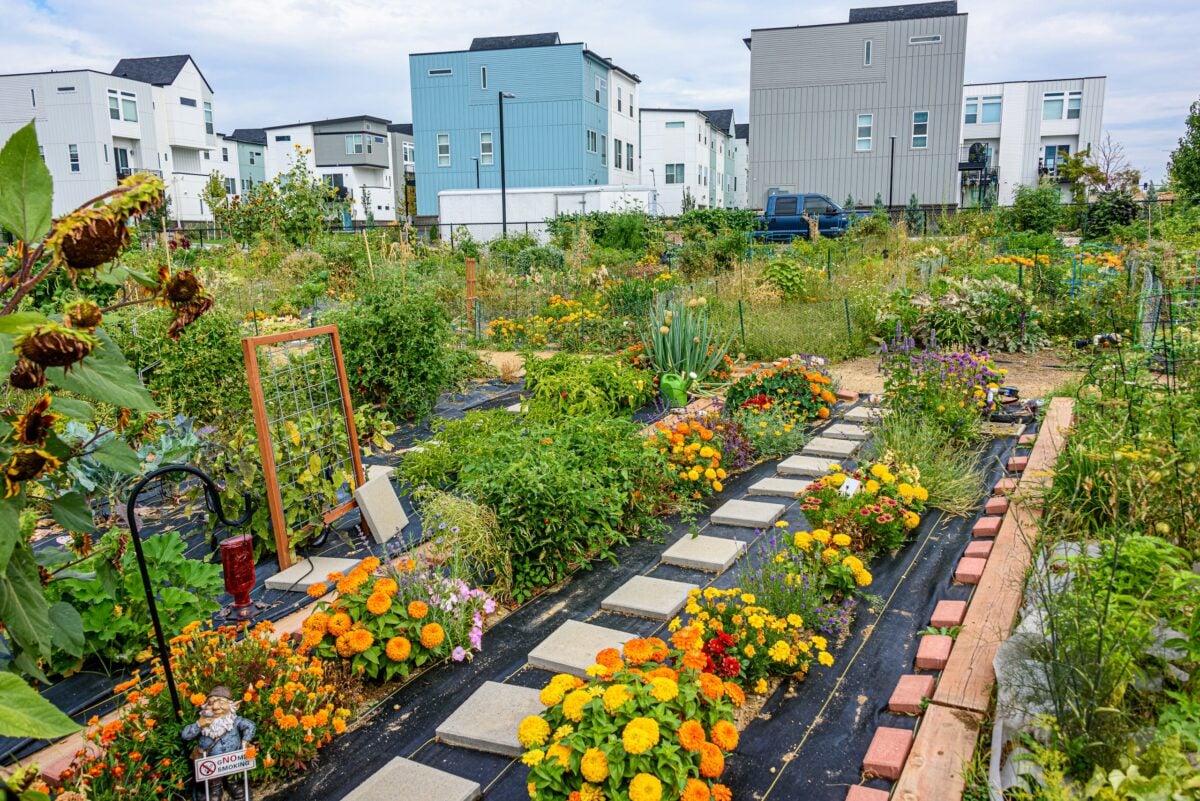
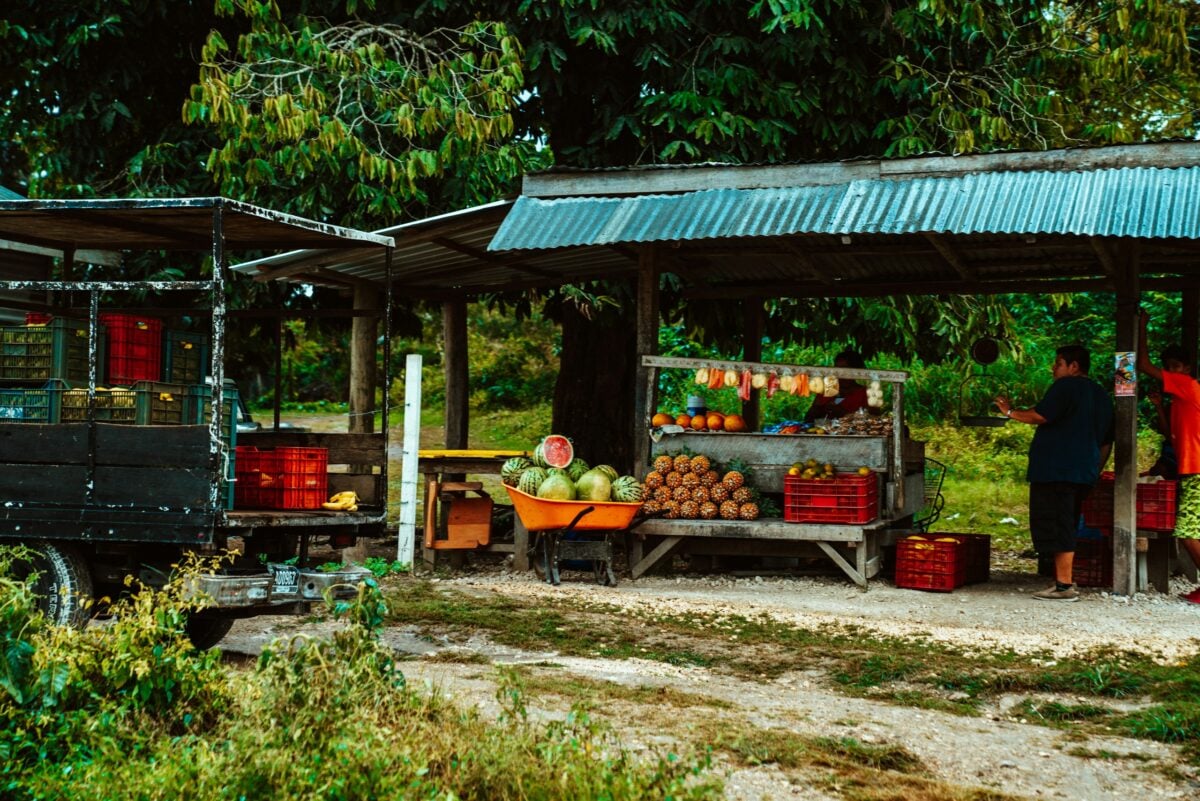
Farm stands are easy to overlook, especially if you’re used to doing all your shopping at one grocery store. But in farming areas, roadside stands and on-farm markets can be some of the simplest places to find freshly harvested produce.
You may see tomatoes stacked in baskets, sweet corn picked that morning, or peaches from an orchard a few miles away.
Just keep in mind that not every farm stand sells only what was grown on that property. Some bring in produce from neighboring farms.
If you’re curious, ask which items were grown there. It’s a perfectly normal question.
Try a Pick-Your-Own Farm
If you want very little guesswork, look for U-pick or pick-your-own farms.
Depending on where you live, you may be able to pick your own strawberries, blueberries, apples, peaches, pumpkins, or other crops.
Because you’re standing in the field or orchard, you know exactly where the food came from. The catch is that availability can change quickly. A berry farm may have a great crop one weekend and be picked out a few days later.
It’s worth checking the farm’s website, social media page, or phone message before heading out.
Grocery Stores Can Still Be a Good Source
You don’t have to avoid supermarkets to buy local produce.
Many grocery stores bring in fruits and vegetables from nearby growers when they’re in season. The trick is knowing what to look for.
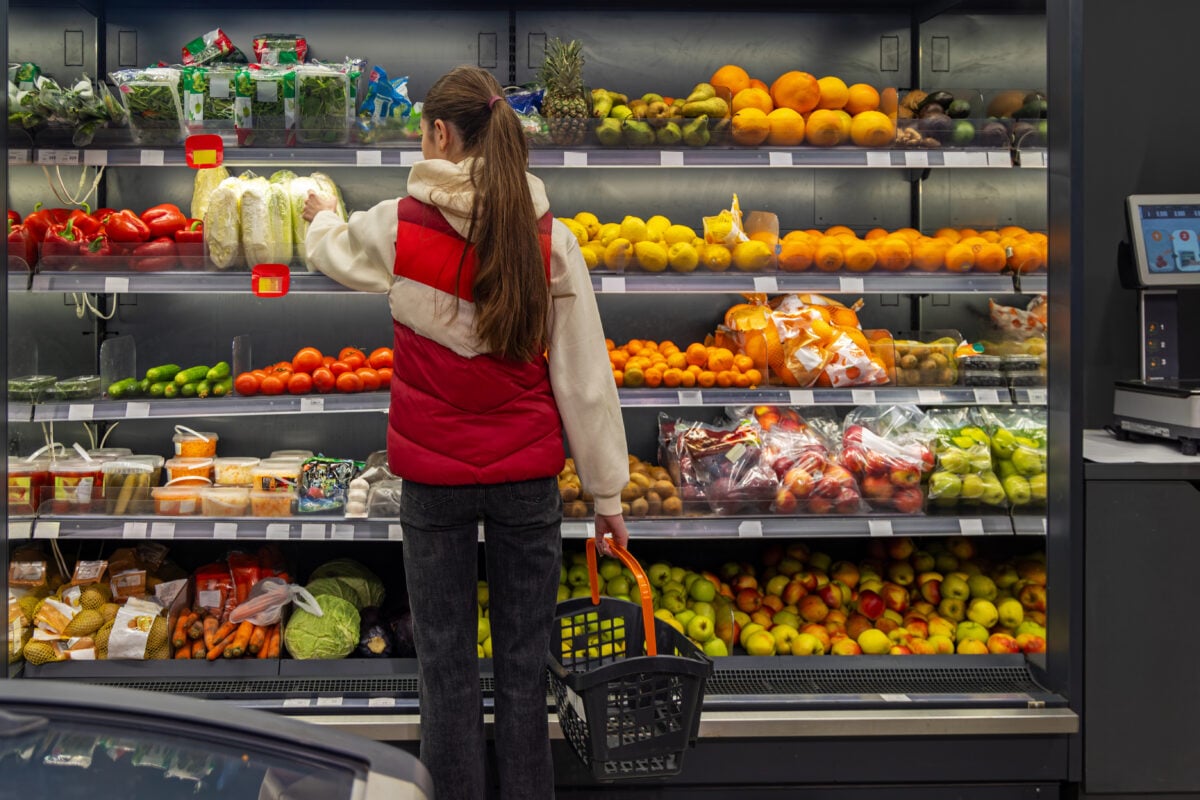
Start with the signs above the display. The most helpful ones include details such as:
- the farm name
- the town or county
- the state
- the growing region
A sign that says “Grown at Smith Farms — 28 miles away” tells you much more than a banner that simply says “Local Favorites.”
You can also check bags, clamshells, and other packaging for grower information.
One thing to watch for: the address on a package may belong to the company that packed or distributed the food, not necessarily the farm where it was grown.
When you’re not sure, ask someone in the produce department.
A specific question such as “Which items here were grown in this state?” usually gets you a better answer than asking whether the store sells local food.
Local and Organic Are Not the Same Thing
This one trips up a lot of shoppers.
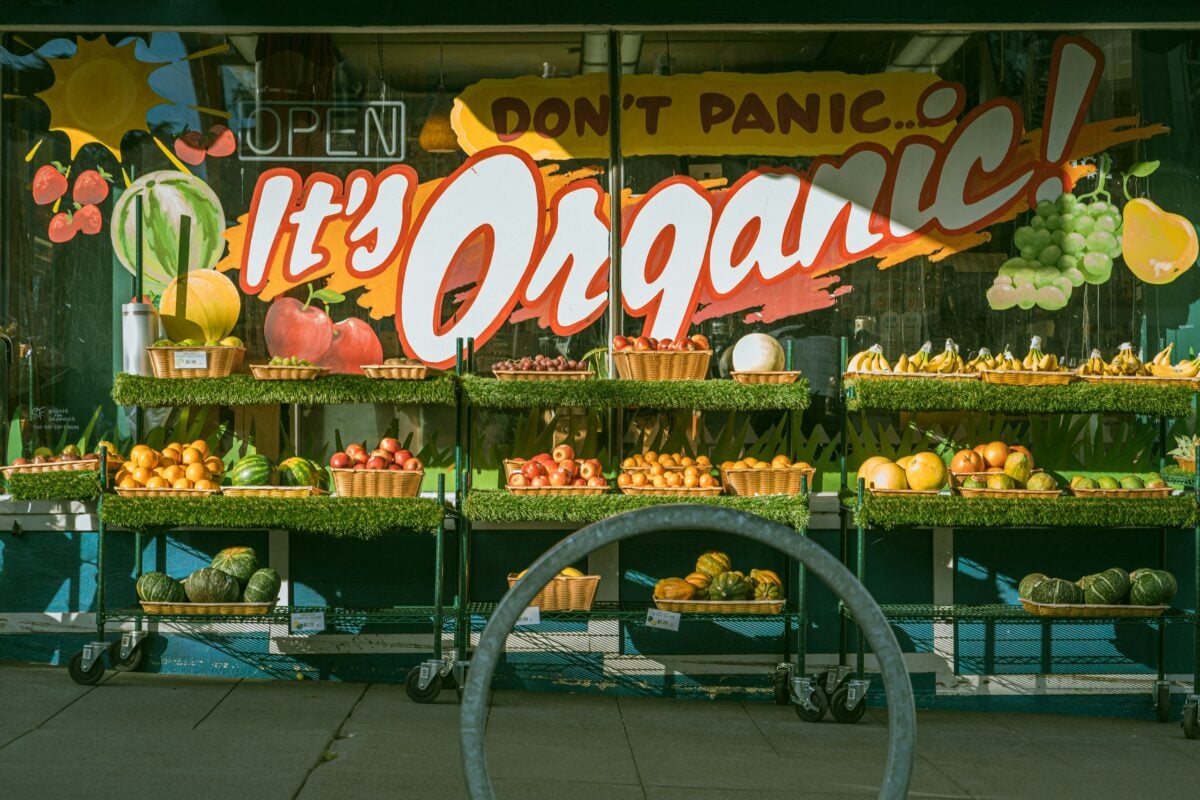
Local generally refers to where food was grown, while organic refers to how it was produced under organic standards. If you’ve ever wondered where those ideas overlap, our guide to the local food movement takes a closer look at what “local” actually means and why it isn’t automatically the same as organic.
A nearby farm can grow produce conventionally. An organic apple can travel hundreds of miles before it reaches your store.
So you can have produce that is:
- local and organic
- local but not organic
- organic but not local
- neither
If organic matters to you, look for organic certification or labeling rather than assuming local automatically means organic. You can also use our Dirty Dozen and Clean Fifteen guide if you’re trying to decide where buying organic produce matters most to you.
“Local” Doesn’t Always Mean Right Down the Road
This is another reason the word can be confusing.
One store might use “local” for produce grown within 50 miles. Another might use it for anything grown in the same state. Someone else may consider food grown a few hundred miles away to be regional.
No universal mileage rule applies to every seller.
That’s why we think “Where was this grown?” is a much better question than “Is this local?”
It gives you a real answer instead of a marketing term.
Pay Attention to What’s in Season
Seasonality can help you make sense of local claims.
If it’s June and nearby farms are harvesting strawberries, seeing local strawberries at a market makes perfect sense.
If you see a display of “local” strawberries in the middle of winter in a cold climate, that’s a good reason to look more closely. They may have been grown in a greenhouse, brought in from a warmer part of the state, or simply labeled more broadly than you expected.
Growing seasons vary a lot depending on where you live, so there isn’t one calendar that works everywhere.
A quick search for “[your state] seasonal produce calendar” can be surprisingly helpful. Your state’s Cooperative Extension service may also have a month-by-month guide.
You can learn a lot just by visiting the same farmers market regularly. When asparagus suddenly appears at several stands, asparagus season has probably arrived. A month later, it may be strawberries. Then corn, tomatoes, peppers, peaches, apples, or squash.
Over time, you start to recognize the rhythm of what’s actually grown near you.
Shopping in season can also make produce easier on the grocery budget. If you tend to use a lot of fruits and vegetables at once, our guide to juicing includes a few practical ideas for buying seasonal produce and making use of imperfect fruits and vegetables.
Fresh and Local Aren’t the Same Thing
Produce can be local and still be past its best.
It can also come from farther away and arrive in very good condition.
So don’t rely on origin alone when you’re choosing what to buy.
- For leafy greens, look for crisp leaves rather than limp, yellowing, or slimy ones.
- For berries, check the bottom of the container for crushed fruit, leaking juice, or mold.
- Cucumbers and peppers should generally feel firm, not soft or badly shriveled.
- With tomatoes, peaches, plums, and other softer fruits, firmness depends on how ripe you want them. Rock-hard isn’t always better.
If you’re buying directly from a farmer, asking “When was this picked?” can also be useful. Something harvested that morning may look and taste very different from produce that has been sitting for several days.
A Simple Way to Shop for Local Produce
If you want an easy system, keep these five questions in mind the next time you shop.
- Where was it grown? Look for a specific farm, town, state, or region.
- Who grew it? A grower’s name is much more useful than a generic “local” sign.
- Is it in season here right now? If the timing seems unusual, ask where it came from.
- What does the package or sign actually say? Country-of-origin information can help narrow things down.
- Can the seller tell you more? At a farm stand, market, or grocery store, a simple question often clears things up.
You don’t need to investigate every tomato you buy.
But if you’d like to know whether your produce really came from nearby, a little curiosity goes a long way. Look for specific place names, get familiar with what’s in season where you live, and ask when the label leaves you guessing.
Once you know what to look for, shopping for local produce gets a whole lot easier.
Frequently Asked Questions About Local Produce
We’ve covered a lot, but a few questions tend to come up again and again when you’re trying to figure out what’s actually local. Here are the quick answers—and if there’s something we missed, leave your question in the comments. We’d be happy to hear what you’re wondering about.
How can you tell if produce is locally grown?
Look for specific information about where it was grown, such as the farm name, town, county, or state. At a farmers market or farm stand, simply ask the seller where it came from. At a grocery store, check signs and packaging or ask someone in the produce department. A specific location tells you much more than a sign that just says “local.”
Does a PLU sticker tell you where produce was grown?
No. The numbered PLU sticker on an apple, avocado, banana, or other loose produce helps stores identify the item at checkout, but it doesn’t tell you the farm, state, or country where it was grown. If you’re trying to confirm that something is local, look for origin information elsewhere on the display or packaging.
Does local produce mean it’s organic?
No. Local and organic mean different things. Local refers to where food was grown, while organic refers to how it was produced under organic standards. A nearby farm can grow conventional produce, and certified organic produce can travel hundreds or even thousands of miles before reaching your store.
Where can I find local produce near me?
Farmers markets, CSAs, farm stands, U-pick farms, food co-ops, and grocery stores that work with nearby growers are all worth checking. You can also search LocalHarvest or the USDA Local Food Directories by location to find options in your area.
Still have a question about finding, choosing, or shopping for local produce? Leave it in the comments below. If you’re wondering about it, there’s a good chance another reader is too.
Keep Exploring Fresh Food at Earth’s Friends
Once you start paying attention to where your produce comes from, a few other grocery-store questions tend to follow.
Wondering whether local and organic mean the same thing? Take a closer look at the local food movement and how the term “local” is actually used.
If you’re trying to decide which fruits and vegetables you might want to buy organic, our Dirty Dozen and Clean Fifteen guide can help you sort through the choices without feeling like everything in your cart has to be organic.
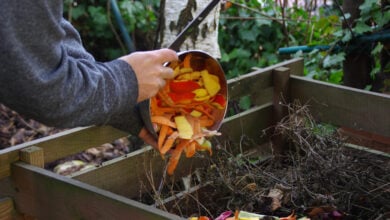
And if fresh produce has you thinking about growing a little food of your own, our homemade composting guide shows how ordinary kitchen scraps can eventually be put back to work in the garden.
The more you know about where your food comes from, the easier it becomes to make choices that work for you—whether you’re shopping at a farmers market, joining a CSA, or simply paying a little more attention in the produce aisle.
Where Do You Find the Best Local Produce?
We’d love to hear what’s worked for you. Share your favorite farmers markets, farm stands, local produce-finding tricks, seasonal shopping tips, or anything else you’ve learned along the way in the comments below. Your tip might help someone else discover a great local source they didn’t know was there.