When you purchase through links on our site, we may earn a commission. Here’s how it works.
You don’t need a backyard, or an expensive gardening setup, to grow some of your own food.
Table of Contents
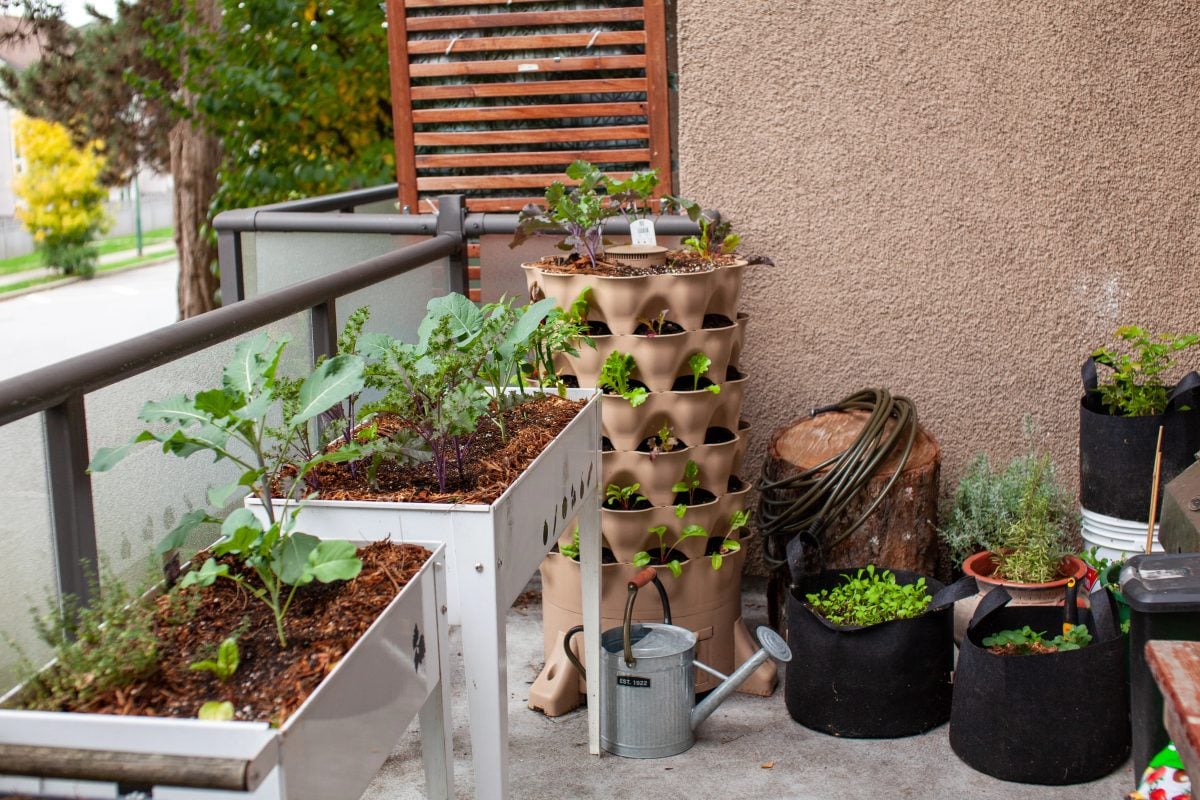
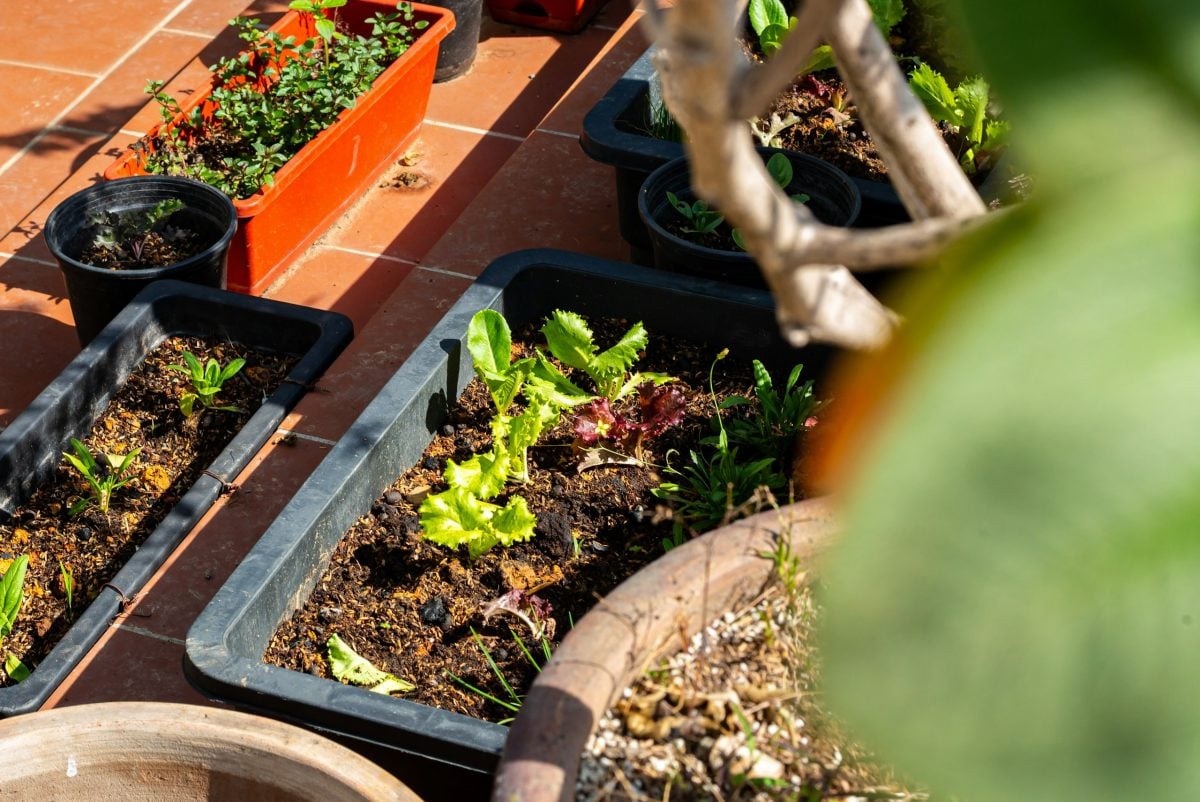
A sunny balcony can hold tomatoes, peppers, strawberries, herbs, and salad greens. A small patio gives you even more options. And if all you have is a bright windowsill, you can still start with herbs and a few compact edible plants.
The trick is knowing what is actually worth growing in a small space.
Some plants produce surprisingly well in ordinary pots and inexpensive containers. Others need so much room, sunlight, or equipment that they’re more trouble than they’re worth for most apartment gardeners.
Want our human-written content to rank above AI-generated garbage? Help us out by clicking this button!
So before you buy a stack of planters or turn your living room into a greenhouse, start with the space you already have.
Here’s what you can realistically grow, what you’ll need, and how to put together a simple apartment garden without spending a fortune.
First: What Kind of Growing Space Do You Have?
Apartment gardening can mean very different things depending on where you live.
You might have:
- A sunny balcony
- A small patio
- A rooftop you’re allowed to use
- A fire escape or exterior area where containers are permitted
- A sunny windowsill
- A bright room with no usable outdoor space
Don’t start by asking, “What do I want to grow?”
Start by asking, “Where does the sun hit my apartment, and for how long?”
That one question can save you a lot of money and frustration.
Warm-season vegetables such as tomatoes and peppers generally perform best with around 6–8 hours of direct sunlight. Leafy vegetables such as lettuce and spinach can produce with less.
Watch your potential growing area on a clear day and make a rough note of when direct sunlight reaches it and when it disappears.
You don’t need an app or a light meter. A few checks throughout the day will give you a pretty good idea.
If You Get 6–8+ Hours of Direct Sun
You have the most options.
Consider tomatoes, peppers, cucumbers, beans, basil, strawberries, and many other vegetables and herbs.
If You Get Around 3–5 Hours
Don’t give up.
Concentrate on lettuce, spinach, Swiss chard, green onions, parsley, and other crops that don’t need as much sun as fruiting vegetables.
If You Get Very Little Direct Sun
An indoor herb or vegetable garden becomes more difficult.
You may be able to grow some leafy plants, but if you want productive tomatoes, peppers, or other sun-loving plants indoors, you’ll probably need supplemental grow lights.
For a low-cost first garden, we’d start with natural light before buying extra equipment.
What Can You Actually Grow in an Apartment?
Quite a lot.
Here are 20 edible plants worth considering for balconies, patios, containers, and other small spaces:
- Lettuce
- Spinach
- Radishes
- Green onions
- Swiss chard
- Cherry tomatoes
- Peppers
- Bush beans
- Carrots
- Cucumbers
- Basil
- Parsley
- Cilantro
- Chives
- Mint
- Thyme
- Oregano
- Rosemary
- Strawberries
- Blueberries
That doesn’t mean all 20 will work in your apartment.
The best apartment garden isn’t the one with the most plants. It’s the one that matches your sunlight, available space, and how much time you actually want to spend caring for it.
Let’s narrow the list down.
The Easiest Vegetables to Grow in Small Spaces
You don’t need much room to grow vegetables, but some crops make far better use of limited space than others. These are some of the easiest options for containers, balconies, and patios, especially if you’re just getting started.
Lettuce
Lettuce is hard to beat for a first apartment garden.
It grows quickly, doesn’t require a huge container, and lets you harvest outer leaves while the plant keeps growing.
- Good for: Balconies, patios, window boxes
- Sun: Around 3–5+ hours
- Container: A wide container around 6 inches deep or more
- Beginner difficulty: Easy
You also don’t need an expensive planter. A basic window box or suitably sized food-safe container with drainage holes can work.
Leaf lettuce is particularly useful because you can grow several plants together and harvest leaves as needed.
Radishes
Radishes are another inexpensive crop to experiment with.
Seeds are generally more practical than buying individual starter plants, and some varieties mature relatively quickly.
- Good for: Balconies and patios
- Sun: Partial to full sun
- Container: Around 6 inches deep or more for some small varieties
- Beginner difficulty: Easy
Because they’re relatively compact, you can fit several into one container.
Green Onions
Green onions don’t demand much horizontal space and can be tucked into smaller containers.
- Good for: Balconies, patios, bright windows
- Sun: Bright light to full sun
- Container: Small or medium container with drainage
- Beginner difficulty: Easy
Rather than giving each onion its own pot, grow several together.
Spinach
If your apartment doesn’t receive enough sunlight for tomatoes, spinach may be a much better use of your space.
It prefers cooler conditions and doesn’t need the enormous pots larger vegetables do.
- Good for: Balconies and patios
- Sun: Partial to full sun
- Container: Wide container around 6 inches deep or more
- Beginner difficulty: Easy
Its biggest limitation is heat. Spinach tends to bolt as temperatures rise, so it’s better treated as a cool-season crop.
Swiss Chard
Swiss chard gives you edible leaves and brightly colored stems without demanding an entire garden bed.
- Good for: Balconies and patios
- Sun: Partial to full sun
- Container: Medium pot with adequate depth
- Beginner difficulty: Easy
Harvest the outside leaves and let the center continue growing.
Peppers
If you have a genuinely sunny balcony, peppers offer a lot of potential food from a relatively small footprint.
- Good for: Sunny balconies and patios
- Sun: 6–8+ hours
- Container: Roughly 3–5 gallons or larger for some varieties
- Beginner difficulty: Easy to moderate
Compact varieties make the most sense when space is limited.
A basic bucket-style container with drainage works; you don’t need a decorative $40 planter.
Cherry Tomatoes
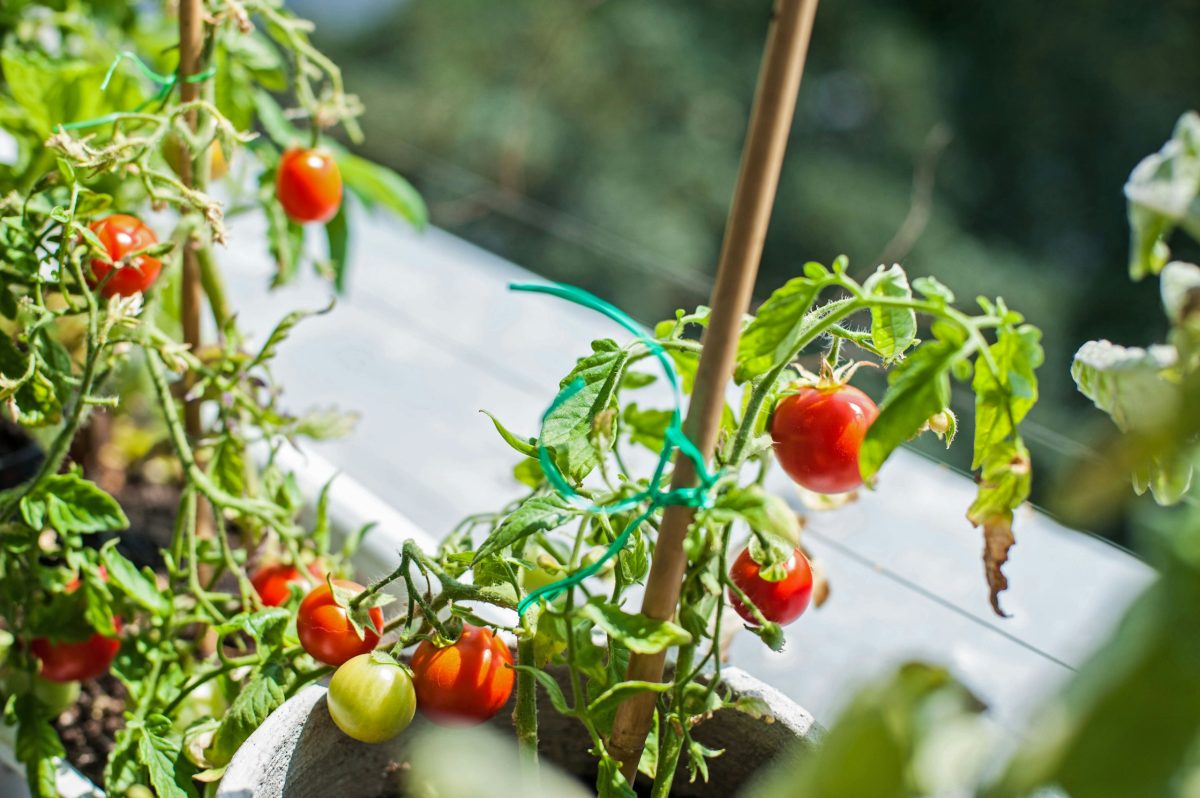
Tomatoes require more attention than lettuce or herbs, but they’re also one of the most satisfying things to grow outside an apartment.
- Good for: Sunny balconies and patios
- Sun: 6–8+ hours
- Container: Large; around 5 gallons should be considered a practical starting point for many container tomatoes, and bigger can be better
- Beginner difficulty: Moderate
Look for varieties described as patio, dwarf, compact, bush, or determinate.
A huge indeterminate tomato isn’t impossible to grow on a balcony, but it may require a much larger container and serious support.
Even compact tomato plants may benefit from a simple tomato cage or plant support as they get larger.
For your first attempt, smaller is easier.
Bush Beans
You don’t necessarily need a trellis covered in vines to grow beans.
Bush beans stay relatively compact and can grow in containers with sufficient sunlight.
- Good for: Balconies and patios
- Sun: Full sun
- Container: Medium-to-large container
- Beginner difficulty: Easy
They’re also easy to start from seed, which keeps costs down.
Carrots
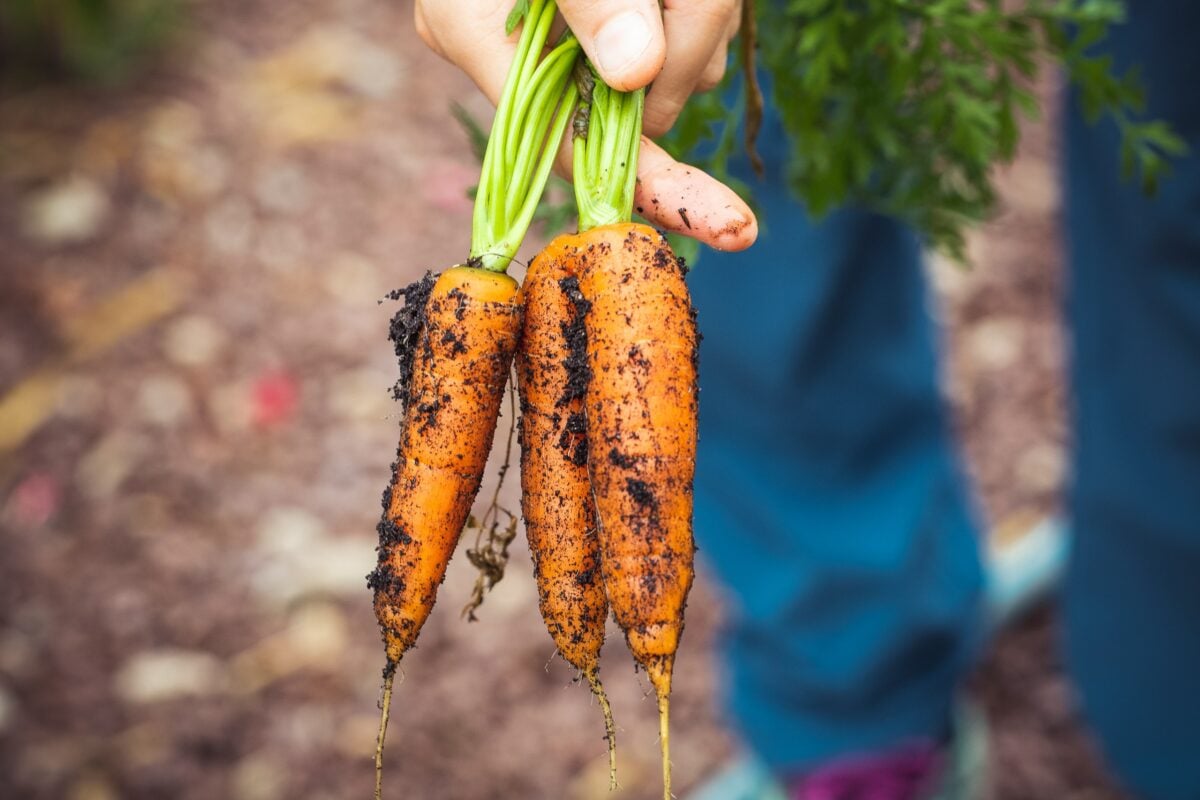
Carrots don’t need much horizontal space. They need depth.
- Good for: Balconies and patios
- Sun: Full sun is best
- Container: Deep enough for the mature carrot variety
- Beginner difficulty: Easy to moderate
If your containers aren’t particularly deep, look for shorter carrot varieties rather than trying to grow giant supermarket-style carrots.
Cucumbers
Cucumbers are where vertical gardening becomes genuinely useful, not just decorative.
Instead of buying an elaborate vertical garden, put a simple trellis or support behind a large container and train the plant upward.
- Good for: Sunny balconies and patios
- Sun: 6–8+ hours
- Container: Large container with support
- Beginner difficulty: Moderate
Compact or bush cucumber varieties are worth seeking out when space is tight.
Once you’ve successfully grown a few vegetables in containers, you may be ready to branch out. Our vegetable gardening guide for beginners goes deeper into planning, planting, and caring for a productive vegetable garden.
Herbs May Be the Best Apartment Garden of All
If your main goal is growing something you’ll actually use, don’t underestimate herbs. They’re also one of the easiest places for a beginner to start. If you want to go beyond the basics below, our beginner’s guide to herb gardening covers everything from getting started to preparing soil and choosing herbs.
Instead of trying to grow everything, start with a few herbs you regularly buy or use in the kitchen.
A few pots immediately outside the kitchen can provide fresh ingredients for months without taking over your balcony.
Basil
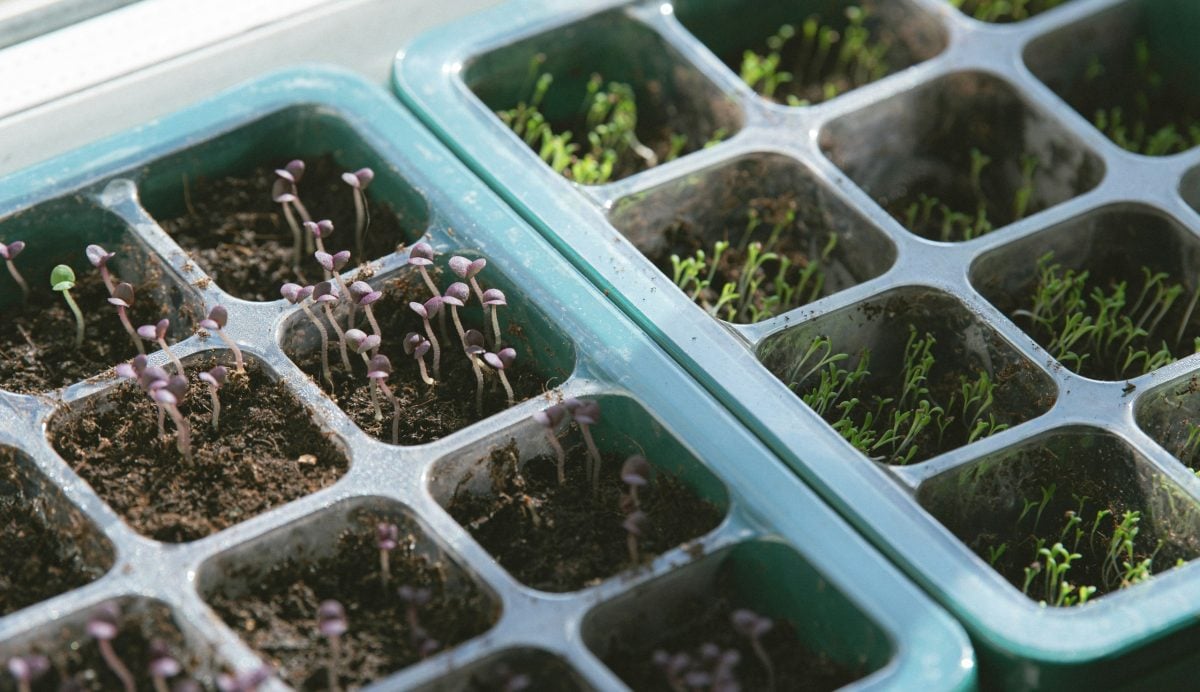
Basil likes plenty of light and regular moisture. Harvesting the growing tips encourages a fuller plant.
If you regularly cook with basil, one productive plant may be more valuable to you than several novelty vegetables.
Parsley
Parsley works well in containers and can be harvested repeatedly, not all at once.
Cilantro
Cilantro is easy to start from seed, although it tends to bolt when conditions become hot.
Instead of planting an enormous batch at once, sow smaller amounts periodically.
Chives
Chives take up little room and can be snipped whenever you need them.
Mint
Mint is actually a plant we’d rather see in a container.
It spreads aggressively when planted in the ground, while a pot keeps it contained.
Give it its own container so it doesn’t overwhelm slower-growing herbs.
Thyme
Thyme stays relatively compact and doesn’t require constantly wet soil.
Oregano
Oregano is another useful compact herb for a sunny container.
Rosemary
Rosemary can eventually become a substantial plant, but it grows well in containers with strong light and good drainage.
Don’t feel compelled to grow all eight.
Pick the three or four herbs you buy most often at the grocery store. That’s usually the most economical apartment herb garden.
Yes, You Can Grow Fruit in Containers Too
Fruit can be a little more demanding than herbs or leafy greens, but a backyard still isn’t required. A few fruits grow surprisingly well in containers, provided you have enough sunlight and choose varieties suited to smaller spaces.
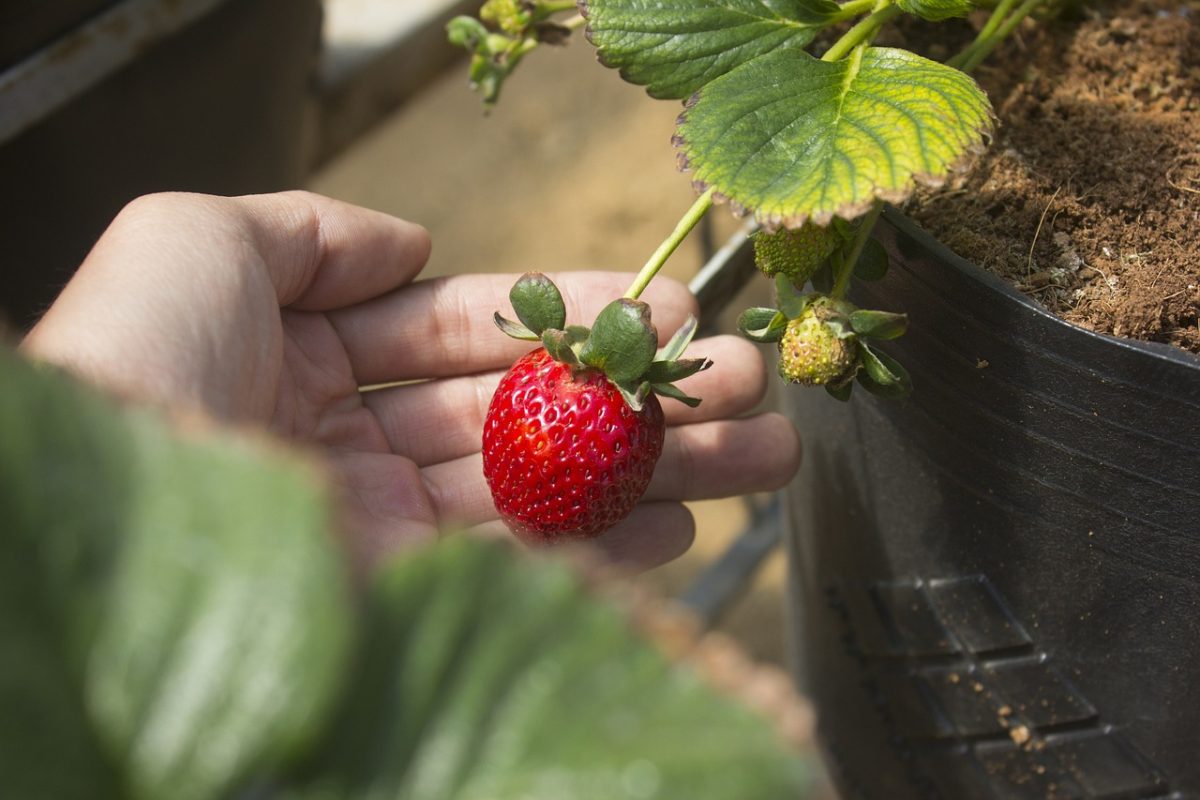
Strawberries
If you only try one fruit, we’d make it strawberries.
They’re compact, attractive, and can grow in pots, window boxes, hanging containers, and strawberry planters.
- Good for: Sunny balconies and patios
- Sun: Full sun for the best fruit production
- Container: Pots, window boxes, or hanging planters
- Beginner difficulty: Easy to moderate
Strawberries are also perfect for using space around the edges of a balcony.
Blueberries
Blueberries can grow in containers, but they’re more demanding.
They require acidic growing conditions and a reasonably large container, and pollination requirements differ by variety.
- Good for: Sunny balconies and patios
- Container: Large
- Beginner difficulty: Moderate
They’re possible, but we wouldn’t make blueberries the first plant in a budget apartment garden.
What Should You Grow on a Balcony?
If you have a sunny balcony, you’ve hit the apartment-gardening jackpot.
A realistic beginner setup might be:
- One large pot: Compact cherry tomato
- One medium pot: Pepper
- One window box: Lettuce and/or radishes
- One smaller container: Strawberries
- Two or three small pots: Your favorite herbs
That’s already a real edible garden.
And notice what’s not on that list: a vertical hydroponic tower, self-watering planters, a greenhouse, an irrigation system, or 20 designer pots.
Start simple.
If the garden succeeds and you enjoy caring for it, expand next season.
A Few Balcony Precautions
Check your lease or building rules before attaching anything to railings or exterior walls.
Wind also becomes more important on upper floors. Make sure pots, trellises, and hanging planters are secure.
And think about where water will go when you water your plants. Your downstairs neighbor probably doesn’t want to be part of your gardening experiment.
What Should You Grow on a Windowsill?
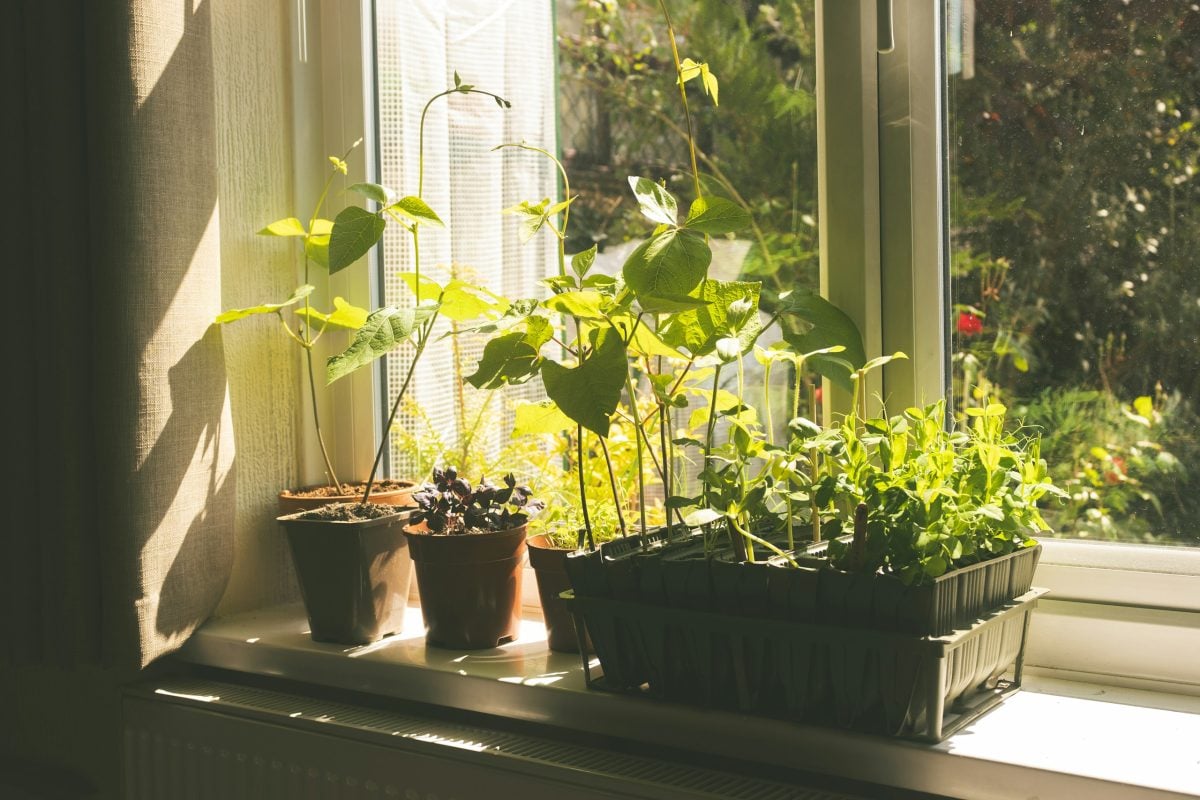
A windowsill garden needs more realistic expectations.
A window that appears bright to us doesn’t necessarily provide the intense direct sunlight vegetables receive outdoors.
Your best low-cost starting point is usually a few herbs.
Try:
- Chives
- Parsley
- Thyme
- Basil if the window gets enough direct light
- Green onions
- Some leafy greens where conditions are suitable
Tomatoes, peppers, strawberries, and cucumbers are much more demanding indoors.
They may require grow lights to perform well, which adds both equipment and electricity costs.
If you’re trying apartment gardening because you want an inexpensive hobby, we’d start with the plants that naturally fit your conditions rather than immediately trying to recreate outdoor sunlight indoors.
What Should You Grow on a Small Patio?
A patio gives you more room for large containers and makes an inexpensive container garden particularly easy.
Put your biggest sun-loving plants—such as tomatoes, peppers, cucumbers, and strawberries—in the sunniest positions.
Use the remaining space for containers of lettuce, radishes, green onions, and herbs.
And think upward.
A cheap trellis behind a cucumber pot can turn several feet of empty air into usable growing space.
You Don’t Need Fancy Planters
This is one place where the original idea behind apartment gardening still holds up: get creative with containers.
A plant doesn’t care whether its container matches your outdoor furniture.
Traditional flower pots work. So can buckets and other suitably sized containers.
Whatever you use needs to:
- Be suitable for growing edible plants
- Give the roots enough room
- Hold potting mix
- Have adequate drainage
- Be strong enough to hold wet soil without failing
If a suitable container doesn’t have drainage holes, add them when you can safely do so.
One thing we wouldn’t do is add a layer of gravel or rocks to the bottom of a pot to “improve” drainage. That’s common old gardening advice, but it doesn’t improve container drainage the way many people assume.
Good drainage holes and an appropriate potting mix matter more.
Inexpensive fabric grow bags are another option, especially for larger plants such as tomatoes and peppers
Cheap and Repurposed Container Ideas
Before buying new planters, look at what you already have.
Food-grade buckets can make practical larger planters. Nursery pots can often be reused. Simple window boxes hold a surprising amount of lettuce and herbs.
You can also ask friends or family whether they have unused pots sitting in a garage or shed.
Just don’t turn “free container” into the only requirement.
Avoid containers that previously held paint, automotive fluids, pesticides, cleaners, or other potentially harmful substances if you’re growing food.
And remember: wet potting mix is heavy.
That matters especially on balconies, rooftops, shelves, and wall-mounted planters.
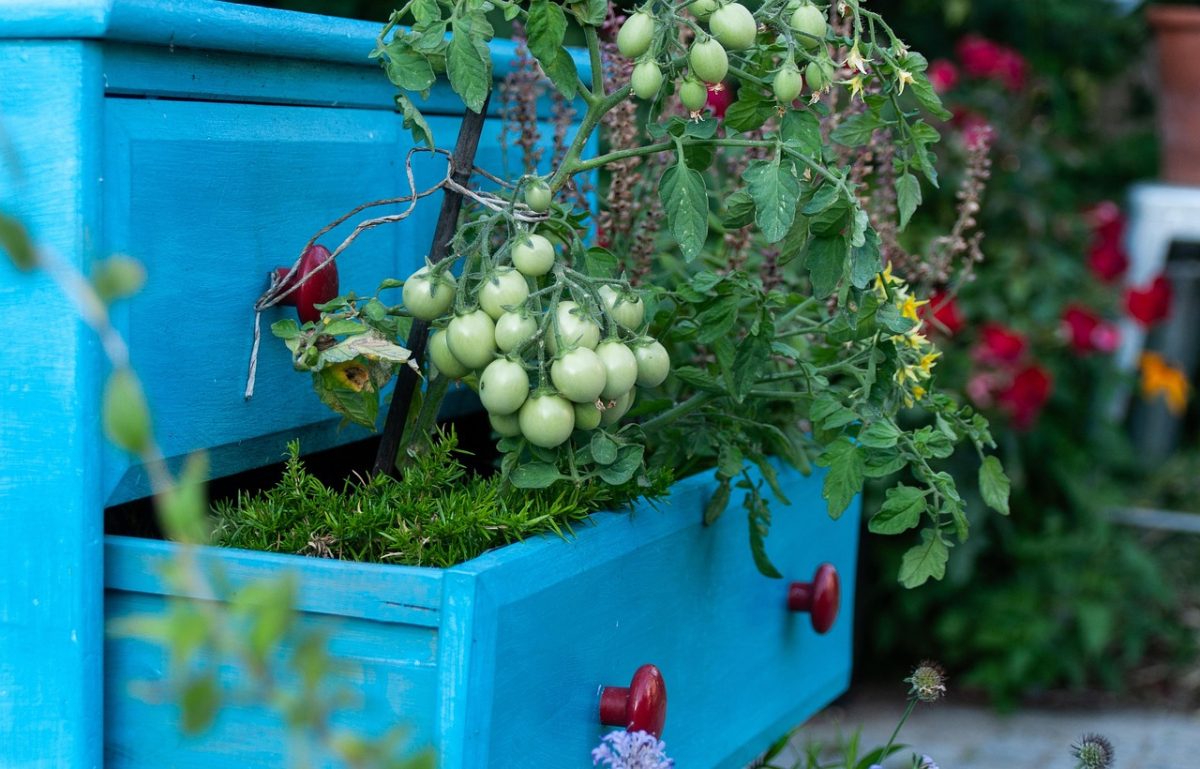
Make Cheap Planters Look Better
One downside of gardening on a budget is that your collection of reused buckets, nursery pots, and mismatched containers may not exactly look like the balcony garden you pictured.
Fortunately, you don’t need to replace perfectly good containers just because they aren’t pretty.
A little creativity can make an inexpensive apartment garden feel much more intentional.
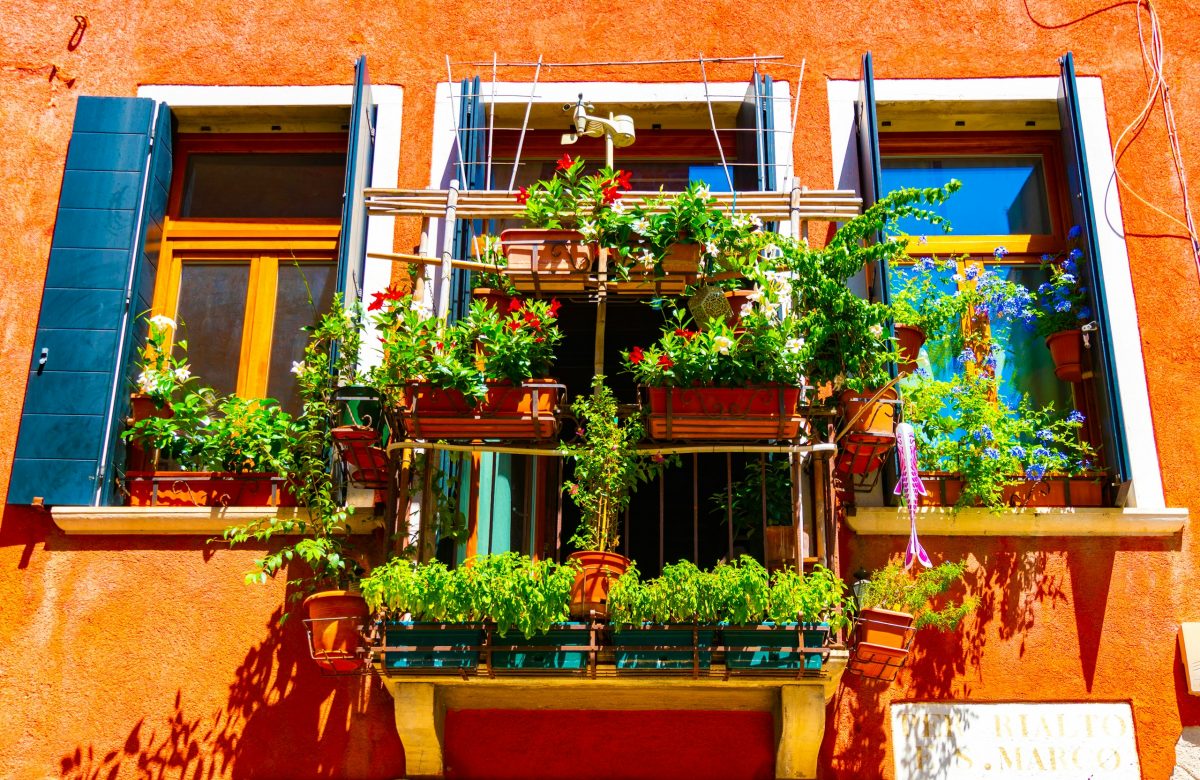
You can paint the outside of suitable containers, add simple plant labels, group pots in coordinating colors, or place inexpensive nursery pots inside decorative outer containers you already own. Even arranging several mismatched pots together on a small bench, shelf, or plant stand can make them look like a collection rather than clutter.
If you’re decorating containers used for edible plants, keep paints, adhesives, and other craft materials on the outside of the planter and use products appropriate for the material and location. Don’t coat the inside of a food-growing container with something simply because it looks good.
You can also let the plants do some of the decorating.
Strawberries spilling over the side of a planter, colorful Swiss chard, flowering herbs, and a tomato climbing a simple trellis can make a balcony feel lush without adding much else.
And don’t feel like every pot has to match. Repeating just one or two elements—similar plant labels, a common color, or containers grouped at different heights—can pull the whole garden together.
The goal isn’t to spend another $100 making your inexpensive garden look expensive.
It’s to make the containers you already have look as if they belong there.
Do You Need Special Potting Soil?
Don’t fill apartment containers with dirt dug out of a random yard.
Container plants do better in growing media designed to balance moisture retention, drainage, and the air roots need.
This is one place where spending a little money makes sense.
A bag of quality potting mix used in inexpensive containers is generally a better investment than expensive decorative pots filled with poor soil.
As you get more serious about growing your own food, compost can also become a useful soil amendment—and a way to put some of your kitchen scraps to work instead of throwing them away. If you’re curious, here’s our beginner-friendly guide to homemade composting.
Do You Need Fertilizer?
Eventually, probably.
Container plants have access to a limited amount of growing medium, and frequent watering can carry nutrients out of the pot. If your plants need additional feeding, our guide to organic garden fertilizers explains NPK and what to look for when choosing fertilizer for vegetables, fruits, and other plants.
But you don’t need a shelf full of specialized products to get started.
Check whether your potting mix already contains fertilizer, follow the needs of the plants you’re growing, and avoid assuming that more fertilizer automatically means more vegetables.
What About Vertical Gardens?
Vertical gardening makes a lot of sense in apartments.
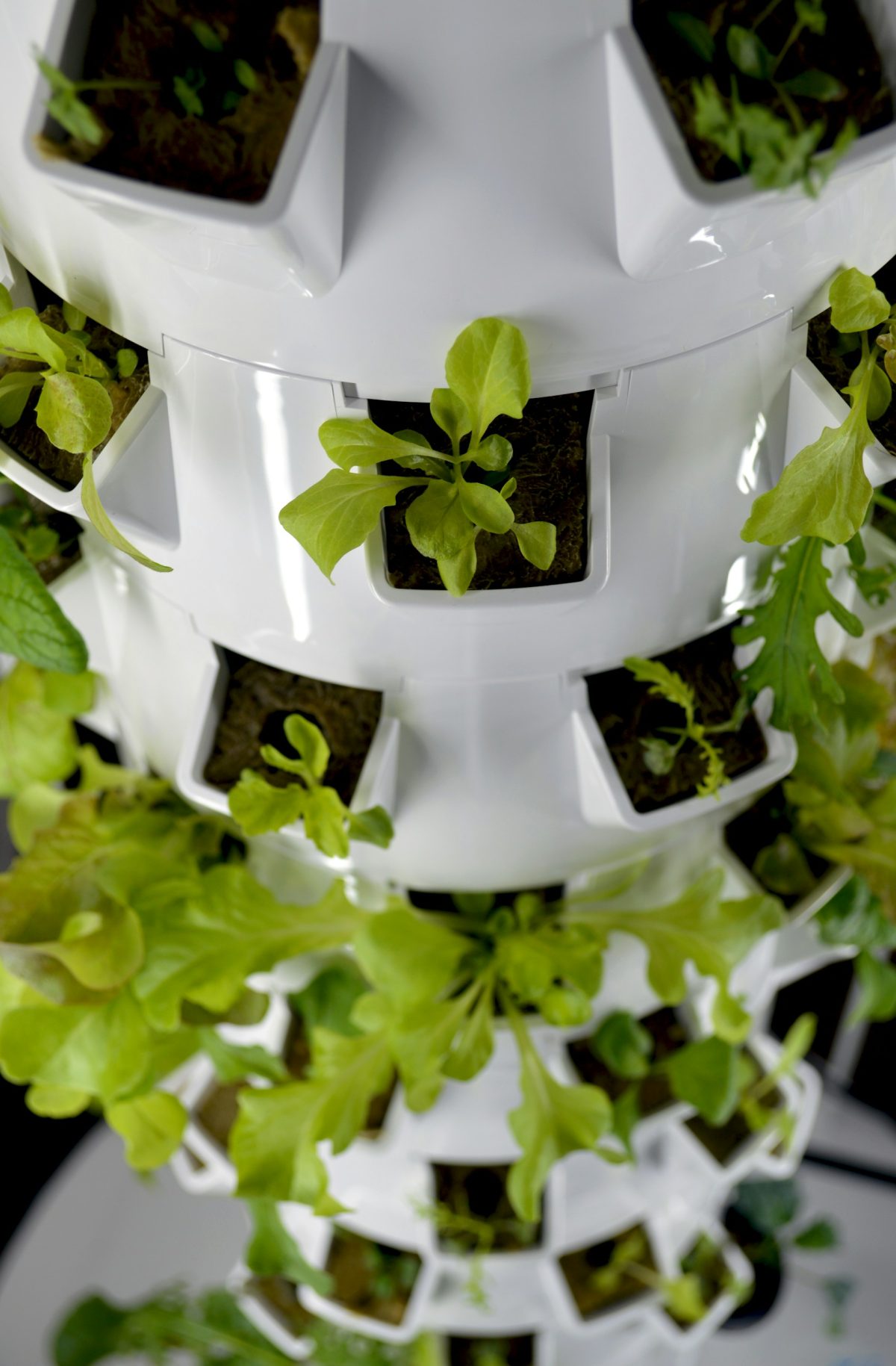
Expensive vertical gardening systems aren’t necessarily required. The cheapest version is simply growing a climbing plant upward instead of outward.
Cucumbers can climb a trellis. Some beans can climb supports. Hanging planters can use overhead space. Shelves can hold several smaller pots in the footprint of one.
That’s vertical gardening too.
If you enjoy DIY projects, you can get more elaborate. But don’t make building the garden more complicated than growing the plants. A basic container trellis can help cucumbers and other climbing plants grow upward instead of taking over valuable floor space.
Can You Use Bottles and DIY Wall Planters?
You can repurpose some household items into planters, but we’d simplify the approach compared to many older DIY gardening tutorials.
The biggest issues are drainage, stability, light, and mess.
A bottle hanging on an indoor wall may look clever on Pinterest, but if it holds too little growing medium, doesn’t drain properly, or drips onto your floor, it may not be a good planter.
Use DIY containers where they genuinely solve a space problem—not simply because they’re free.
What About Rooftop Gardens?
Rooftops can provide fantastic sunlight and growing space, but they come with issues that ordinary patios don’t.
Weight, wind, drainage, access, building rules, and structural capacity all matter.
Don’t rely on a generic rule about how much weight a roof can hold.
If your building has an approved rooftop area where residents can garden, containers may be an option. For anything more substantial, talk with the property owner or manager and get appropriate professional guidance.
And, obviously, don’t create a garden anywhere that requires unsafe access or puts you at risk of falling.
What NOT to Bother Growing in a Tiny Apartment Garden
This may save you more frustration than any other section.
Just because something can be grown in a container doesn’t mean it’s a smart use of three square feet of balcony.
Sweet Corn
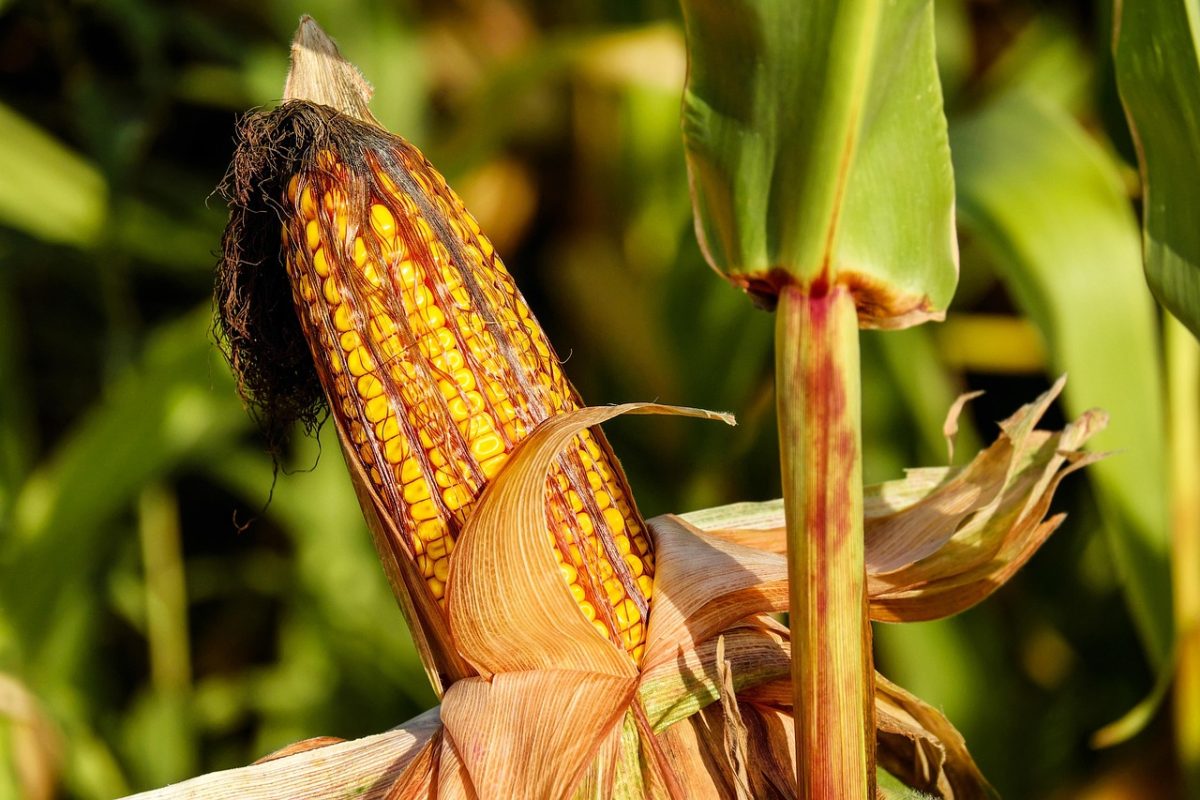
Corn is a poor bargain when space is precious.
It takes up room, grows tall, and relies on wind pollination. One or two stalks won’t give most apartment gardeners much of a harvest.
Watermelon
Watermelon vines want space.
Compact varieties exist, but if your entire outdoor area is a tiny balcony, strawberries are considerably easier.
Large Winter Squash and Pumpkins
Again: vines.
Pumpkins are fun. They’re less fun when the plant decides your entire balcony is its.
Full-Size Zucchini
People sometimes imagine zucchini as a tidy little vegetable plant.
Then they grow one.
Standard zucchini plants can become surprisingly large. Compact varieties are available, but lettuce, peppers, herbs, or strawberries may give you a better return on limited space.
Giant Indeterminate Tomatoes
Yes, you can grow them in containers.
But an indeterminate tomato can become a huge vine requiring a large pot, frequent watering, and substantial support.
A compact patio or dwarf tomato is usually a much friendlier introduction to apartment gardening.
7 Apartment Gardening Mistakes That Waste Money
Apartment gardening doesn’t have to be expensive, but a few common mistakes can quickly waste money on plants, containers, and supplies you don’t actually need. Avoid these beginner slip-ups, and you’ll have a much better chance of getting more from a simple, low-cost setup.
1. Buying Plants Before Checking Your Sunlight
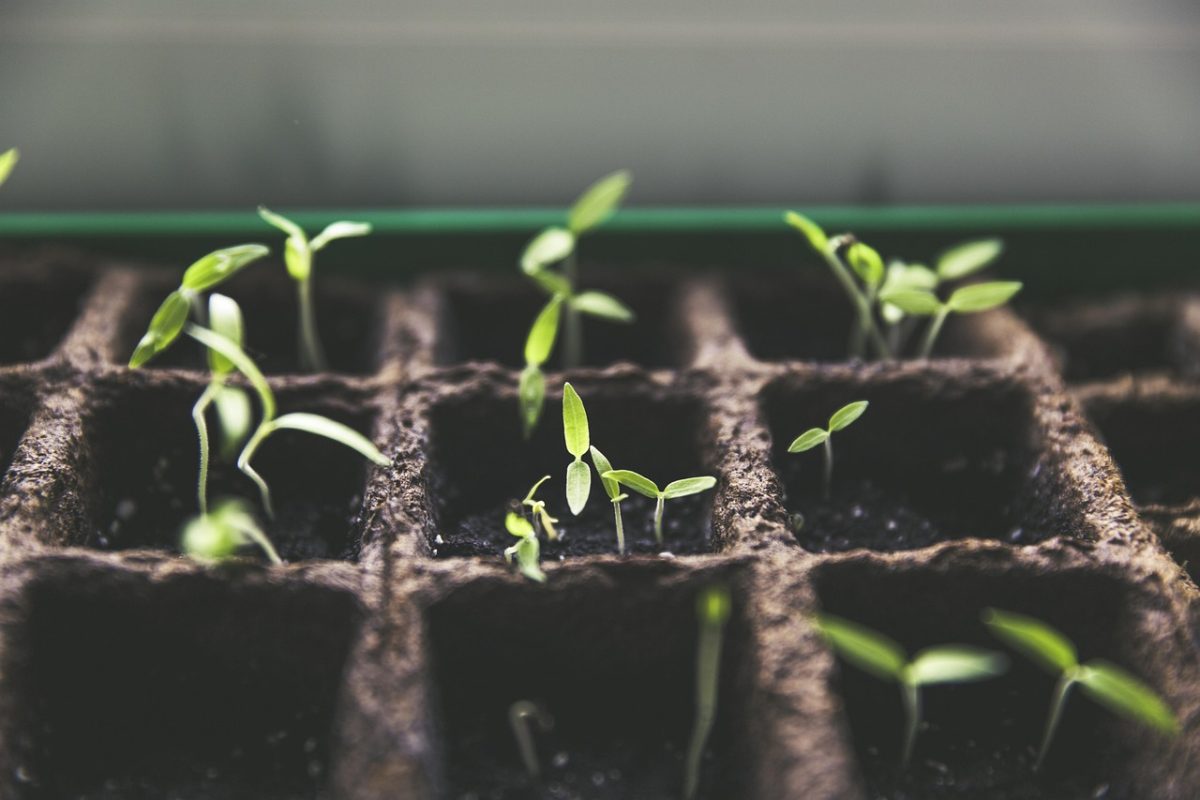
This is probably the easiest way to waste money.
A beautiful pepper plant isn’t a bargain if your balcony doesn’t get enough sunlight to grow peppers well.
2. Buying Expensive Pots Before You Know You Like Gardening
Your first season is an experiment.
Use basic containers and spend your money where it matters: suitable plants, seeds, potting mix, and perhaps a simple support.
You can upgrade the aesthetics later.
3. Using Containers That Are Too Small
A cheap container isn’t cheap if your plant can’t thrive in it.
Match the container to the mature plant, not the tiny seedling you brought home.
4. Forgetting Drainage
Containers need drainage holes.
Without them, excess water can accumulate around the roots.
Good drainage matters more than adding rocks or gravel to the bottom of the pot. In fact, the University of Maryland Extension notes that rocks, gravel, and broken pot shards can actually make drainage problems worse.
5. Putting Rocks in the Bottom of Pots
Skip the gravel layer. Use appropriate potting mix and adequate drainage holes instead.
6. Growing Too Much at Once
Twenty plants sound exciting until you need to water twenty plants during a hot week.
Start with a handful. You can always add more.
7. Growing Things You Don’t Eat
This sounds obvious, but it’s surprisingly easy to get carried away at the seed rack.
If you don’t cook with rosemary, don’t grow rosemary just because it’s easy. The most useful apartment garden grows food you’ll actually walk outside and pick.
Three Realistic Apartment Garden Setups
You don’t need to turn your apartment into a farm to grow something worth eating.
In fact, starting small is usually better. You’ll spend less money, figure out how much sunlight your space really gets, and learn how quickly containers dry out before you’re responsible for keeping 20 plants alive.
The right setup depends mostly on the space you have. Here are three realistic ways to start, from a few herbs on a windowsill to a small patio garden that can produce a surprising variety of food.
Setup #1: The Cheap Windowsill Herb Garden
Good for: Apartments with no outdoor space
Space needed: One bright, sunny windowsill
Start with: 3 herbs
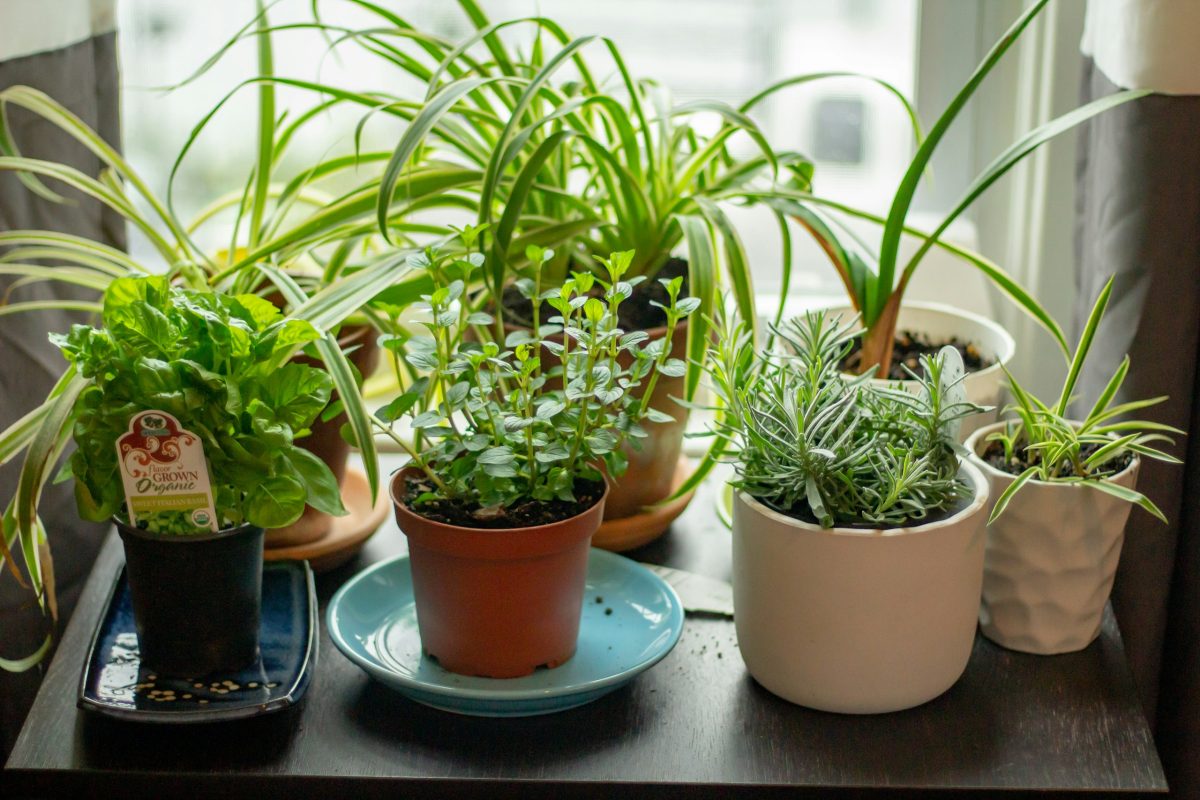
If the only growing space you have is a windowsill, don’t try to force a full vegetable garden into it. Start with a few herbs you’ll actually use.
A simple setup could include:
- Basil
- Chives
- Parsley
Use three small pots or one suitably sized planter with drainage holes, along with a quality potting mix.
That’s really all you need to begin.
If you already have suitable containers around the house, you may be able to reuse them. Just make sure they’re appropriate for growing food, have adequate drainage, and are large enough for the plants.
Place the herbs in your brightest window and pay attention to how they respond. If the plants become thin and stretched or don’t grow well, insufficient light may be the problem.
Most importantly, resist the urge to buy an entire indoor gardening system before you know whether you enjoy growing things indoors.
You don’t necessarily need grow lights, plant shelves, timers, self-watering pots, or a countertop hydroponic garden to grow your first few herbs.
- Where to spend: Good potting mix and healthy plants or seeds.
- Where to save: Containers, decorative accessories, and gadgets.
If you can successfully keep three useful herbs growing on a windowsill, you’ve already got an apartment garden.
Setup #2: The Small Sunny Balcony Garden
Good for: Someone who wants fresh food without giving up the whole balcony
Space needed: A small area receiving around 6–8 hours of direct sun
Start with: Around 5 containers
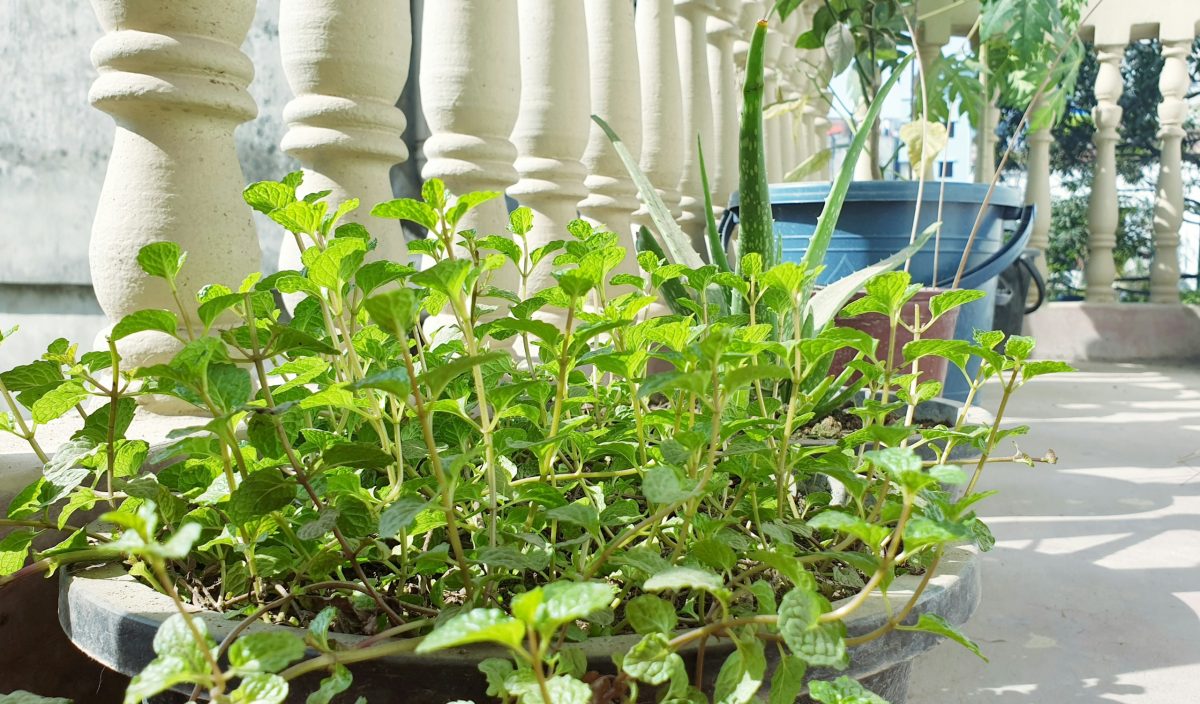
A sunny balcony opens up considerably more possibilities.
But that doesn’t mean you need to line every inch of railing with planters.
A practical first setup could include:
- 1 compact cherry tomato
- 1 pepper plant
- 1 window box of lettuce
- 1 container of strawberries
- 2–3 herbs
Put the tomato in your largest container because it needs considerably more root space than lettuce or herbs. Give the pepper its own medium-to-large pot, and use a window box or wide container for lettuce.
Strawberries can go in another pot, window box, or suitable hanging planter if you have a safe place for one.
Then tuck a few herbs into the remaining space.
This gives you a surprisingly diverse garden without taking over your balcony: tomatoes and peppers for summer meals, lettuce for salads, strawberries to pick and eat, and fresh herbs for cooking.
You can also stagger the heights of your plants to make better use of a small footprint. Put taller tomatoes and peppers toward the back, shorter containers toward the front, and use vertical space where it makes sense.
There’s no need for every container to match.
Basic nursery pots, food-safe buckets, window boxes, and inexpensive planters can all have a place in a budget garden when they’re appropriately sized and have adequate drainage.
- Where to spend: Potting mix, a sufficiently large tomato container, and sturdy support for the tomato if needed.
- Where to save: Matching planters, elaborate vertical systems, and decorative gardening equipment.
One important consideration is water. Make sure excess water won’t drain through your balcony onto a neighbor below, and check building rules before hanging anything from railings or attaching planters to the structure.
Setup #3: The Food-Focused Patio Garden
Good for: Someone with more outdoor space who wants to harvest a useful variety of food
Space needed: A sunny patio or larger balcony with room for several containers
Start with: Around 8–12 containers, depending on their size
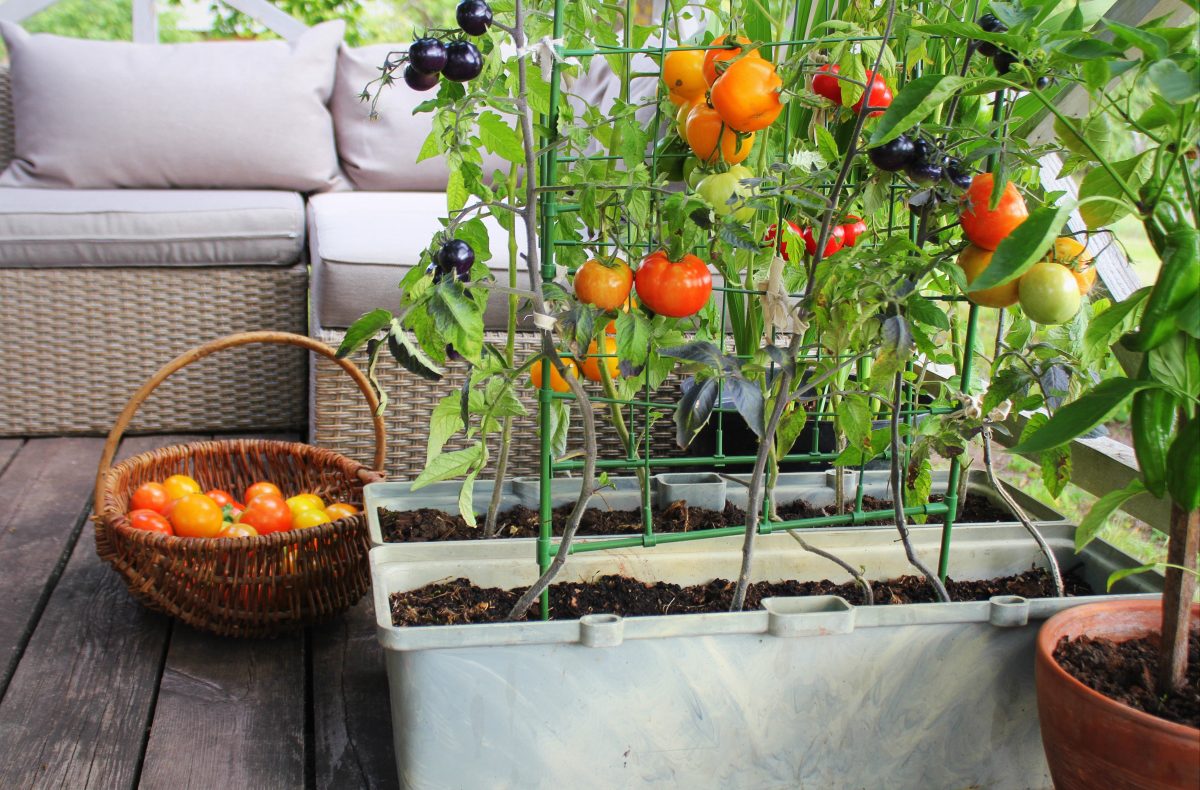
If you have a small patio, you can move beyond “a few things in pots” and create a genuinely productive container garden.
A good starting combination might be:
- 2 compact tomatoes
- 2 pepper plants
- 1 trellised cucumber
- 1 container of bush beans
- 1 wide container of salad greens
- 1 container of strawberries
- Several pots of herbs
This gives you several different kinds of harvest without requiring permanent garden beds.
Use the sunniest locations for tomatoes, peppers, cucumbers, and strawberries. Smaller containers of herbs and greens can fill gaps around them according to their individual light requirements.
This is also where vertical growing becomes especially useful.
A cucumber trained up a simple trellis uses the empty space above its pot rather than sprawling across the patio. Depending on what you grow, plant supports can also help keep vegetables upright and make the whole garden easier to manage.
You can even reuse the same container for different crops during the year.
For example, grow a cool-season crop such as lettuce early in the season, then replace it when hot weather arrives. Plant another round of greens as temperatures cool again.
That’s succession planting, and it’s one of the easiest ways to get more food from a limited amount of container space without buying more pots.
- Where to spend: Quality potting mix, appropriately sized containers for large plants, and sturdy supports where needed.
- Where to save: Decorative pots, expensive raised planters, elaborate irrigation systems, and specialized equipment you don’t yet know you need.
You also don’t have to buy everything in one weekend.
Start with the tomatoes, peppers, greens, and herbs. Add the cucumber, beans, or strawberries once you know where everything fits and how much time you’re spending on watering.
At this point, you have enough space to experiment with different vegetables, succession planting, and vertical growing while still keeping everything in movable containers.
And that’s one of the biggest advantages of apartment and patio gardening: if a plant isn’t happy where you put it, you can often move the pot.
Start With the Smallest Setup That Fits Your Space
It’s easy to look at photos of lush balcony gardens and assume you need dozens of containers to make apartment gardening worthwhile.
You don’t.
Three pots of herbs you use every week are more useful than 15 plants you struggle to keep alive. A tomato, pepper, lettuce box, and strawberry planter can provide plenty of variety for a first season.
Start with the setup that fits your space and budget now.
How to Start for Less Money
The easiest way to overspend is buying everything marketed specifically for “urban gardening.”
You don’t need most of it.
Prioritize:
- Seeds for easy crops. Lettuce, radishes, beans, cilantro, and similar crops are inexpensive to start from seed.
- Starter plants where they make sense. A healthy tomato or pepper transplant can save a beginner time.
- Basic containers. Reuse suitable ones where possible.
- Potting mix. Don’t cheap out on the thing your plants actually grow in.
- A simple watering can or container. It doesn’t need Wi-Fi.
- Basic supports. Only for plants that actually need them.
That’s enough to start.
The Benefit of Apartment Gardening
An apartment garden won’t eliminate your grocery bill.
That’s not really the point.
It can give you fresh herbs immediately outside your kitchen, lettuce you can harvest a few leaves at a time, strawberries picked ripe, or cherry tomatoes that never had to spend a week being shipped to a supermarket.
It also turns balconies, patios, and windowsills that might otherwise go unused into productive spaces.
And you don’t have to build the entire garden at once.
Start With Five Things
Still not sure what to grow? Don’t overthink it.
For a sunny balcony or patio, a simple starter garden could include:
- 1 compact cherry tomato
- 1 pepper plant
- 1 container of lettuce
- 1 container of strawberries
- 2 or 3 herbs you actually cook with
Small-space tip: Choose containers based on the plant’s root needs, not just the space you have. Use larger pots for tomatoes and peppers, then tuck smaller herb pots and shallow containers of greens around them to make the most of every inch.
Working with less sunlight? Skip the tomato and pepper and focus on leafy vegetables and herbs that can handle lower-light conditions.
A sunny windowsill calls for an even simpler approach. Start with two or three herbs you’ll actually use in the kitchen.
Then see what happens.
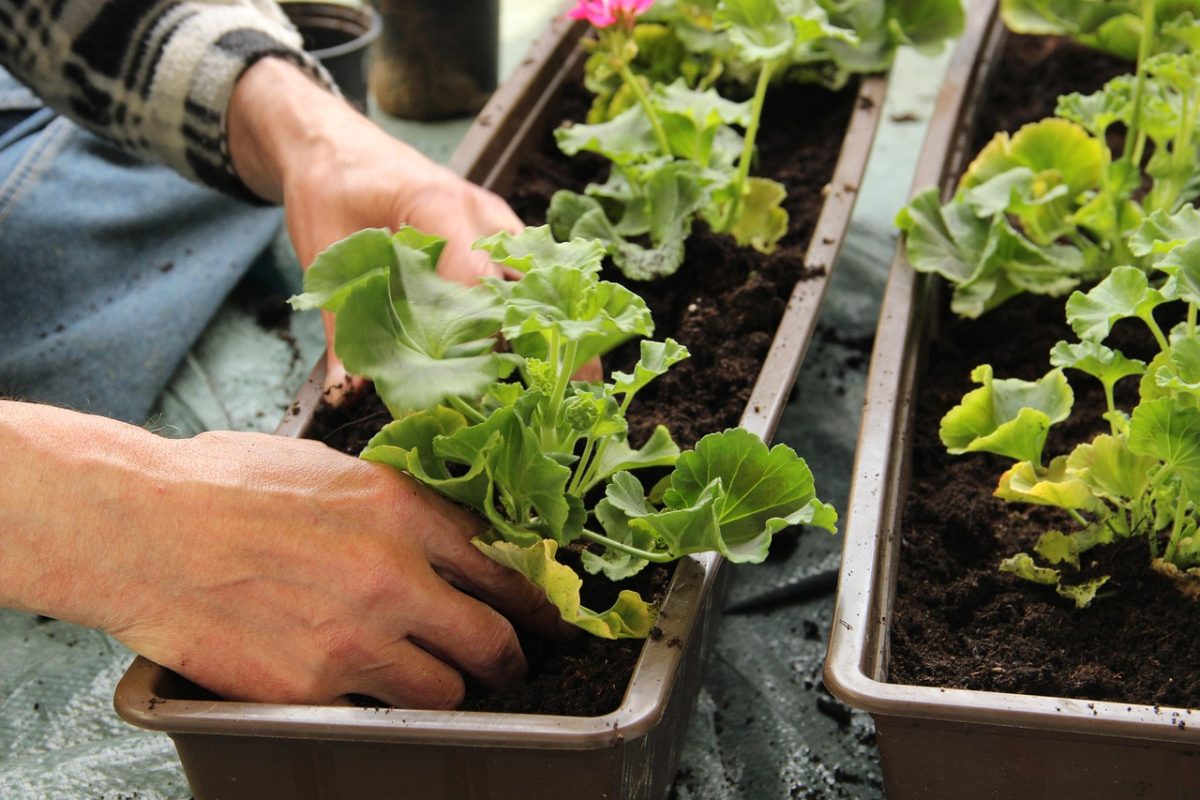
You’ll learn how quickly your pots dry out, where the strongest sunlight falls, which plants thrive, and which ones aren’t worth trying again.
Next season, you can grow more.
Because successful apartment gardening isn’t about squeezing as many plants as possible into a tiny space—or buying enough equipment to turn your balcony into a miniature farm.
It’s about figuring out what grows well in the space you already have and starting small enough to actually enjoy it.
Keep Growing: Where to Go From Here
Starting an apartment garden may begin with a pot of basil or a tomato on the balcony, but it can quickly change the way you think about food.
Once you’ve tasted something picked a few feet from your kitchen, you may start wondering what else you could grow—and where the rest of your food comes from.
If you eventually have access to a little more outdoor space, you can take the next step without spending a fortune. See how to build a raised garden bed cheaply using simple materials, or learn how to deal with unwanted plants using our guide to homemade weed killers.
Growing your own food can also make you think differently about the produce you still buy. Our look at the EWG’s Dirty Dozen explains which fruits and vegetables make the list and what it actually means, while our guide to the local food movement explores the benefits of buying food grown closer to home.
And if you eventually have a yard of your own, it doesn’t have to be devoted entirely to vegetables. A wildlife garden can provide food, water, shelter, and habitat for birds, pollinators, and other local wildlife.
For now, though, don’t worry about creating the perfect garden.
Start with the sunny corner, balcony, patio, or windowsill you already have. Grow a few things you actually like to eat, learn what works in your space, and build from there.
A backyard can wait. Your garden doesn’t have to.
What Are You Growing?
Have you tried growing food in a small space? Tell us what’s worked (or what hasn’t!) in the comments. We’d love to hear about your setup.