When you purchase through links on our site, we may earn a commission. Here’s how it works.
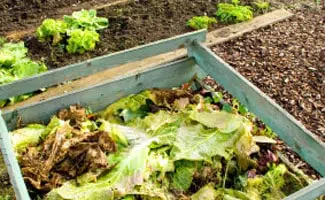 If you have been thinking about making compost but think that it may be too difficult, complicated, or time-consuming, you have come to the right place. We aim to make it clear and simple. While composting can be an exact science, it certainly doesn’t need to be. After all, Mother Nature does composting all the time without the help of human effort. We can join her efforts without making it a big deal. We’re going to discuss composting methods and then show you how to make your own homemade composting bin.
The Two Types of Composting
Composting can be categorized into two basic types:
- Passive composting
- Active composting
Passive Composting
Passive composting is simpler and requires very little work on your part while active composting is more complex and demands more of your time, energy, and mental capacities. Both types of composting result in the same end product, however, so for the purpose of this article and to keep it true to the how to make homemade compost title, we will focus on passive composting.
But before we get into the specifics of composting, we need to address some basic information.
What Is Compost?
Simply put, compost is plant food. It is light, nutrient-rich soil that you put in your garden or potted plants to make them grow better. Essentially, when you go to the garden center to purchase bags of soil, you are buying manufactured compost. Compost is the best of everything you plants need:
- Mulch
- Plant food
- Fungicide
- Disease deterrent
Why Make Your Own Compost?
There are several reasons why you should make your own, homemade compost:
Composting Is Economical
- You already have most, if not all the things you need to make compost, so you do not have to spend any extra money to make it.
- You also save money when you make compost because you will no longer need to buy soil and plant food at the garden center.
- You cut down on your trash and garbage removal fees because you have less for the garbage man to take.
- Researchers estimate that 30 – 40% of all household waste could be converted into compost.
That’s a significant reduction in your waste pick up costs!
Composting Is Fun!
 If you like to garden, you no doubt like to be outside. Composting is fun because you get to be outside doing something creative and productive. If you like plants, you probably like to see things grow. Composting is fun because you get to nurture your plants and make them grow by your own efforts, especially when you know that you are feeding them home-made meals, so to speak.
Composting Is Environmental
24 % of all the solid waste is yard trimmings and food waste that could be diverted from the landfills by composting!
How Long Does Homemade Composting Take?
Let’s first answer this in terms of the composting activity itself. It takes no longer to make compost than it takes to bag up your yard cuttings and put it out for the trash pick-up. And it takes no longer to make compost than it takes to put your table scraps down the garbage disposal. It does take a few extra minutes each week to go outside and look at your pile and stab at it a bit with a shovel. In terms of how long it takes to get from beginning your collection of compost materials to the finished product of complete compost – it takes one year.
How to Make Homemade Compost
 Before we get to the actual steps of composting, you will have to decide where and how to collect your materials. There are three possible ways to collect your material:
- Make a bin
- Buy a bin
- Pile it freely with no container
The decision is entirely up to you depending on your yard/ neighborhood environment and your personal preference.
If you have plenty of space outside and don’t want to contain your compost, simply designate an area where you will collect your materials. If you want to contain it, however, you can either buy a bin or make your own.
Buying a Compost Bin
There are all kinds of bins for sale made especially for the containment of compost materials. A quick search on the internet will show you the myriad of choices available in size, color, style and materials.
How to Make Your Own Compost Bin
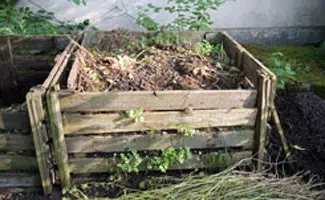
If you want to make your own compost bin, here’s how. Simply nail together four skids and you’ve got a perfect 64 cubic foot bin. You can also construct one out of easy to mold wire. Chicken wire is a bit too flimsy, but anything else will work just fine. Just nail the wire to four posts and you’ve got a bin.
Make Your Compost Pile Directly on the Ground
It is best to make your compost pile directly on the ground. The earth below will aid the decomposing process. If you buy a bin, however, you may not have this option. You may also want to build a bin over a concrete slab or other such outdoor surface. Although it is best to compost over the raw ground, this option may not always be feasible. In such cases, you should put some finished compost in the bottom of the bin to initiate the decomposing process.
Once you have decided on where you will keep the compost materials, whether or not you want to contain it, you are ready to follow these steps.
Three Steps to Making Homemade Compost
Start with Yard Scraps
When you cut your grass or rake up the leaves, put them in your compost pile. Toss twigs in there as well as this helps provide ventilation.
Add Table Scraps
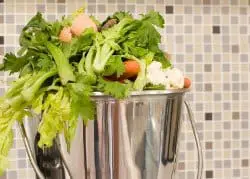
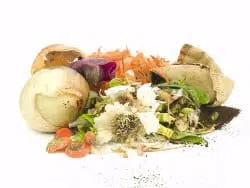 After meals, collect table scraps in a bucket and when it is full, simply dump it over the yard scraps.
The Composting Rule of Ratio
You can consider the ratio of carbon and nitrogen as a complex science and some hard-core composters certainly do, but remember, this articles is called homemade composting, so we are keeping it simple. Even if your ratios are not exact, you can produce excellent compost by sticking to a general composting rule of ratio: 4 parts brown to 1 part green. The brown stuff: sticks, twigs, dried leaves – is carbon; the green stuff: wet green leaves, kitchen scraps – is nitrogen.
This ratio is important, but don’t let that consume you with worry and stress. Simply eyeball the size of the bulk you put into your pile and try to keep it to the 4 – 1 ratio.
Stab and Stir
You will probably be anxious to tend to your compost pile, so every week just go out and stab at it with your shovel. Every 2 – 3 weeks you can dig down and stir it up. This is important as it keeps the pile ventilated and avoids the build-up of mildew.
That’s it! This time next year, you will have plenty of complete compost (natural fertilizer) to use in your garden. You’ll be amazed at how happy your plants, vegetables, herbs, etc. are to have such rich and healthy soil.
Advanced Composting Tips
 While the above steps are really all you need to know to make compost, there are a few extra tips you should follow in order to make better compost and to make the process more effective.
- Start directly on the ground or start with a finished compost to get the microbial activity started.
- Pile in layers rather than vertically. The more surface area you create with your pile, the more efficiently the material will decompose.
- If your compost starts to smell bad, it is simply crying out for air. This is your cue to stab and stir.
- To harvest your compost, skim off the stuff that on top that has not rotted and use the finished compost below for your plants.
Note: Not everything breaks down easily, so if you put certain thing into your pile that shouldn’t be there, you will hinder the process. Follow the two lists below:
Use These Materials in Your Compost:
- Banana peels
- Bread
- Coffee grounds and filters
- Crushed egg shells
- Dryer lint
- Egg shells
- Feathers
- Flowers
- Flour
- Fruit scraps
- Grains
- Grass clippings & yard waste
- Green plant trimmings
- House plants
- Hair
- Leather
- Leaves
- Kitchen scraps
- Natural fibers (cotton, linen, wool)
- Newsprint (b&w)
- Oatmeal
- Paper/cardboard (shredded)
- Peanut shells
- Pine needles
- Potato peels
- Rice
- Stale bread & cereal
- Straw & hay
- Tea bags
- Tobacco
- Protein powder
- Vacuum bag wastes
- Wood chips & shavings
Do Not Use These Materials in Your Compost:
- Bones
- Dairy products
- Diseased plants
- Fats
- Feces
- Fish
- Limestone compound
- Meat
- Peanut butter
- Weeds
- Sauces
Gardening Coupons
Need a coupon for your gardening materials? We have some limited time sensitive coupons for our readers. Check out the comment section below for details and the coupon codes.
Have you tried composting? Were any of our tips useful?
Tagged With: Composting