When you purchase through links on our site, we may earn a commission. Here’s how it works.
Bees are dying by the billions, and no one’s hitting the brakes. Entire colonies are collapsing overnight. Farmers are panicking. Scientists are scrambling.
Table of Contents
It’s not just one cause. It’s a perfect storm of killers: toxic chemicals, a blood-sucking parasite, and junk food for bees. And if they disappear, your fruit, coffee, and chocolate could vanish right along with them.
So, what’s behind this mass die-off? Let’s break down the three biggest threats hitting honey bees, and what you can do to help.
Why Are Honey Bees Dying So Fast?
Bees are dying, and it’s not slowing down. In fact, some beekeepers have lost up to 70%–100% of their colonies in just the past year, according to a 2025 report from the honey bee research group Project Apis m.
Want our human-written content to rank above AI-generated garbage? Help us out by clicking this button!
Entire colonies are collapsing overnight. Farmers are panicking. Scientists are scrambling. But why are honey bees dying so fast?

The truth is, there’s no single villain. It’s a deadly combo of parasites, pesticides, and poor nutrition. Three silent killers are working together to push honey bees past the breaking point.
Quick Honey Bee Facts
- According to the American Veterinary Medical Association (AVMA), honey bees, our number one managed pollinator, are responsible for 75% of our most nutritious food crops
- The U.S. Fish & Wildlife Service (FWS) states that more than 1 in 3 bites of food you eat exists because of bees
- Studies show that bees support an estimated $34 billion in pollination value to U.S. agriculture each year, including apples, almonds, coffee, and chocolate
1. The Tiny Vampire That Infects Whole Hives
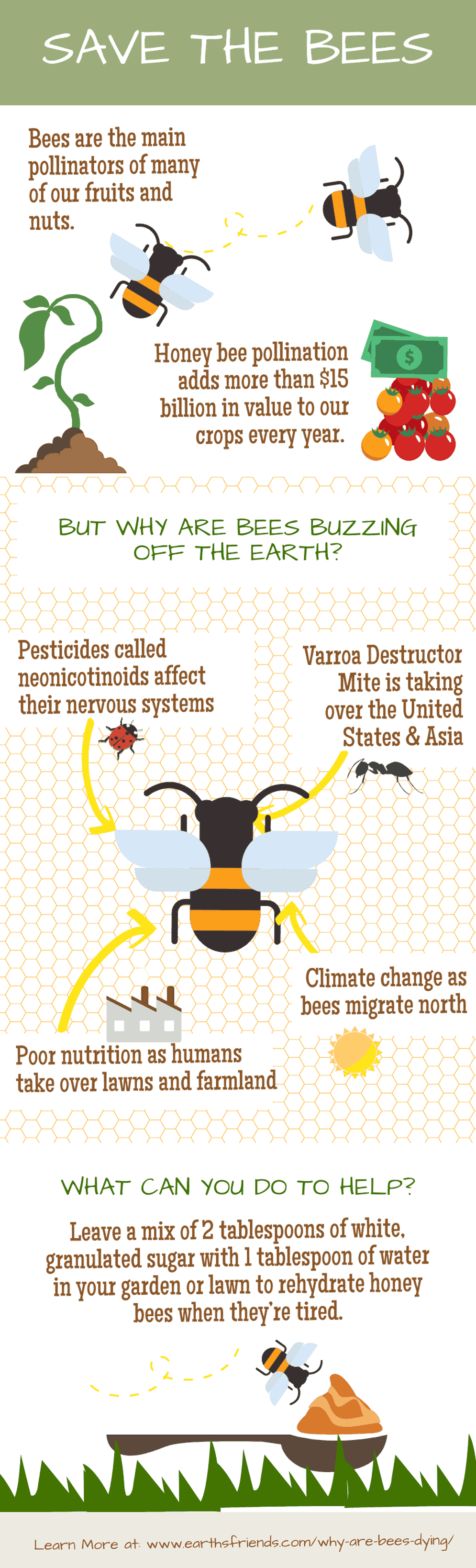
Meet the Varroa mite, also known as Varroa destructor. This bug is no bigger than a grain of salt, but it’s an absolute menace. Think of it as a vampire tick for bees. It latches onto their bodies, feeds on their fat, and spreads viruses like biological warfare.
One or two mites? Manageable. But infestations explode fast, and once they take hold, entire colonies start to collapse.
Bonus horror? These mites also hitchhike between hives, making it almost impossible to contain them.
2. Pesticides That Poison Bees From The Inside Out
Bees are dying from pesticides called neonicotinoids, which affect their nervous systems, resulting in infections. Neonicotinoids have a chemical structure similar to nicotine.
It has been linked to honeybee colony collapse disorder and also to the decline of birds due to a reduction in the number of insects. These pesticides coat seeds and soak into the plants bees visit, so the poison doesn’t just sit on the surface; it gets inside the nectar and pollen.
To learn more about how neonicotinoids are killing bees, watch this sad video.
Bees don’t die instantly. Instead, they become disoriented, lose their memory, and sometimes forget how to return to the hive. Even low exposure can compromise their immune systems, making them more susceptible to other health issues.
Oh, and while some of these chemicals are banned in Europe? They’re still legal in the U.S.
3. Poor Nutrition From Empty Fields
You’d think bees have plenty to eat with all the crops we grow. However, most modern farms are dominated by monocultures, such as corn and soy plants, which offer very little nutritional value for bees.
Bees need diverse sources of nectar and pollen to stay healthy, fuel their immune systems, and support the hive. However, in many regions, their food landscape has become a nutritional wasteland.
And it gets worse: herbicides used on these large farms also wipe out wildflowers, clover, and dandelions, the exact plants bees rely on for high-quality nutrition. So, even if bees do find food, it’s often not enough to help them survive or ward off other threats, such as mites and viruses.
Are Cell Phones Really Killing Bees?
You’ve probably heard this one: “Bees are dying because of Wi-Fi.” Or maybe it was 5G, smartphones, or satellites. Either way, it’s become a full-fledged internet urban legend. But is there any truth to it?
The Buzz Behind the Myth
This theory blew up years ago after a few small studies suggested that electromagnetic radiation from mobile devices could disorient bees or interfere with their navigation.
A study even showed that bees exposed to cell phone signals stopped returning to their hives. Cue the headlines…
But here’s the truth: larger, peer-reviewed studies have failed to confirm a direct link. While the viral “worker piping” study garnered headlines, broader peer-reviewed research reveals more nuanced effects.
In a more recent study, honeybee queen larvae exposed to 900 MHz mobile phone radiation hatched at significantly lower rates. But if queens did hatch and mate, colonies developed normally.
Researchers acknowledge that cells were placed right next to the hives, which is not realistic. So, compared to parasites, pesticides, and habitat loss, radiation ranks very low on the list of threats.
So… Can You Toss Your Phone Yet?
Not really. While electromagnetic exposure might have some low-level effects, there’s no solid evidence that it’s killing bees at scale.
But the rumor persists, because, well… it’s weird and kinda makes sense. The reality? The real killers are far more ordinary. And way more dangerous.
What Climate Chaos Does to Bee Brains
If the parasites don’t get them, and the pesticides don’t poison them, climate change might just break their brains.
Bees are incredibly sensitive to environmental cues, including temperature, light, and seasonal timing, all of which signal to them when to wake up, forage, and pollinate. However, as the climate becomes more unpredictable, those cues begin to break down.

Heatwaves = Hive Confusion
Extreme heat can literally overheat bee brains, making them disoriented, less productive, and slower to respond to threats. Studies have also shown that high temperatures reduce foraging behavior and impair memory, which bees rely on to navigate back to the hive.
Additionally, climate shifts are disrupting the timing of plant blooming. Flowers are blooming earlier or later than usual, while bees still follow their old schedule, meaning they often miss the food window entirely.
More Rain, Fewer Flights
Even rainy days are a problem. More storms mean fewer days that bees can fly. And no flying means no foraging, no pollination, and no food for the hive.
The result: weaker colonies, lower reproduction rates, and fewer bees surviving to the next season.
It’s Not Just the Bees
While bees are a high-profile warning sign, they’re not alone. Read our article on the impact of climate change on endangered species to discover how rising temperatures are pushing animals like polar bears, sea turtles, frogs, and birds closer to extinction and what can still be done to protect them.
Hear It From the Beekeepers Themselves
Still wondering how serious the issue of bees dying is? Watch this short CBS interview with one of America’s top beekeepers, who states they are currently experiencing record-breaking colony losses.
You’ll hear firsthand how entire hives are collapsing, how it’s impacting farms, and why even experienced beekeepers are calling this one of the worst years they’ve ever seen.
Can We Survive If The Bees Don’t?
Bees may be small, but the hole they’d leave behind is massive.
Research shows that over one-third of the food we eat depends on pollination. That includes fruits, vegetables, nuts, seeds, coffee, and even some of the crops we use to feed livestock. Without bees, these foods would become scarce, expensive, or disappear entirely.
Apples, almonds, blueberries, strawberries, cucumbers, pumpkins… all of them rely heavily on honey bee pollination. No bees? No harvest.
And it’s not just about food. If bee populations crash beyond recovery, ecosystems will shift in ways we can’t easily undo. Wild plants, birds, and other pollinators would all be affected. The ripple effects would reach every corner of the food chain, including ours.
Fewer bees = Less food, higher prices, unstable ecosystems
So, can we survive without bees? Technically, yes, for a while. But your grocery bill won’t. Your fruit bowl won’t. And the planet won’t look the same.
What’s The Government Doing?
With bees dying at record rates, you’d hope the government is stepping in. And in some ways, it is, but not nearly fast enough, according to many experts and beekeepers.

The Obama-Era Push
In 2015, the Obama administration established the Pollinator Health Task Force, aiming to reduce colony losses, restore 7 million acres of pollinator habitat, and coordinate a federal response. That task force produced a National Strategy, a Research Action Plan, and a public education campaign.
However, the initiative did not restrict the use of neonicotinoid pesticides, which many scientists believe are a key driver of bee collapse. As a result, critics argued that the program was more strategic than enforceable.
What Happened Next?
The Pollinator Health Task Force has since been disbanded; however, many of its recommendations continue to be implemented through federal programs. These include USDA-led pollinator research, Farm Bill funding, and conservation incentives for farmers.
What’s Still Being Done Today
Federal agencies like the United States Department of Agriculture (USDA), the United States Environmental Protection Agency (EPA), and the FWS have continued to:
- Fund pollinator research
- Monitor honey bee colony losses
- Issue guidelines to reduce pesticide exposure
There are also:
- Grants for habitat restoration
- Incentives for pollinator-friendly farming
- State-level laws restricting pesticide use near flowering crops
However, many neonicotinoid pesticides, which are linked to bee disorientation and colony collapse, remain legal and are widely used in the U.S., despite being banned in the European Union.
Even where bee-friendly programs exist, they’re often voluntary, underfunded, and unevenly enforced, leaving many beekeepers frustrated with loopholes and the lack of enforcement.
Bottom line? There are government efforts in place, but much of the real progress is being led by scientists, nonprofits, and everyday people who care about keeping bees (and our food system) alive.
What to Plant for Bees in Spring, Summer & Fall
You don’t need a huge garden, or even a yard, to help honey bees. Just planting a few bee-friendly flowers can make a real difference, especially in urban and suburban areas where pollinators struggle to find nutritious food.
The key is diversity and bloom timing. Bees need nectar and pollen from early spring through late fall, so the more variety you plant, the more support you give. Here are some of the best plants to help save the bees and why they work.
1. Spring: Fuel for the First Foragers
In early spring, bees emerge hungry and weak after winter. These early bloomers help jumpstart hive activity and colony growth. Plant these:
- Crocus
- Dandelions (yes, let them grow!)
- Hyacinth
- Willow
- Bluebells
Why it matters: Spring flowers give bees a vital first source of nectar and pollen when nothing else is blooming.
2. Summer: Peak Pollination Season
This is when bees are most active and most in need of consistent, high-nutrition forage. Plant these:
- Lavender
- Coneflower (Echinacea)
- Bee balm (Monarda)
- Black-eyed Susan
- Borage

Why it matters: Summer blooms fuel hive strength, honey production, and pollination of major crops.
3. Fall: A Last Push Before Winter
Late-blooming plants help bees build up energy reserves before going dormant or dying off for the season. Plant these:
- Goldenrod
- Asters
- Sedum
- Joe-Pye weed
Why it matters: Fall flowers are often overlooked, but they’re critical for colony survival and queen health.
4 More Bonus Bee-Friendly Tips
- Choose native plants: They’re better adapted to local pollinators and offer more nutritious nectar
- Go single-bloom: Avoid “double bloom” flowers, which are pretty but usually nectar-poor
- Ditch the pesticides: Even trace amounts can disorient or kill bees
- Container gardening works: Balconies, window boxes, and patio pots can all support pollinators
Planting for all three seasons gives bees the year-round support they need to survive.
Even small spaces, such as balconies or window boxes, can make a significant difference if you choose the right plants. And the bonus? What’s good for bees is also great for butterflies, birds, and overall biodiversity.
The Lazy Person’s Guide to Helping Bees: 8 Tips
Want to help save the bees but don’t have a yard, a green thumb, or the energy to plant wildflowers every weekend?
Good news: you don’t have to go full beekeeper to make a real impact. In fact, some of the most helpful actions are also the easiest. Here’s how you can be a pollinator hero, without breaking a sweat.
1. Let the Weeds Grow
That dandelion in your driveway? It’s not an eyesore, it’s a bee buffet. Early-season blooms, such as dandelions and clover, provide essential food when nothing else is flowering.
Lazy win: Skip mowing or spraying, and you’ve already helped.

2. Skip the Pesticides
Pesticides, even ones labeled “natural” or “bee-friendly”, can interfere with bee navigation, immunity, and survival.
Lazy win: Just don’t spray. That’s it. You’ve helped.
3. Buy Local Honey
When you buy from small, ethical beekeepers, you’re supporting those who prioritize bee health over production. Bonus: Local honey often tastes better and helps support native ecosystems.
Lazy win: Swap that generic squeeze bottle for a jar from your local market.
4. Plant Something – Anything
You don’t need a wildflower meadow. Even a single potted lavender or basil plant on your balcony can feed a hungry bee.
Lazy win: One plant = one win. No garden needed.
5. Leave a Messy Corner
Solitary bees don’t live in hives; they nest in bare soil, dead wood, and hollow stems. Leaving part of your space a little “wild” gives them a place to rest and reproduce.
Lazy win: Don’t clean everything. Let nature do its thing.
6. Talk About It
Raise awareness by sharing factual information about why bees are dying, such as mites, pesticides, and poor nutrition, rather than just conspiracy theories about 5G or microwaves.
Lazy win: Share a bee-friendly post or article (like this one!)
7. Leave Out a Teaspoon of Sugar Water
Here’s one simple way to help, straight from Sir David Attenborough himself. The legendary naturalist behind Planet Earth and The Blue Planet suggests leaving out a teaspoon of sugar water in your garden or on your lawn. It’s a quick way to help tired, dehydrated honey bees regain their strength and get back to pollinating.
If you find a tired bee in your home, a simple solution of sugar and water will help revive an exhausted bee. Simply mix two tablespoons of white, granulated sugar with one tablespoon of water, and place on a spoon for the bee to reach.
Lazy win: One spoon of sugar, a splash of water, and you’ve got a bee rescue station.
8. Support Pollinator Policies
Many local governments are slowly introducing pesticide bans or pollinator-friendly landscaping laws. Signing petitions, voting for local measures, or emailing your rep can push these forward.
Lazy win: One click. One email. One signature.
You don’t need land, money, or even lots of time to help save bees. Just stop spraying, plant something simple, and let your weeds live a little. The bees will thank you, even if they don’t text.
6 Weird Bee Facts You’ll Want to Share
I’ve talked about the threats facing bees, how to help them, and why they matter. And even though bees are tiny, they’re sophisticated problem-solvers, snappy navigators, and tiny timekeepers. These creatures are smarter, stranger, and more impressive than most people realize.
1. Bees Can Recognize Human Faces
Honey bees are capable of learning to recognize and remember human faces, much like dogs or primates. Researchers trained bees to associate a face-like image with a sugar reward, and the bees continued to identify the face even when the reward was removed.
2. They Communicate By “Waggle Dance”
Forager bees perform a figure-eight “waggle dance” to tell their hive mates the direction and distance of food sources by encoding angle and duration.
3. Honey Never Spoils
Archaeologists have discovered pots of honey in ancient Egyptian tombs that are over 3,000 years old, yet the honey remains perfectly edible due to its natural properties.
4. A Bee’s Brain Is the Size of a Sesame Seed
University studies show that despite its tiny brain, a honey bee can make decisions faster and more accurately than humans. Their brains are literally the size of a sesame seed.
5. They Fly at Up to 15 Miles Per Hour
Honey bees can reach speeds up to 15 mph, beating their wings nearly 200 times per second.
6. Bees Vote on Where to Live
When swarming, scout bees “vote” on potential new hive sites through dances. As more scouts dance for one site, a quorum is reached, and the swarm moves there, an incredible example of group decision-making.
Keep Going: Explore More Eco-Friendly Guides
Want to dive deeper into backyard sustainability and pollinator protection? Check out our guide to beekeeping for beginners if you’ve ever thought about starting your own hive. Learn how to turn your yard into a buzzing haven by creating a wildlife garden or explore apartment gardening in more detail.
Discover our top picks for the best compost bins to reduce waste and find safe, homemade weed killers. Whether you’re all in or just bee-curious, there’s more to explore here at Earth’s Friends.
Got a Bee Story or Question? We’d love to hear from you! Whether you’ve started planting for pollinators, spotted a struggling bee, or just have questions about what’s really causing the die-off, drop your story or question in the comments. Let’s keep the conversation buzzing.