When you purchase through links on our site, we may earn a commission. Here’s how it works.
Turn on any faucet in your home, and you probably expect the water to be clean and safe. But an unpleasant taste, chlorine smell, cloudy glass, or stubborn orange stains can make you wonder what is actually coming through your pipes.
Table of Contents
A whole-house water filter promises cleaner water from every tap, including the water used for cooking, bathing, laundry and ice. That sounds appealing, but these systems can cost thousands of dollars and require ongoing maintenance.
So, do you really need one? The answer depends on your water source, what is in your water, and whether the problem affects your entire home or only the water you drink.
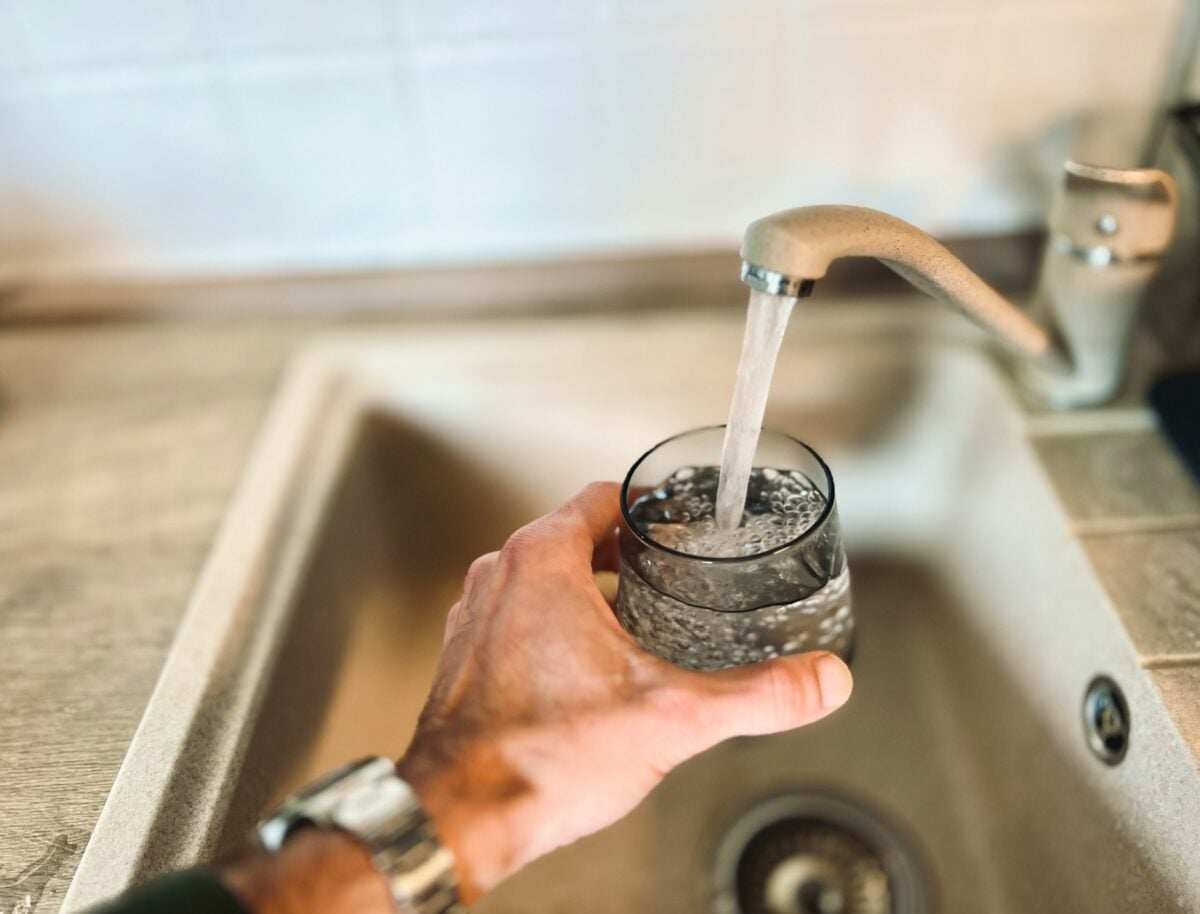
Quick Answer: Do You Need A Whole-House Water Filter?
You may benefit from a whole-house water filter if:
- Testing finds a contaminant that should be treated throughout your home.
- Sediment, chlorine, odors, or staining affect water from multiple fixtures.
You may not need one if your tap water meets safety standards and your only concern is the taste of drinking water. A certified refrigerator, faucet, or under-sink filter may solve that problem for much less.
Test your water before choosing a system. No single filter removes every contaminant, and buying the wrong technology can leave the actual problem untreated.
What Does A Whole-House Water Filter Do?
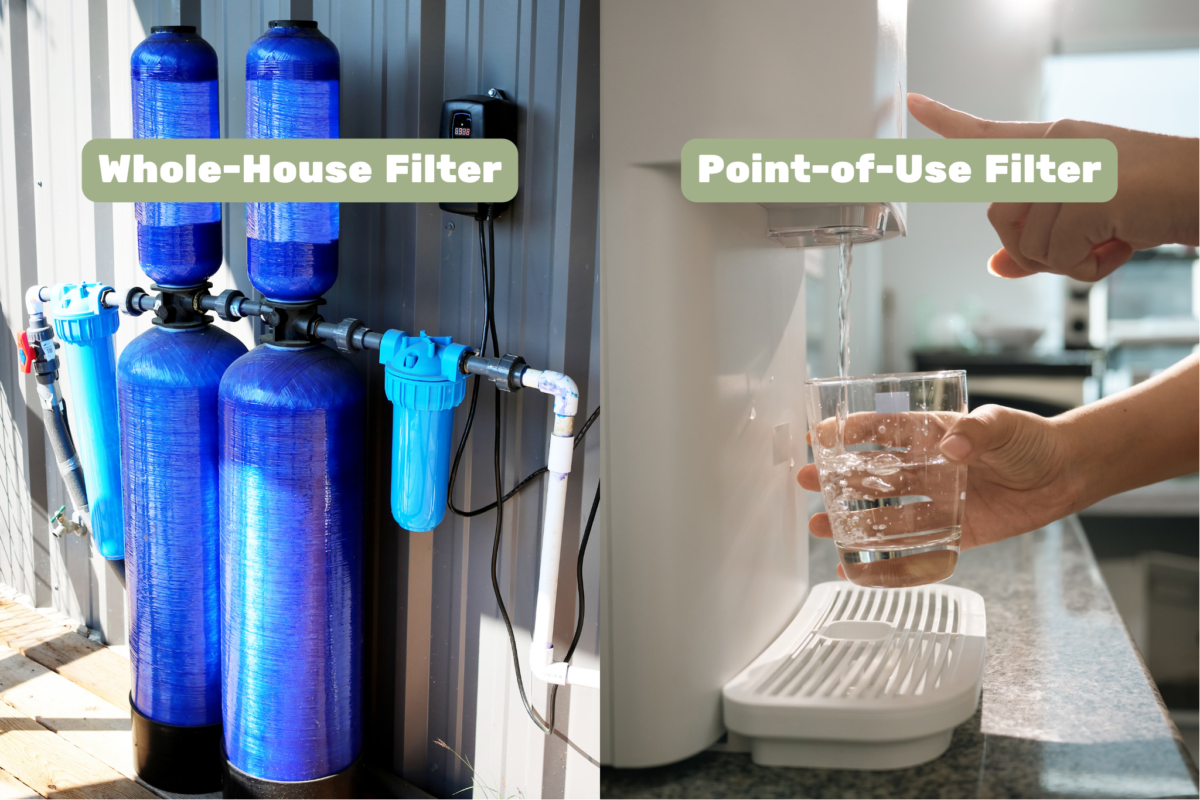
A whole-house water filter treats water near the point where the main supply line enters your home. It is also called a point-of-entry system because it filters water before it is distributed to individual fixtures and appliances.
Depending on the system, this may include water flowing to:
- Kitchen and bathroom faucets
- Showers and bathtubs
- Toilets
- Washing machines
- Dishwashers
- Refrigerator water dispensers
- Refrigerator ice makers
- Water heaters
This is the main difference between whole-house filtration and a point-of-use filter. A refrigerator or under-sink filter treats water at one location, while a whole-house system treats most or all of the water entering the home.
What Can A Whole-House Filter Remove?
That depends on the filter media and the contaminants the system is certified to reduce. “Whole-house” describes where the system treats water, not what it removes.
- Sediment filters capture particles such as sand, silt, and rust but generally do not remove dissolved chemicals or minerals.
- Activated carbon filters can reduce chlorine and improve taste and odor. Some may also reduce chloramine, volatile organic compounds and certain pesticides, depending on their certification.
- Specialized treatment systems may address iron, manganese, sulfur odors or contaminants specific to well water.
- Reverse osmosis, ultraviolet light and other advanced systems may target certain chemicals or microorganisms, including bacteria, viruses and parasites.
Does A Whole-House Filter Make Water Safe To Drink?
Yes, it can reduce specific contaminants if the system is designed, certified, and maintained for that purpose; however, simply installing something labeled a whole-house filter does not guarantee that your water is safe.
Some filters are certified only to reduce aesthetic concerns, such as chlorine taste and odor. Others are tested for contaminants associated with health effects.
Certification is also specific. A filter certified to reduce lead is not automatically certified to remove arsenic, bacteria, PFAS or nitrates.
When comparing systems, look beyond phrases such as “purifies water” or “removes harmful contaminants.” Check the exact contaminant-reduction claims and independent certification.
Common standards include:
| Standard | What It Generally Covers |
|---|---|
| NSF/ANSI 42 | Treatment systems certified to reduce aesthetic concerns related to chlorine, taste, odor, and particulates |
| NSF/ANSI 44 | Water softeners that use ion exchange to reduce hardness caused by calcium and magnesium |
| NSF/ANSI 53 | Treatment systems certified to reduce specific contaminants associated with health effects |
| NSF/ANSI 55 | Ultraviolet systems used for microbiological treatment |
| NSF/ANSI 58 | Reverse osmosis systems for performance and contaminant-reduction |
| NSF/ANSI 401 | Treatment systems removing pharmaceuticals or chemicals not yet regulated by EPA |
A certification does not mean the filter removes everything covered by that standard. Use the manufacturer’s performance data sheet or an independent certified-product database to confirm the exact claim. You can learn more through NSF’s guide to water treatment standards.
Signs You Might Need A Whole-House Water Filter
A bad taste, unusual odor, or visible stain can signal a water-quality problem, but it cannot identify the cause. Some potentially harmful contaminants have no noticeable taste, smell, or color.
Consider the following signs as reasons to investigate your water and arrange appropriate testing.
1. Your Water Has A Strong Chlorine Taste Or Smell
Public water systems commonly use disinfectants such as chlorine or chloramine to control germs. The amount reaching your home may meet safety standards but still affect the taste or smell of your drinking water, coffee, tea, and food.
A whole-house carbon system may help when the problem is noticeable at faucets throughout the home. If it only bothers you when drinking or cooking, a certified refrigerator, faucet or under-sink filter may be sufficient.
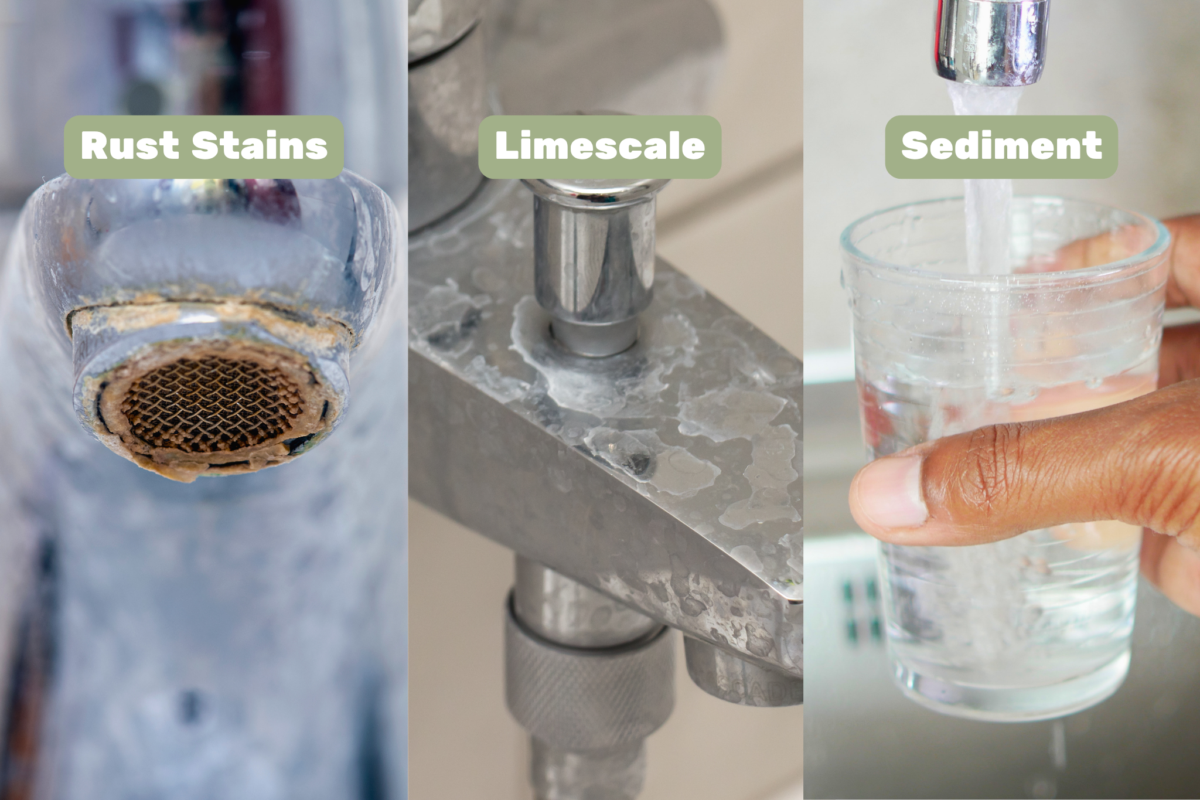
2. You See Sediment Or Rust At Multiple Fixtures
Visible grit, rust-colored particles or clogged faucet aerators may indicate that sediment is entering through the main water supply. Possible sources include a private well, aging pipes or work on nearby water lines.
Sediment can collect in showerheads, washing-machine screens, appliance valves and water heaters. A whole-house sediment filter may capture these particles before they move through the home, but it will not remove dissolved chemicals or the minerals responsible for hard water.
Cloudy water does not always indicate sediment or contamination. Tiny air bubbles can make water look milky, but the water typically clears from the bottom of the glass upward within a few minutes. Investigate persistent particles, color, or cloudiness.
3. Your Water Leaves Unusual Stains Or Buildup
Stains around sinks, tubs, toilets and fixtures can provide clues about what may be in your water.
| What You Notice | Explanation |
|---|---|
| Orange or reddish-brown stains | Iron or rust |
| Black or dark brown stains | Manganese or other minerals |
| Blue-green stains | Copper corrosion |
| White scale or spots | Hard-water minerals |
| Yellow or tea-colored water | Tannins, iron or another source of discoloration |
These signs are not enough to diagnose the problem. Testing can help determine whether the discoloration comes from the water source, the household plumbing, or both.
A whole-house filter may be appropriate for certain types of iron, manganese, or tannins. Hard-water scale generally requires a water softener rather than a standard whole-house filter, while blue-green stains may call for corrosion control or plumbing repairs.
4. Your Water Smells Like Rotten Eggs
A rotten-egg smell is commonly associated with hydrogen sulfide gas or sulfur-related bacteria. The odor may originate in groundwater, plumbing, or the water heater.
Check whether you notice the smell in hot water, cold water or both. An odor limited to hot water may indicate a water-heater problem rather than an issue with the home’s entire water supply.
Depending on the cause, treatment may involve oxidation, filtration, disinfection or water-heater maintenance. A basic carbon filter may temporarily reduce the smell without correcting the underlying problem.
5. Your Home Uses A Private Well
Having a private well does not automatically mean you need a whole-house filter. Some wells produce high-quality water, while others contain sediment, minerals, microorganisms, or chemicals that require one or more forms of treatment.
Private wells are not regulated under the federal Safe Drinking Water Act, so the homeowner is responsible for testing the water and maintaining the well. The Environmental Protection Agency recommends testing private wells annually for total coliform bacteria, nitrates, total dissolved solids and pH.
Additional testing may be appropriate after flooding or well repairs, or because of nearby agriculture, mining, industrial activity or known groundwater concerns. The results should determine whether you need filtration, disinfection, softening or another treatment method.
6. The Same Problem Appears Throughout Your Home
A whole-house system makes the most sense when the issue affects water at multiple fixtures. Sediment at several faucets, staining in multiple bathrooms, or a strong chlorine smell throughout the home may justify point-of-entry treatment.
If the problem is limited to one faucet, appliance or water temperature, inspect that fixture and its plumbing first. Treating every gallon entering the house is unlikely to be practical for an isolated problem.
7. Someone In Your Home Has A Specific Health Concern
People with weakened immune systems may need additional protection from waterborne germs, especially if the home uses a private well or another unregulated water source. Treatment should be selected with guidance from a health care professional, local health department or qualified water specialist.
Do not rely on taste, smell or appearance to determine whether water is microbiologically safe. Many germs and chemical contaminants cannot be detected by the senses, making proper testing especially important for vulnerable households.
Test Your Water Before Buying A Filter
Water testing is the most important step in choosing any treatment system. Without test results, you may spend thousands of dollars on equipment that does not address the substance causing your concern.
Testing also gives you a baseline. You can compare the results with a follow-up test to determine whether the installed system is working.
If You Have Public Water
Start with your utility’s annual Consumer Confidence Report. Community water systems must provide customers with a report explaining where their water comes from, which regulated contaminants were detected, and how those levels compare with federal standards.
You can request the report from your water provider or use the EPA’s Consumer Confidence Report resources.
Note: The report reflects water tested within the public system. It cannot show what may enter your water from the service line, household plumbing, or fixtures.
Consider testing water from your tap if:
- You live in an older home
- Your service line or plumbing may contain lead
- Your water suddenly changes color, taste or smell
- Your utility issues an advisory
- A household member is pregnant, an infant or especially vulnerable
- You want to confirm a filter’s performance
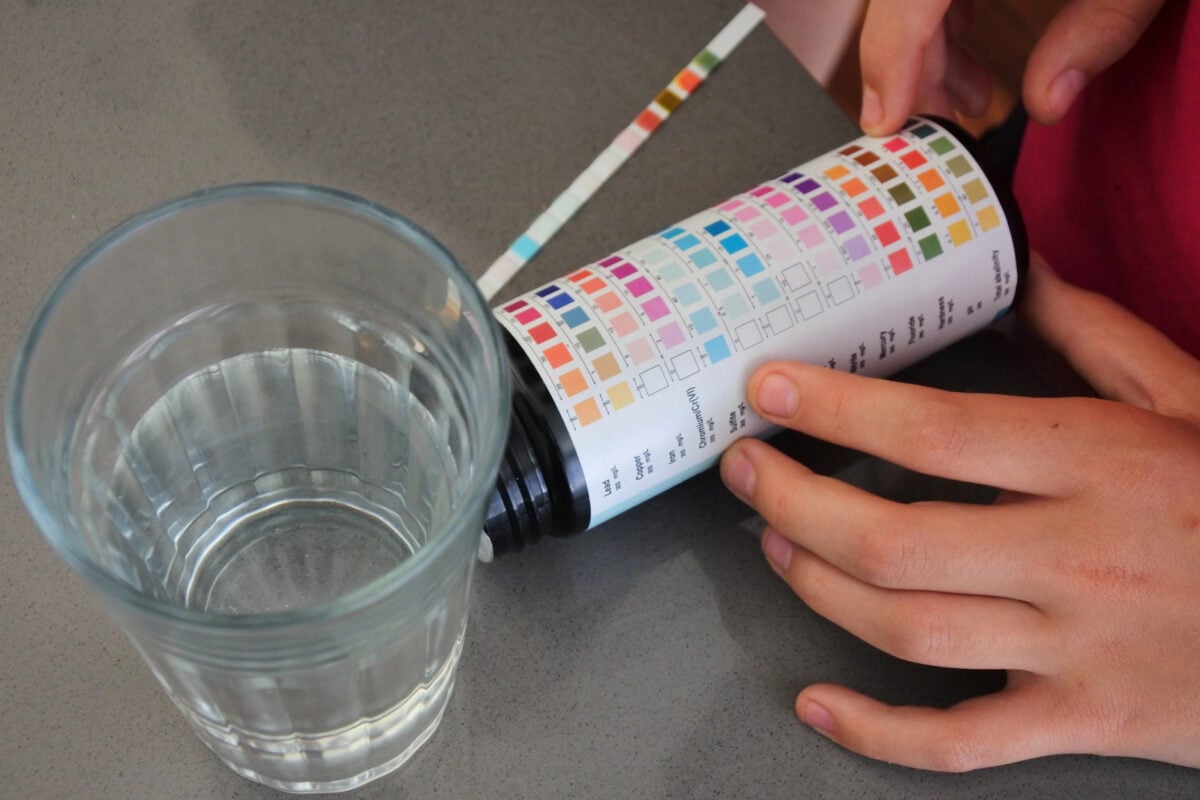
Use a state-certified laboratory when testing for health-related contaminants. A basic home test strip may help screen for hardness, chlorine, or pH, but it should not replace certified laboratory testing when safety is the concern.
If You Have A Private Well
At minimum, the EPA recommends annual testing for:
- Total coliform bacteria
- Nitrates
- Total dissolved solids
- pH
Your local health department may recommend additional tests based on common groundwater concerns in your area. Testing may include arsenic, iron, manganese, pesticides, volatile organic compounds, or other contaminants.
Test the well again if:
- The property floods
- The well is repaired
- Nearby land use changes
- The water’s taste, smell or appearance changes
- Someone in the household becomes pregnant
- Household members experience unexplained gastrointestinal illness
- A nearby well develops a contamination problem
Do not choose a well-water system based only on a salesperson’s general package. Well water can vary significantly between neighboring properties, so treatment should be based on results from your own tap.
Ask These Questions About Your Results
Before considering equipment, identify:
- What contaminant or water-quality issue is present?
- Is it a health concern, an aesthetic concern, or both?
- What is its measured concentration?
- Does the problem affect all household water?
- Could it originate in the plumbing rather than the water source?
- Which treatment technologies reduce it?
- Is the proposed system independently certified for that exact claim?
- How will you verify that the treatment continues to work?
This process may reveal that you need a whole-house system, a water softener, a point-of-use filter, or a plumbing repair. It may also show that no additional treatment is necessary.
Whole-House Filters vs Point-Of-Use Filters
A whole-house system is not automatically better than a smaller filter. The best location for treatment depends on which water you need to treat and how you use it.
A point-of-entry system treats water as it enters the home. A point-of-use filter treats water at one fixture, such as the kitchen faucet or refrigerator dispenser.
| Filter Location | Water It Treats | Often Best For |
|---|---|---|
| Whole-house or point-of-entry | Most water entering the home | Problems affecting multiple fixtures, such as sediment, chlorine, iron or sulfur odor |
| Under-sink | Water from one faucet | Drinking and cooking water |
| Faucet-mounted | Water from one faucet | Basic taste and odor improvement |
| Refrigerator | Refrigerator dispenser and ice maker | Better-tasting drinking water and ice |
| Showerhead | Water from one shower | Reducing chlorine or odor |
| Countertop or pitcher | Water poured through the unit | Renters, small households and basic drinking-water concerns |
When A Whole-House Filter Makes More Sense
Whole-house treatment may be worth considering when you want a solution throughout your home. It can treat water used for bathing, laundry, and appliances in addition to drinking and cooking.
For example, a whole-house sediment or iron system may help prevent particles and stains from reaching sinks, showers and the washing machine. A carbon system may reduce chlorine or odor at multiple fixtures.
A whole-house filter will not necessarily soften hard water. If mineral buildup, poor soap lather or reduced detergent performance is the main concern, a water softener may be the more appropriate solution.
When A Point-Of-Use Filter Is Enough
A point-of-use filter is often the more practical choice when your public water meets safety standards, and your main concern is the taste or smell of drinking water. It can also target certain contaminants at the tap where water is consumed.
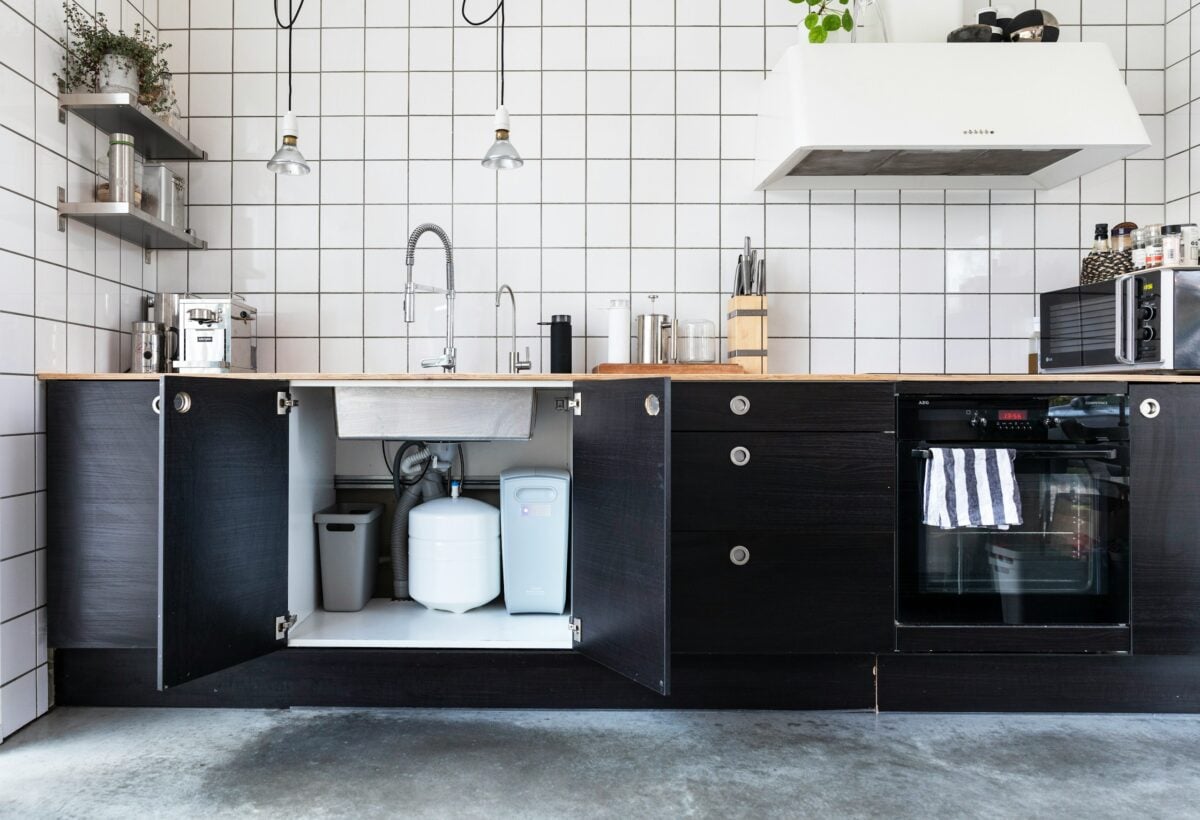
This matters because most household water is used for flushing toilets, washing clothes, cleaning and bathing. Filtering all of it to drinking-water standards can increase the purchase price, required flow rate, and maintenance costs.
Point-of-use filters are also useful for renters and homeowners who cannot alter the main plumbing line. Just confirm that the product is certified for the specific contaminant you want to reduce.
Can You Use Both?
Yes. Some homes use whole-house treatment for sediment, chlorine, or another widespread issue and a separate under-sink or refrigerator filter for drinking water.
This layered approach lets each system do a specific job. A sediment filter might protect the plumbing and the finer point-of-use filter, while an under-sink reverse osmosis system treats only the water used for drinking and cooking.
Does A Whole-House Filter Also Filter Refrigerator Water & Ice?
In most homes, yes. If the refrigerator is connected to the household’s cold-water plumbing, water reaching its dispenser and ice maker will pass through a whole-house filter first.
That does not necessarily make the refrigerator’s internal filter redundant. The answer depends on what the whole-house system removes and what you want from the refrigerator water.
Should You Keep The Refrigerator Filter?
Keeping it can provide an additional stage of filtration close to the point of consumption. This may further improve taste or reduce a contaminant covered by the refrigerator filter’s certification.
The downside is additional expense and maintenance. Two carbon filters in sequence may offer little practical benefit when the whole-house system already addresses the same taste and odor concerns.
You may be able to use a manufacturer-approved bypass plug if the refrigerator filter is unnecessary. Do not simply remove the cartridge unless the appliance is designed to operate that way, as some models require a filter or bypass plug to maintain water flow and prevent leaks.
What If Your Refrigerator Is Not Connected To The Main Water Line?
A refrigerator dispenser and automatic ice maker need a water-supply connection. If your refrigerator does not have one, installing a whole-house filter will not automatically supply it with filtered water.
A plumber or experienced installer may be able to run a line from the home’s cold-water plumbing. The installation must follow local plumbing requirements and the refrigerator manufacturer’s instructions.
If you use an under-sink system instead, it may be possible to connect that treated-water line to the refrigerator. The system must provide enough pressure and flow for the dispenser and ice maker.
Whole-House Water Filter vs Water Softener
Water filters and water softeners are often discussed together, but they solve different problems. A standard whole-house filter does not necessarily soften water, and a water softener does not serve as a general contaminant filter.
Hard water contains elevated levels of calcium and magnesium. These minerals can leave white scale on fixtures, reduce soap lather, and accumulate inside water-using appliances.
A traditional ion-exchange softener reduces hardness by exchanging calcium and magnesium ions for sodium or potassium ions. It does not automatically remove chlorine, sediment, germs, or the full range of chemicals a filter might target.
| If Your Main Problem Is | You May Need |
|---|---|
| White scale and hard-water spots | Water softener |
| Poor soap lather | Water softener |
| Sediment or rust particles | Sediment filter |
| Chlorine taste or odor | Certified carbon filter |
| Iron or manganese staining | Treatment selected for the form and concentration present |
| Bacteria, viruses or parasites | Appropriate disinfection or filtration based on testing |
| Several unrelated problems | Appropriate disinfection or filtration based on testing |
Some households need both a filter and a softener. The equipment must be arranged in the proper order based on the water chemistry, flow requirements, and manufacturer instructions.
Be cautious with products marketed as “salt-free softeners.” Some are scale-control or water-conditioning systems rather than true ion-exchange softeners. They may help limit scale under certain conditions but do not remove hardness minerals in the same way.
Types Of Whole-House Water Treatment Systems
Whole-house treatment is rarely one universal filter. A system may contain one stage or combine several technologies to address multiple water-quality issues.
Testing should determine which stages you need. Adding unnecessary stages increases cost and maintenance without guaranteeing better water.
1. Sediment Filters
Sediment filters physically capture suspended particles such as sand, silt, and rust. They are often used as a first stage to protect carbon filters, UV systems, softeners and household plumbing.
Filters are available with different micron ratings. A smaller micron rating captures finer particles but may clog faster or restrict flow if it is not properly sized.
Sediment filtration does not remove dissolved minerals, chemicals, or microorganisms unless the filter is specifically designed and certified to do so.
2. Activated Carbon Filters
Activated carbon adsorbs certain substances as water passes through its porous surface. Whole-house carbon systems are commonly used to reduce chlorine and improve taste and odor.
Some certified carbon systems may also reduce specific volatile organic compounds, pesticides, or other chemicals. Performance varies by the type and amount of carbon, water flow, contact time, and contaminant-reduction claims.
A filter that reduces chlorine may not effectively reduce chloramine. If your utility uses chloramine, look for a system specifically certified to reduce chloramine. Catalytic carbon is commonly used in systems designed for this purpose, but the product’s certification and performance data remain more important than the marketing term.
3. Oxidation & Filtration Systems
Iron, manganese and hydrogen sulfide can require more than basic sediment or carbon filtration. Treatment may first oxidize the dissolved substance, turning it into particles that a filter can capture.
The appropriate method depends on the contaminant, its concentration, the water’s pH and other water-quality factors. Well-water treatment may use air injection, chlorine, hydrogen peroxide or specialized filter media.
Improper treatment can fail to remove the problem or cause filters to clog quickly. These systems should be selected using laboratory results rather than stain color or odor alone.
4. Ultraviolet Treatment
Ultraviolet systems expose water to UV light to inactivate microorganisms. They may be used in homes with private wells when testing identifies a microbiological risk or when the homeowner wants an additional disinfection barrier.
UV does not remove sediment, minerals, or chemicals. The water usually needs prefiltration because cloudiness and particles can shield microorganisms from the light.
A UV system also depends on electricity and regular lamp replacement. Look for the appropriate NSF/ANSI 55 classification and follow the manufacturer’s maintenance schedule.
5. Reverse Osmosis
Reverse osmosis forces water through a semipermeable membrane and can reduce total dissolved solids along with certain germs and chemicals. The exact reductions depend on the system and its certification.
Most residential reverse osmosis systems treat water at one point of use because the process is relatively slow, creates a reject-water stream, and may require a storage tank. A point-of-use system can provide highly treated water for drinking, cooking and possibly the refrigerator without processing water used for toilets, laundry and showers.
Whole-house reverse osmosis is available, but it is a more complex option.
6. Specialty Media And Ion Exchange
Specialty treatment media may target contaminants such as arsenic, nitrate, or certain metals. Ion-exchange resins can also be designed to remove specific positively or negatively charged substances.
These systems are not interchangeable. Capacity and performance can be affected by competing ions, pH, water chemistry, and contaminant concentration.
Use laboratory results and certified contaminant-reduction claims to choose specialty treatment. Follow-up testing is particularly important because media may continue to pass water after its treatment capacity is exhausted.
Match The Treatment To The Water Problem
This table provides a starting point, not a substitute for testing or professional system design.
| Water Problem | Treatment Commonly Considered | Important Limitation |
|---|---|---|
| Sand, silt or rust particles | Sediment filtration | Does not remove dissolved contaminants |
| Chlorine taste or smell | Activated carbon | Must be replaced before its capacity is exhausted |
| Chloramine | System certified for chloramine reduction | Standard carbon may not provide adequate reduction |
| Hard-water scale | Ion-exchange water softener | Does not provide broad contaminant filtration |
| Iron or manganese | Oxidation, specialized media or other treatment based on testing | Treatment depends on the contaminant’s form and concentration |
| Rotten-egg odor | Treatment based on whether the source is hydrogen sulfide, bacteria or the water heater | Carbon alone may only mask the problem temporarily |
| Bacteria, viruses or parasites | UV, membrane filtration or another approved disinfection method | UV does not remove chemicals and needs clear water |
| Certain dissolved chemicals | Reverse osmosis, adsorption or specialty media | No method removes every chemical |
| Lead from household plumbing | Certified point-of-use treatment is often practical | A whole-house filter may not address lead introduced after the filter |
| Several water-quality issues | Properly designed multistage system | More stages mean more maintenance and potential flow loss |
The final decision should consider more than contaminant removal. A whole-house system must also support the home’s peak water demand without causing an unacceptable drop in pressure.
That means the system’s flow rate, filter capacity and plumbing size must match the number of bathrooms, fixtures and people in the home. These practical considerations will be covered in the next section.
Pros & Cons Of A Whole-House Water Filter
A whole-house system can address water problems at every fixture, but that broader coverage comes with higher costs and more maintenance.
| Pros | Cons |
|---|---|
| Treats water throughout the home | Costs more than most point-of-use filters |
| Can reduce sediment before it reaches plumbing and appliances | Usually requires changes to the main water line |
| May improve taste and odor at multiple faucets | The wrong system may not address your actual water problem |
| Can combine several treatment stages | Filters, media, lamps and other components require maintenance |
| Eliminates the need for separate filters at some fixtures | An undersized or clogged system may reduce water pressure |
| May help with widespread staining or odor problems | Some systems use electricity, salt or additional water |
| Can be customized for tested well-water concerns | Removing disinfectant from all household water may have drawbacks |
The value of these benefits depends on your water. Treating every gallon makes little sense when the concern is limited to drinking water, but it may be worthwhile when sediment, staining, odor, or a tested contaminant affects the entire home.
How Much Does A Whole-House Water Filter Cost?
Whole-house water treatment can range from a basic filter housing with a replaceable cartridge to a multistage system with large media tanks, ultraviolet treatment, pumps and electronic controls. As a result, there is no single price for a system.
A basic sediment-filter setup may cost a few hundred dollars before installation. An installed carbon or multistage system can reach the low thousands, while specialized well-water treatment or whole-house reverse osmosis can cost significantly more.
Your final cost may include:
- Water testing
- Treatment equipment
- Prefilters and postfilters
- Plumbing parts
- Professional installation
- Electrical work
- Drain connections
- Storage or pressure tanks
- Replacement cartridges or media
- UV lamps
- Salt or other treatment supplies
- Follow-up water testing
Get an itemized quote that separates the equipment, installation and expected annual maintenance. Ask whether the quoted system includes a bypass valve, pressure gauges, shutoff valves and the first set of replacement filters.
A low purchase price does not always mean a lower long-term cost. A small cartridge that must be replaced frequently may eventually cost more than a larger media tank with a longer service life.
What To Know About Installation
A whole-house filter is usually installed on the main water line after it enters the home but before the water branches to individual fixtures. Municipal systems are commonly installed near the water meter, while well-water systems may be installed near the pressure tank.
The exact order of equipment depends on the treatment plan. A system might include a sediment prefilter, oxidation stage, carbon tank, softener, UV unit, or another specialized component.
Can You Install It Yourself?
A simple cartridge housing may be manageable for someone with appropriate plumbing experience. More complicated systems often require cutting into the main line, installing valves and drains, making electrical connections, or adjusting well equipment.
Professional installation is the safer choice when:
- The system includes several treatment stages
- You need a new drain or electrical outlet
- The main line is difficult to access
- The home has older or unusual plumbing
- Local codes require a permit or licensed plumber
- The system treats a health-related contaminant
- The home uses a private well
Poor installation can create leaks, pressure problems, contaminated connections, or equipment failure. It may also affect the manufacturer’s warranty.
Do Whole-House Filters Reduce Water Pressure?
Any treatment system can create some pressure loss as water moves through it. The change may be minor with a clean, properly sized filter but more noticeable when a cartridge clogs or the system is too small for the home’s peak demand.
Check the system’s rated flow in gallons per minute and the pressure drop at that flow. The system should be able to supply several fixtures running at the same time without causing weak showers or slow-filling appliances.
Consider:
- The home’s incoming water pressure
- Main plumbing-line diameter
- Number of bathrooms
- Number of household members
- High-demand fixtures
- Peak simultaneous water use
- Filter micron rating
- Expected sediment load
A high advertised flow rate does not guarantee the same performance after months of use. Ask how flow changes as the filter collects contaminants and how you will know when service is needed.
Maintenance & Filter Replacement Basics
Every whole-house system requires maintenance. A filter that isn’t replaced or serviced on time may lose effectiveness, restrict water flow, or allow germs to grow.
Whole-house systems that remove chlorine or other residual disinfectants may also allow more microbial growth in household plumbing, making proper maintenance especially important.
Maintenance requirements depend on the system.
You should never rely on taste or odor to determine whether a filter is still working. Some contaminants can pass through an exhausted filter without causing a noticeable change.
Keep a maintenance record that includes:
- Installation date
- Filter or media model numbers
- Replacement dates
- Water-meter readings, if capacity is gallon-based
- Pressure readings before and after the system
- Water-test results
- Service visits
- Changes in taste, odor, color or flow
Retest the water when the system is installed to confirm that it works. Additional testing may be needed at regular intervals, after maintenance or when water quality changes.
When A Whole-House Filter May Not Be Necessary
A whole-house system is probably unnecessary if your water meets applicable standards and your only complaint is the taste of your drinking water. A smaller certified filter can usually address that concern with less expense and maintenance.
You may not need whole-house filtration if:
- The problem occurs at only one faucet
- A refrigerator or under-sink filter addresses your drinking-water concern
- A specialized filter can address one fixture, appliance or purpose
- White scale is the only issue and you need a softener instead
- The problem comes from a water heater or household plumbing
- Testing does not find a contaminant that requires treatment
- You rent and cannot modify the main water line
- You are not prepared to maintain the system
- The system is being recommended without water-test results
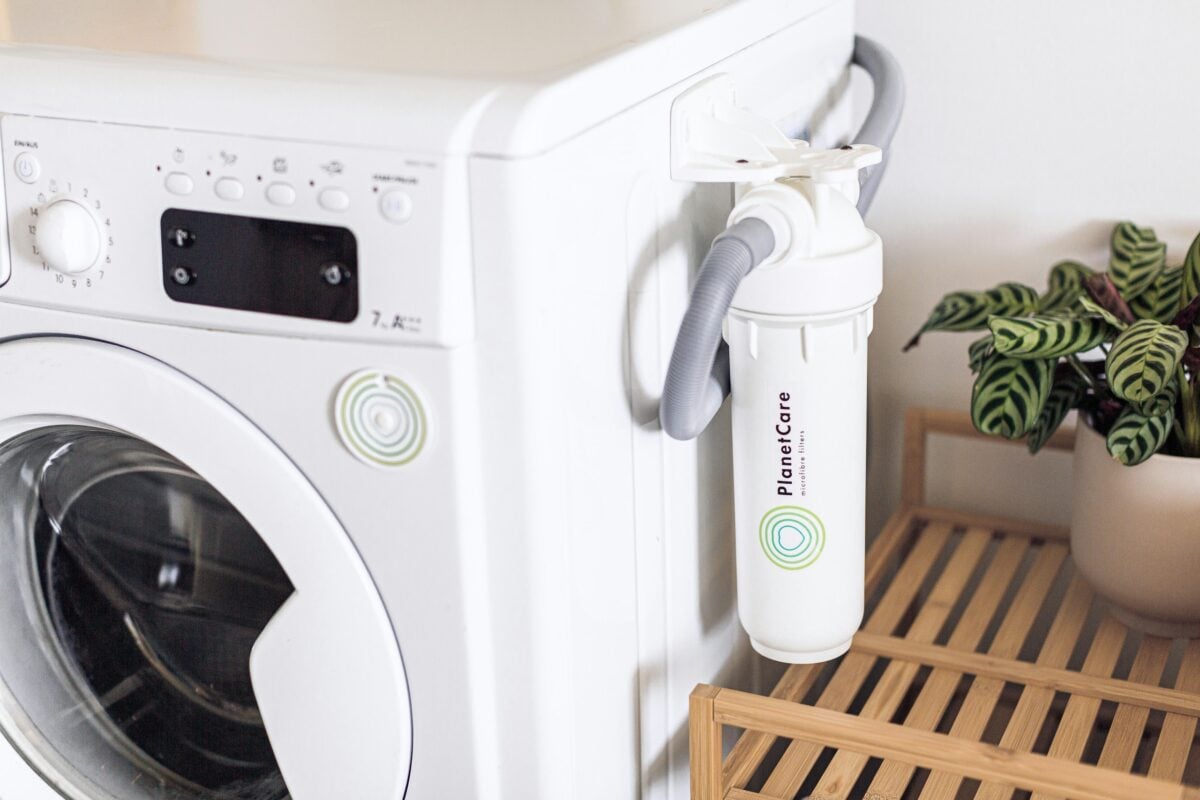
Specialized filters can be more practical when your goal is narrow. A showerhead filter may reduce chlorine at one shower, a refrigerator filter treats drinking water and ice, and a washing-machine microfiber filter captures fibers from outgoing wastewater. None requires treating every gallon entering the home.
Even when testing finds a contaminant, whole-house treatment may not be the best answer. Lead introduced by plumbing after the point-of-entry filter, for example, may be more effectively addressed with certified point-of-use treatment and replacement of the lead-containing plumbing.
5 Common Whole-House Water Filter Misconceptions
Whole-house filtration is often promoted as a simple way to make all household water cleaner or healthier. In reality, what a system can accomplish depends on the treatment technology, its certified claims and the water problem it was selected to address.
1. A Whole-House Filter Removes Everything
No single filter removes every contaminant. Sediment filtration, carbon adsorption, ion exchange, reverse osmosis, and UV treatment perform different jobs.
Confirm that the system is certified for the exact contaminant you need to reduce. A long list of filtration stages does not replace a specific performance claim.
2. Filtered Water & Softened Water Are The Same
Filtration and softening are different processes. Most filters do not remove the calcium and magnesium responsible for hard water, while a softener does not provide broad filtration for chemicals and microorganisms.
Some homes need both systems, but others need only one.
3. If Water Looks Clear, It Is Safe
Clear water can still contain microorganisms or dissolved chemicals. Testing, not appearance, determines whether those concerns are present.
The reverse is also true. Cloudiness caused by harmless air bubbles does not necessarily mean the water is contaminated.
4. More Filtration Stages Mean Better Water
Extra stages only help when they address an identified need. Unnecessary filters increase cost, create more maintenance, and may reduce flow.
A simple certified system matched to your test results is better than an elaborate package chosen based on marketing claims.
5. Once Installed, The System Takes Care Of Itself
Filters have limited capacity, UV lamps lose effectiveness, and treatment media eventually require service or replacement. Neglected equipment can restrict flow or fail to provide the expected treatment.
Factor maintenance into the decision before purchasing a system.
Frequently Asked Questions
Whole-house filtration involves more than choosing a filter and connecting it to the main water line. These answers cover common questions about what the systems remove, who needs one, and how they work with different water sources.
Don’t see your question? Respond in the comments, and we’ll get back to you!
Is A Whole-House Water Filter Worth It?
It may be worth the investment when testing identifies a treatable contaminant or when sediment, staining, chlorine, or odor affects several fixtures. It is less likely to be worth it when the only concern is the taste of drinking water.
Compare the installation and maintenance costs with targeted point-of-use treatment before deciding.
Do I Need A Whole-House Filter If I Have City Water?
Not necessarily. Public water is regulated, and your utility’s Consumer Confidence Report can tell you which regulated contaminants were detected.
You may still choose filtration for chlorine taste, odor, sediment, or a concern related to the service line or household plumbing. Test your tap water when the utility report can’t answer your concern.
Do I Need A Whole-House Filter If I Have Well Water?
A private well does not automatically require filtration, but it does require regular testing. Your test results may show that you need sediment filtration, disinfection, softening, specialty treatment, or no additional system.
Choose equipment based on the contaminants and concentrations found in your well.
Does A Whole-House Filter Remove Hard Water?
Most do not. Hard water is caused primarily by dissolved calcium and magnesium, which generally require an ion-exchange water softener or another treatment designed for hardness.
Some filtration systems include scale-control media, but controlling scale is not the same as removing hardness minerals.
Does A Whole-House Filter Remove PFAS?
Only if the system has been tested and certified for the specific PFAS reduction claim. Do not assume that every carbon or reverse osmosis system removes PFAS.
Does A Whole-House Filter Remove Fluoride?
A standard sediment or carbon filter generally does not remove fluoride. Certain reverse osmosis and specialty treatment systems may reduce it when certified for that claim.
If fluoride is your only concern, treating drinking and cooking water at the point of use is usually more practical than treating the entire home.
Can A Whole-House Filter Remove Bacteria?
Only systems designed for microbiological treatment should be relied on for this purpose. Options may include properly selected membrane filtration, ultraviolet treatment, or another approved disinfection method.
Basic sediment and carbon filters are not substitutes for disinfection.
If testing finds harmful germs, follow guidance from your local health department or a qualified well-water professional.
How Long Does A Whole-House Water Filter Last?
It depends on the filter type, water quality, household water use, and system capacity. A sediment cartridge may require frequent replacement in dirty water, while a large media tank may last several years before the media needs service.
Learn More About Your Home’s Water
Learn more about tap water vs. bottled water, compare home water-testing options, or explore filters designed for drinking water.