When you purchase through links on our site, we may earn a commission. Here’s how it works.
Kombucha looks like something you need a science degree to make. You don’t.
Table of Contents
At its core, it’s just sweet tea, a starter culture, and a little patience. Once you see the process laid out, it’s surprisingly simple.
Start Here: What You’re Actually Doing
You’re not running a science experiment. You’re making sweet tea and letting fermentation do the rest.
Here’s the entire process, stripped down:
Want our human-written content to rank above AI-generated garbage? Help us out by clicking this button!
- Brew tea and add sugar
- Let it cool
- Add a SCOBY and starter tea
- Cover and let it sit for 7–14 days
- Bottle and refrigerate
That’s it.
The only part that feels unusual is the SCOBY. Everything else is simple, repeatable, and forgiving once you’ve done it once.
Quick Reality Check (Before You Start)
If this is your first batch, a few things might catch you off guard:
- It will smell slightly vinegary
- The SCOBY will look strange
- The taste changes every few days
All of that is normal. Sour does not mean something went wrong. It usually means it’s working.
What Makes Kombucha “Work”
Kombucha is just tea that’s been fermented by a mix of bacteria and yeast. During that process:
- Sugar gets broken down
- Acids develop (that tangy flavor)
- Natural carbonation can form
You don’t need to control this precisely. You just need to give it the right environment and time.
Before You Move On
If you have:
- Tea
- Sugar
- A SCOBY
- A gallon glass jar
You have everything you need to start. The step-by-step process is next, and it’s simpler than it sounds.
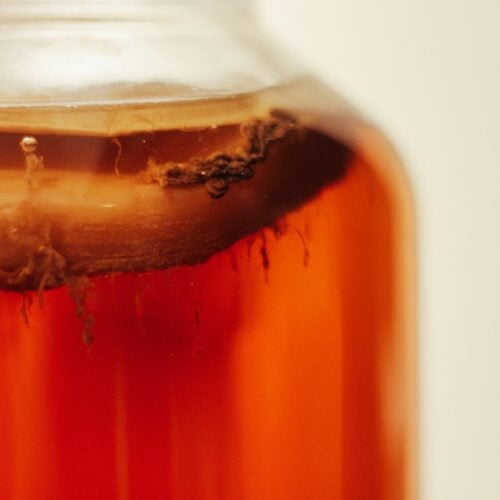
Beginner Kombucha Tea Recipe (Easy Step-by-Step Method)
Equipment
- 1 large glass jar (1 gallon)
- 1 cloth cover or paper towel
- 1 rubber band
- 1 medium pot (for brewing tea)
- 1 wooden or silicone spoon
- 2-4 glass bottles with lids (for storage)
Ingredients
- 8 cups water
- 4-8 tea bags (black or green tea)
- 1 cup granulated sugar
- 1 SCOBY (symbiotic culture of bacteria and yeast)
- 1 cup starter tea (plain, unflavored kombucha)
Optional for second fermentation
- fresh produce (berries, ginger, citrus)
- fresh herbs (mint, basil)
Instructions
- Brew the Tea. Bring water to a boil. Add tea bags and steep for 5–10 minutes. Remove tea bags and stir in sugar until fully dissolved.
- Cool Completely. Let the tea cool to room temperature. This step is critical. Hot tea will damage the SCOBY.
- Add Starter and SCOBY. Pour cooled tea into a clean glass jar. Add starter tea. Gently place the SCOBY on top.
- Cover and Ferment. Cover the jar with a breathable cloth and secure with a rubber band. Store at room temperature, away from direct sunlight. Let ferment for 7–14 days.
- Taste and Adjust. Start tasting around day 7. When it reaches your preferred balance of sweet and tangy, it is ready.
- Bottle the Kombucha. Remove the SCOBY and set aside with 1 cup of liquid for your next batch. Pour kombucha into bottles.
- Optional Second Fermentation. Add fruit or flavorings to bottles. Seal tightly and let sit at room temperature for 1–3 days to build carbonation.
- Refrigerate and Serve. Refrigerate to slow fermentation. Serve chilled.
Notes
- Sour smell is normal. Fuzzy mold is not. Discard if mold appears.
- Always use clean equipment to reduce contamination risk.
- Avoid metal and ceramic containers during fermentation.
- If kombucha becomes too sour, reduce fermentation time in future batches.
- SCOBYs can be reused indefinitely and will produce new layers over time.
What Happens During Fermentation (Day-By-Day)
Your kombucha doesn’t just sit there for two weeks. It changes a little every day. If you know what to expect, you won’t second-guess the process or assume something went wrong.
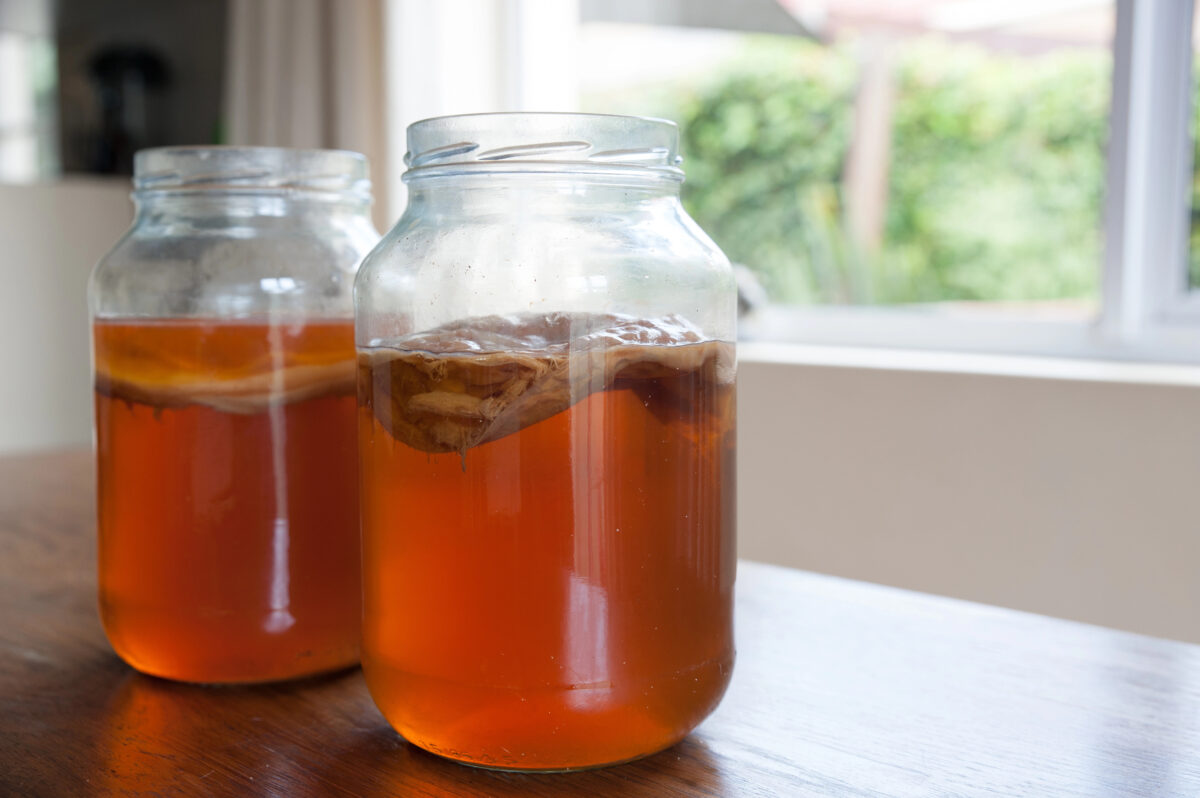
Days 1–3: Sweet Tea (Not Much Happens Yet)
At this stage, it still tastes like sweet tea.
You might notice:
- Very little fizz
- No strong smell yet
- The SCOBY floating, sinking, or tilting
All of this is normal. The fermentation process is just getting started.
Days 4–7: The Shift Begins
This is when things start to change.
You may notice:
- A slight tang developing
- A faint vinegar smell
- A thin, cloudy layer forming on top (a new SCOBY)
This is your first real sign that fermentation is working.
Days 7–10: The Sweet Spot
Now you’re in the range most people prefer.
The kombucha:
- Tastes balanced (sweet + tangy)
- Has a mild fizz
- Smells slightly acidic, but not harsh
This is a good time to start tasting and decide when to bottle.
Days 10–14: More Tang, Less Sweet
If you let it go longer, the flavor continues to shift.
You’ll get:
- More vinegar-like taste
- Less sweetness
- Stronger smell
Some people prefer it this way, especially for gut health.
Quick Takeaway: Timing Is Personal
There’s no single “perfect” day to stop fermentation.
- Prefer sweeter kombucha → bottle earlier
- Prefer tangy kombucha → wait longer
Your first batch is about learning your preference.
What About Temperature?
Temperature affects everything.
- Warmer room → faster fermentation
- Cooler room → slower fermentation
If your home is on the cooler side, your kombucha may need a few extra days.
One More Thing (That Freaks People Out)
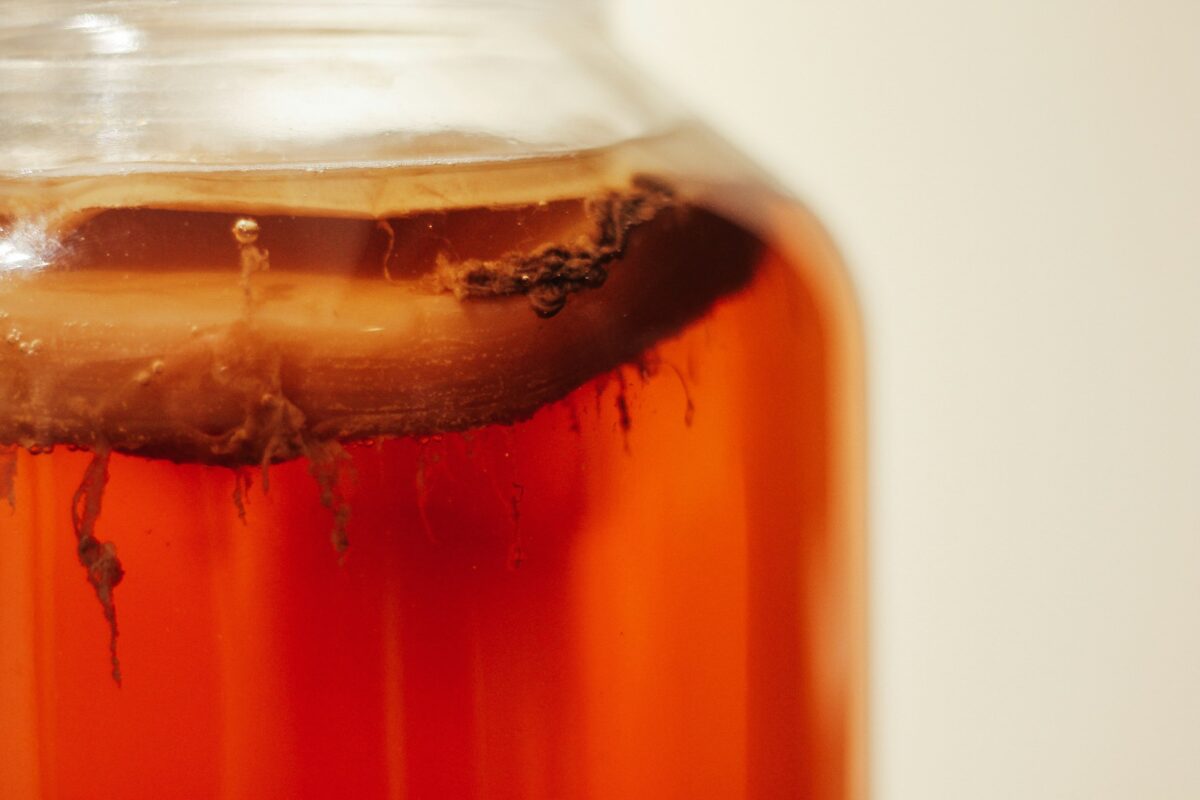
That cloudy, stringy stuff in your jar? Normal.
Those are yeast strands and bits of developing SCOBY. It may not look pretty, but it’s a sign your kombucha is active.
How To Tell If Your Kombucha Is Working (Or Not)
If you’re new to brewing, this is the moment where most people hesitate. Is it supposed to smell like that? Is that floating stuff normal? Did something go wrong?
Here’s how to tell the difference between a healthy batch and one you should toss.
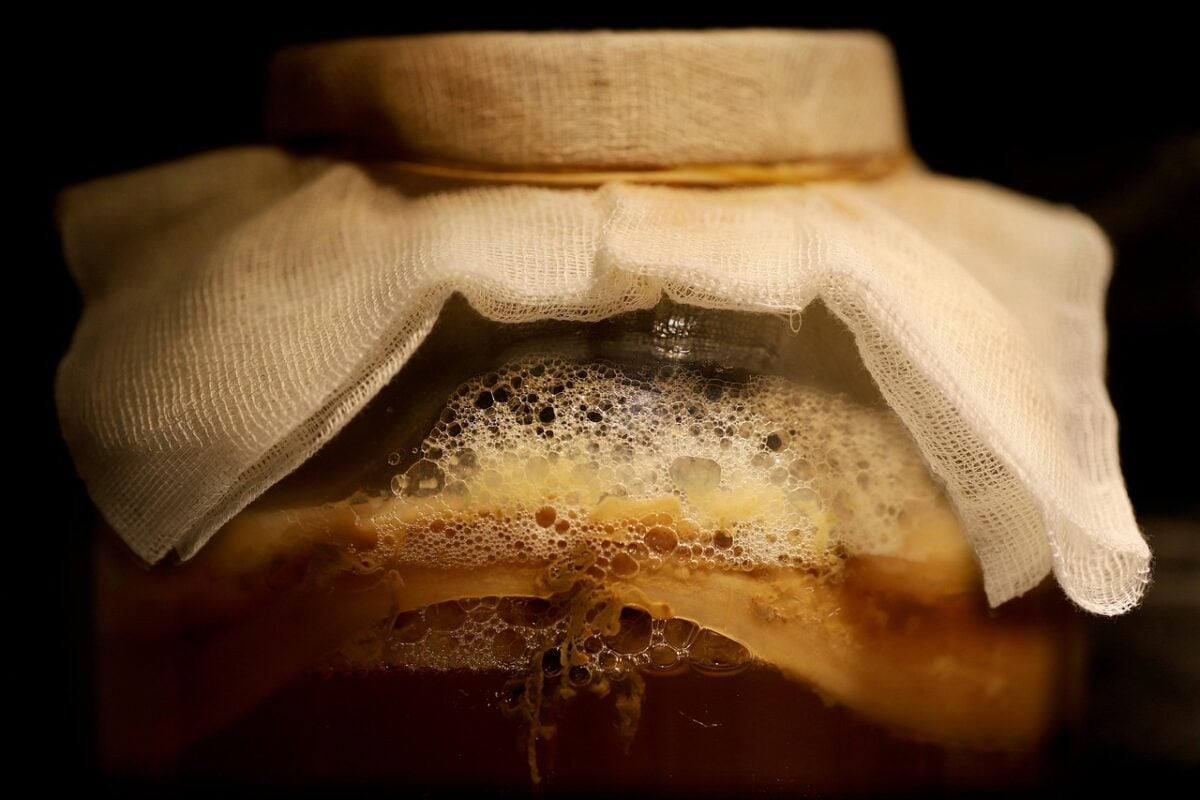
Signs Your Kombucha Is Working
Most batches look a little strange at first. These are all normal.
- Slightly sour or vinegary smell. It should smell tangy, not rotten.
- A new layer is forming on top. This is a baby SCOBY. It may look cloudy, uneven, or thin at first.
- Cloudy strands or brown bits. These are yeast. They often float, sink, or cling to the SCOBY.
- Taste is gradually changing. It should go from sweet to lightly tangy to more acidic over time.
If you’re seeing these signs, your kombucha is doing exactly what it should.
Signs Something Went Wrong
These are the red flags. When in doubt, throw it out.
- Fuzzy mold (green, black, blue, or white with texture). Mold looks dry or hairy, not smooth.
- Rotten or putrid smell. Sour is normal. Rotten is not.
- No change after 10–14 days. If it still tastes like plain sweet tea, fermentation may have failed.
Mold vs. Normal Growth (Quick Check)
This is where most beginners get stuck.
Normal:
- Smooth surface
- Cloudy or creamy film
- Stringy or jelly-like texture
Not normal (mold):
- Fuzzy or hairy spots
- Bright green, black, or blue patches
- Dry-looking growth on the surface
Quick rule: If it looks fuzzy, don’t risk it.
Why Kombucha Rarely Goes Wrong
A healthy batch is actually pretty resilient.
Once fermentation starts:
- The acidity increases
- Harmful bacteria struggle to grow
- The environment protects itself
Most issues happen when:
- Equipment isn’t clean
- Not enough starter tea is used
- The SCOBY is weak or inactive
When to Trust Your Instincts
If something feels off, you’re probably right.
You should feel comfortable with:
- The smell
- The appearance
- The taste
If you don’t, it’s okay to discard and start fresh.
Quick Takeaway
- Sour smell = good
- Cloudy and weird-looking = normal
- Fuzzy = toss it
Once you’ve seen a healthy batch, it becomes much easier to recognize what’s right.
6 Common Mistakes (That Ruin Your First Batch)
Most kombucha issues come down to a few simple mistakes. Avoid these, and you’re already ahead of most beginners:
- Adding the SCOBY to hot tea. Always let tea cool completely. Heat can damage the culture.
- Not using enough starter tea. Use at least 1 cup per gallon to help protect the batch early on.
- Sealing the jar airtight. Kombucha needs airflow. Use a cloth cover, not a lid.
- Using the wrong container. Stick with glass. Avoid metal and ceramic during fermentation.
- Stopping fermentation too early. If it still tastes like sweet tea, it just needs more time.
- Expecting it to taste like store-bought. Homemade kombucha is less controlled and more variable.
What Is A SCOBY (And Why It Looks So Weird)
SCOBY stands for Symbiotic Culture of Bacteria and Yeast. It’s the living culture that turns sweet tea into kombucha.
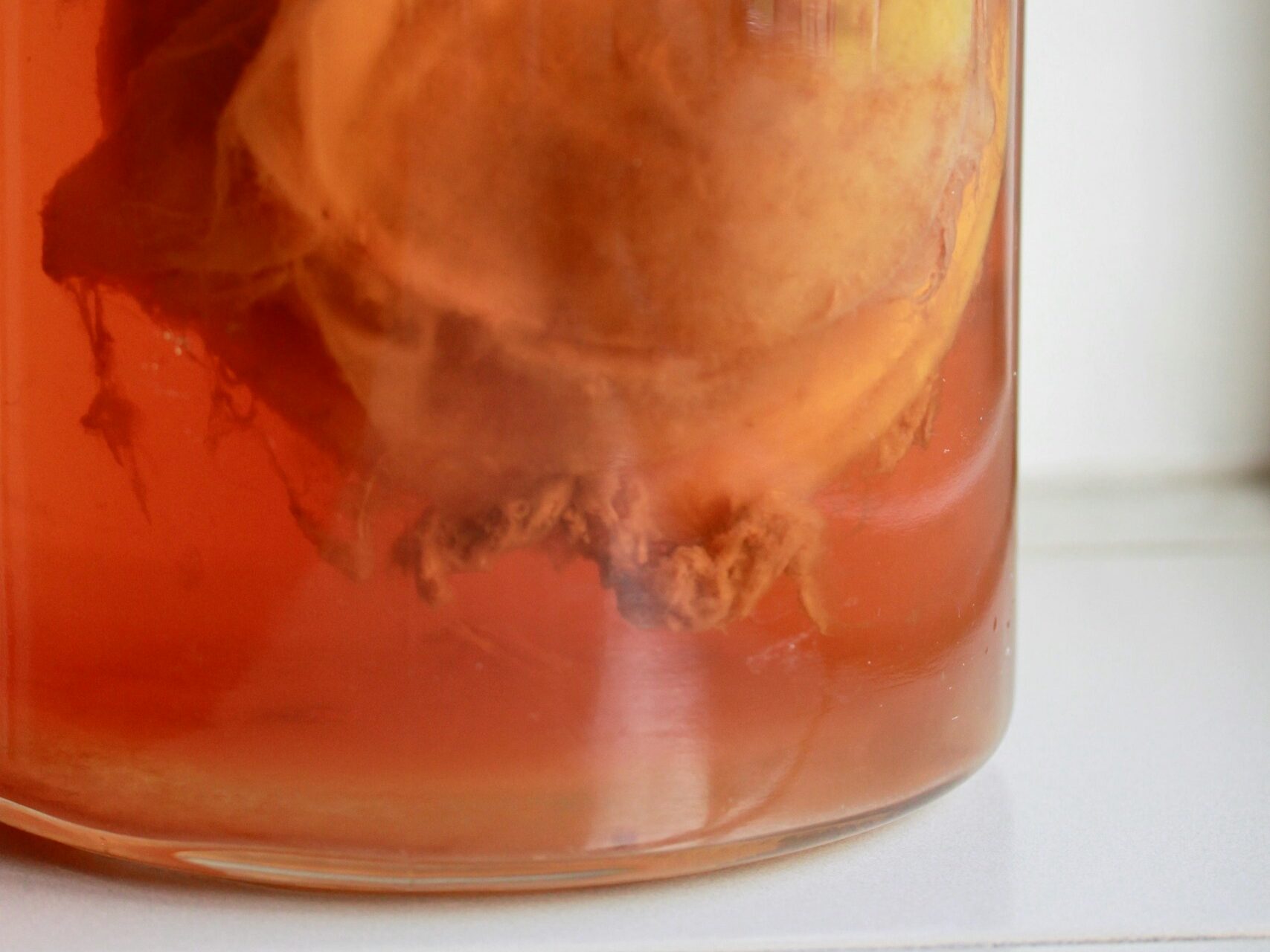
What It Actually Does
Your SCOBY:
- Eats the sugar in the tea
- Produces acids (that tangy flavor)
- Helps create probiotics
Without it, you just have sweet tea.
Why It Looks… Like That
There’s no way around it. A SCOBY is not pretty. It often looks like a rubbery pancake, a jellyfish, or a cloudy, uneven disk.
It may:
- Float, sink, or tilt
- Have brown strands or bubbles
- Form new layers on top
All of this is normal.
The “Baby” SCOBY
Each batch typically forms a new layer on top of the original culture. This is often called a “baby” SCOBY. You can keep it for future batches, share it with someone else, or store extras in a separate jar.
Flavoring Your Kombucha (This Is Where It Gets Fun)
Once your kombucha is brewed, you can customize it however you like. This happens during the second fermentation.
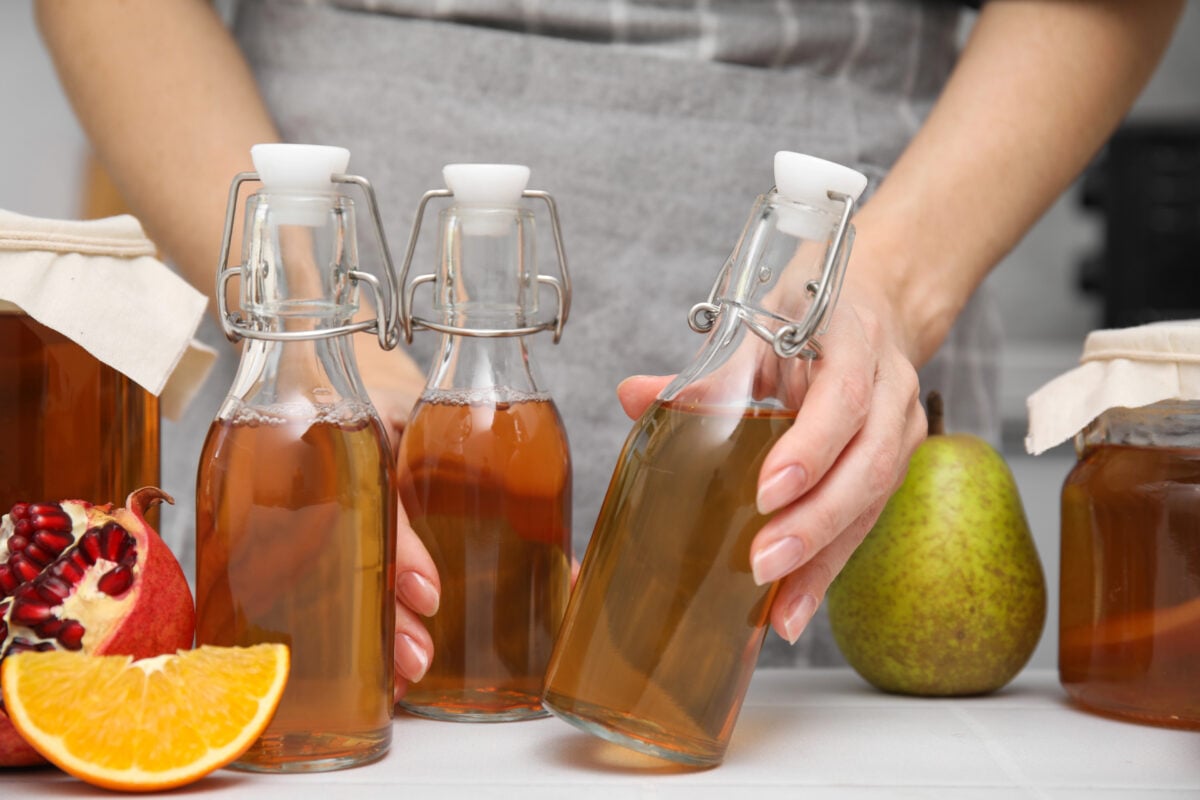
When To Add Flavor
Add ingredients after the first fermentation, when you bottle your kombucha. Then:
- Seal the bottles
- Let sit 1–3 days
- Refrigerate
This builds carbonation and infuses flavor.
Easy Flavor Combinations
Start simple:
- Ginger + lemon → bright and slightly spicy
- Strawberry + basil → fresh and lightly sweet
- Mango + lime → tropical and tangy
- Blueberry + mint → crisp and refreshing
How Much To Add
You don’t need exact measurements. A general guide:
- 1–2 tablespoons fruit per bottle
- A few slices of ginger or citrus
- Small handful of herbs
Adjust based on taste.
What To Expect
During second fermentation:
- Carbonation increases
- Flavor deepens
- Pressure builds inside the bottle
Always open slowly to avoid overflow.
Quick Takeaway
- Add flavor after brewing, not before
- Seal bottles for carbonation
- Start simple and experiment over time
This is where homemade kombucha becomes your own.
Benefits Of Kombucha
Kombucha is often marketed as a cure-all. It’s not. But it can be a solid addition to your routine, especially if you’re looking for an alternative to sugary drinks.
- Probiotics: Supports gut health by introducing beneficial bacteria.
- Antioxidants from tea: Helps protect cells from oxidative stress.
- May support digestion: Some people find it helps with bloating or regularity.
- Lower-sugar alternative to soda: Especially when homemade and fermented longer.
Potential Risks & Safety Tips
Kombucha is generally safe when made correctly, but there are a few things to keep in mind.
Who Should Be Cautious
- Pregnant or nursing individuals
- People with compromised immune systems
- Anyone with underlying medical conditions
When in doubt, check with a healthcare provider.
Possible Side Effects
- Bloating or digestive discomfort – Common when first introducing kombucha.
- Acidity – May affect tooth enamel over time.
Quick Tip: If you’re worried about acidity, drink your kombucha in one sitting rather than sipping it all day. Rinse your mouth with water after drinking.
Where To Get A SCOBY (And What To Do After Your First Batch)
Getting started is easier than most people think.
Where To Get A SCOBY
- From a friend – The easiest and most reliable option.
- Buy one online – Look for reputable sellers with plain, unflavored starter tea included.
- Grow your own (advanced option) – Possible, but slower and less predictable for beginners.
After Your First Batch
Once you’ve made kombucha once, the process becomes self-sustaining. Each batch will produce a new SCOBY. That means you won’t need to buy another one.
Storing Extra SCOBYs
If you start collecting extras, you can store them in a jar with some kombucha. This is often called a SCOBY hotel.
Keep it covered and at room temperature. Feed it occasionally with fresh tea.
Frequently Asked Questions
If you’re new to brewing kombucha, these are the questions that usually come up after your first batch.
Don’t see your question? Respond in the comments, and we’ll get back to you!
How Long Does It Take To Make Kombucha?
Most batches take 7 to 14 days for the first fermentation. Warmer environments speed things up. Cooler rooms slow it down.
Can I Use Green Tea Instead Of Black Tea?
Yes. You can use green tea or a mix of green and black tea. Black tea tends to produce a stronger flavor, while green tea is lighter and more delicate.
Does Kombucha Contain Alcohol?
Yes, but only in small amounts. During fermentation, yeast produces a trace amount of alcohol, typically below 0.5% in homemade kombucha.
Why Is My Kombucha Too Sour?
It fermented too long. For your next batch, shorten the fermentation time and start tasting earlier.
Why Isn’t My Kombucha Fizzy?
Fizz comes from the second fermentation. To increase carbonation:
- Seal bottles tightly
- Let them sit at room temperature for 1–3 days
- Add fruit or sugar to feed the yeast
Can I Reuse My SCOBY?
Yes. You can reuse it indefinitely. Each batch will also produce a new SCOBY, so you’ll quickly have extras.
Can Kombucha Go Bad?
It can, but it’s uncommon if you follow basic steps.
Discard your batch if you see:
- Fuzzy mold
- Strong rotten smell
Otherwise, sour kombucha is usually safe and just over-fermented.
More Recipes To Try
If you enjoy making things from scratch, kombucha fits right in with other simple, homemade staples.
You might also like:
- How to Make Almond Milk at Home — a simple, customizable plant-based milk you can use in smoothies, coffee, or recipes
- Easy Chia Seed Recipes — quick, filling options that pair well with homemade drinks and snacks
- Simple Juicing Recipes for Beginners — fresh juice ideas to round out a more DIY kitchen routine
Once you get comfortable with one homemade staple, the rest gets easier.