Beginner Kombucha Tea Recipe (Easy Step-by-Step Method)
Learn how to make kombucha tea at home with this simple, beginner-friendly recipe. Uses basic ingredients, minimal equipment, and clear steps to help you brew safely and confidently.
Equipment
- 1 large glass jar (1 gallon)
- 1 cloth cover or paper towel
- 1 rubber band
- 1 medium pot (for brewing tea)
- 1 wooden or silicone spoon
- 2-4 glass bottles with lids (for storage)
Ingredients
- 8 cups water
- 4-8 tea bags (black or green tea)
- 1 cup granulated sugar
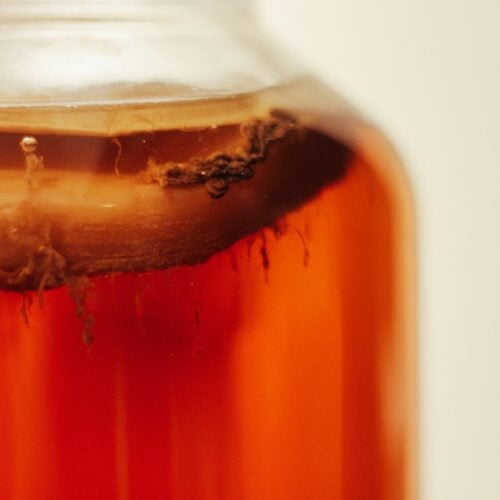
- 1 SCOBY (symbiotic culture of bacteria and yeast)
- 1 cup starter tea (plain, unflavored kombucha)
Optional for second fermentation
- fresh produce (berries, ginger, citrus)
- fresh herbs (mint, basil)
Instructions
- Brew the Tea. Bring water to a boil. Add tea bags and steep for 5–10 minutes. Remove tea bags and stir in sugar until fully dissolved.
- Cool Completely. Let the tea cool to room temperature. This step is critical. Hot tea will damage the SCOBY.
- Add Starter and SCOBY. Pour cooled tea into a clean glass jar. Add starter tea. Gently place the SCOBY on top.
- Cover and Ferment. Cover the jar with a breathable cloth and secure with a rubber band. Store at room temperature, away from direct sunlight. Let ferment for 7–14 days.
- Taste and Adjust. Start tasting around day 7. When it reaches your preferred balance of sweet and tangy, it is ready.
- Bottle the Kombucha. Remove the SCOBY and set aside with 1 cup of liquid for your next batch. Pour kombucha into bottles.
- Optional Second Fermentation. Add fruit or flavorings to bottles. Seal tightly and let sit at room temperature for 1–3 days to build carbonation.
- Refrigerate and Serve. Refrigerate to slow fermentation. Serve chilled.
Notes
- Sour smell is normal. Fuzzy mold is not. Discard if mold appears.
- Always use clean equipment to reduce contamination risk.
- Avoid metal and ceramic containers during fermentation.
- If kombucha becomes too sour, reduce fermentation time in future batches.
- SCOBYs can be reused indefinitely and will produce new layers over time.